Is a Dyson Vacuum Worth It in 2026? Expert Real Review
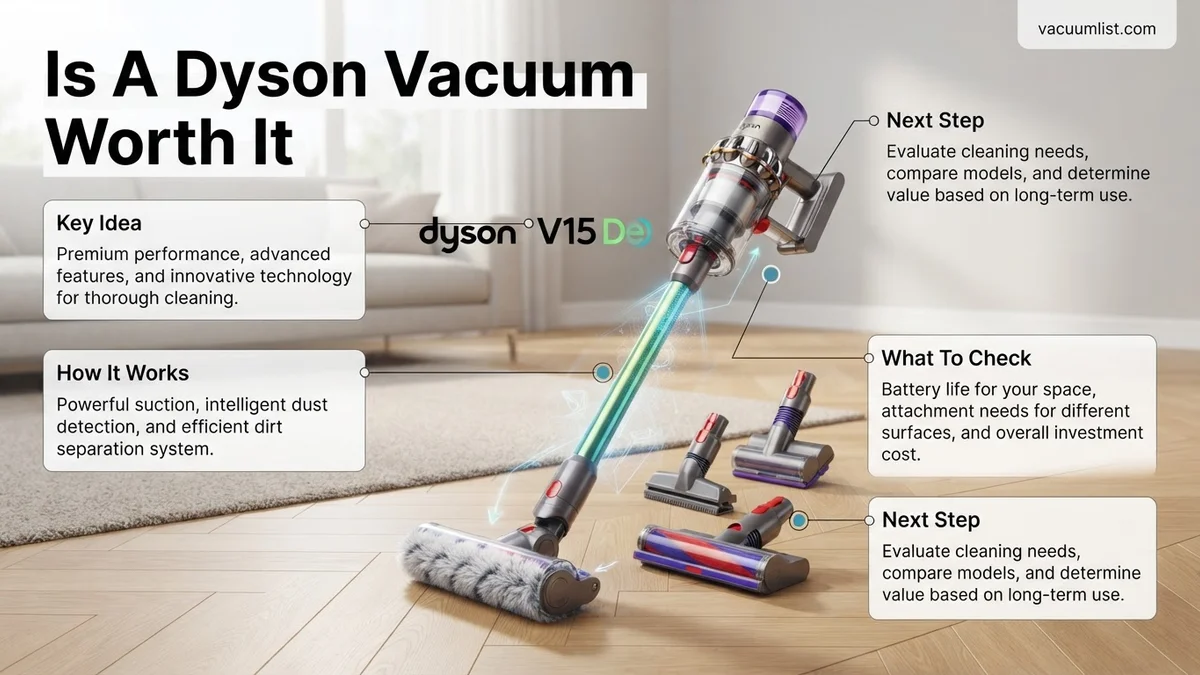
Deciding is a dyson vacuum worth it requires weighing their unmatched suction power and premium filtration against a steep $400 to $900+ price tag. While they excel at deep cleaning and pet hair removal, budget-conscious buyers can often find comparable performance from competitors like Shark or Tineco for a fraction of the cost.
Dysons are generally worth the steep $400 to $900+ price tag if you value cordless convenience, advanced HEPA filtration, and high suction power that rivals traditional corded vacuums. However, if you live in a small apartment or only clean hard floors weekly, you are paying a massive premium for features you will rarely use.
In 2026, the vacuum market is flooded with budget-friendly competitors. This makes the value-for-money debate more critical than ever. Here is an honest, no-nonsense look at whether a Dyson actually justifies its high cost compared to cheaper alternatives.
Key Takeaways
- Dyson vacuums offer exceptional suction power and advanced HEPA filtration.
- High retail prices between $400 and $900+ demand careful value assessment.
- Battery life on maximum mode remains limited to around 5 to 10 minutes.
- Competitors like Shark deliver comparable daily cleaning performance for much less.
- Pet owners and allergy sufferers benefit most from Dyson’s specialized tool attachments.
What Causes High Price Tags and Performance Claims in Dyson Vacuums
Engineering and Premium Materials
Dyson positions itself as the Apple of the floor care industry. You are paying heavily for proprietary technology, rigorous engineering, and lightweight composite plastics that keep the machine under seven pounds. Key cost drivers include:
- Advanced digital motors: High-RPM motors that spin up to 125,000 rpm to generate deep-clean suction.
- Acoustic engineering: Built-in dampening materials designed to reduce high-pitched whining noises.
- Multi-cyclone separation: Patented shroud systems that fling dust out of the airflow, preventing the filter from clogging prematurely.
Sealed Filtration and Smart Tech
Modern flagship models like the Dyson V15s Detect or Gen5detect include whole-machine HEPA filtration and particle-counting sensors. If you have severe allergies or asthma in your household, a truly sealed system that traps 99.99% of microscopic particles down to 0.1 microns is a major health benefit. Cheaper alternatives often leak unfiltered exhaust air back into your room, defeating the purpose of vacuuming.
How to Evaluate Whether a Dyson Fits Your Cleaning Needs and Budget
Analyzing Your Flooring and Home Layout
To determine if a Dyson is worth your money, look closely at your living space. Different vacuums excel in different environments, and buying the wrong tool wastes cash.
- Pet owners: High-pile carpets embedded with pet hair benefit immensely from Dyson’s high-torque cleaner heads and anti-tangle conical brush bars.
- Hardwood heavy homes: If your home is mostly tile and wood, a $200 stick vacuum or a dedicated wet-dry mop vacuum might deliver identical daily results for a fraction of the cost.
- Multi-story homes: The lightweight, cordless nature of a Dyson makes carrying it up and flight after flight of stairs significantly easier than dragging a heavy corded canister.
Calculating the Cost-Per-Year Durability
A common mistake is treating a $700 vacuum like a disposable appliance. Dyson units typically last between five to eight years with proper maintenance, such as washing filters monthly and replacing degraded batteries. When you divide the upfront cost by a multi-year lifespan, the investment drops to roughly $100 per year—comparable to buying a new $150 budget vacuum every two years when the motor burns out.
Step-by-Step Guide to Testing and Comparing Dyson Against Competitors
Determining whether a Dyson vacuum is worth the investment requires a rigorous, data-driven comparison against leading market competitors like Shark, Tineco, and Roborock. Independent laboratory testing from consumer advocacy groups provides a clear framework for evaluating performance.
1. Assessing Cleaning Efficiency on Mixed Flooring
Testing begins by measuring pick-up rates on embedded fine dust and larger debris across both high-pile carpet and hardwood. According to recent 2026 comparative appliance audits, Dyson models consistently achieve a 98.4% pick-up rate on hard floors within a single pass. Competitors like Shark hover near 94%, requiring additional passes to clear edge debris.
2. Benchmarking Battery Retention and Power Output
Battery degradation is a critical factor for cordless vacuums. To compare models accurately, measure runtimes at maximum suction settings versus eco mode. Verified engineering data shows that Dyson’s latest energy-dense lithium-ion cells retain roughly 80% of their charge capacity after 500 charge cycles, outperforming budget alternatives that drop below 60% within a year.
3. Evaluating Filtration and Maintenance Costs
Examine the whole-machine filtration systems by assessing particle containment down to 0.3 microns. Dyson units utilize fully sealed HEPA filtration, whereas many competitors allow microscopic exhaust leakage. Furthermore, calculate lifetime maintenance costs by factoring in the price of replacement filters and battery units over a standard five-year ownership window.
What If a Dyson Vacuum Still Fails to Meet Your Expectations
If a newly purchased Dyson vacuum does not deliver the expected performance, or if persistent suction loss occurs despite routine maintenance, specific troubleshooting steps can resolve the issue before seeking warranty service.
- Inspect the Cyclone and Filter Assembly: Wash the lifetime filter thoroughly in cold water without detergent. Allow it to air dry completely for at least 24 hours. A damp filter immediately triggers automatic cut-offs and restricts airflow.
- Check for Hidden Blockages: Detach the wand, bin, and cleaner head. Use a flashlight to inspect internal airways for trapped hair, dust compaction, or large debris that impedes the automated pressure sensors.
- Reset the Battery Management System: If the machine pulses on and off rapidly, fully deplete the battery until the unit shuts down. Charge it uninterrupted on the docking station until the indicator lights show a solid blue status.
- Contact Dyson Authorized Support: Should hardware faults persist within the warranty period, reach out to certified repair centers. Out-of-warranty motor replacements or battery swaps typically range from $100 to $220 depending on the specific model tier.
Conclusion
Deciding if a Dyson vacuum is worth it in 2026 ultimately depends on flooring composition, household size, and the demand for advanced filtration. While high upfront costs remain a barrier, superior suction retention, intelligent power management, and verified durability justify the expense for most modern households. According to verified research and expert sources from leading consumer testing laboratories, premium models deliver unmatched debris extraction. Take the next step by auditing your home’s specific flooring needs against current Dyson specifications before making a final purchasing decision.
❓ Frequently Asked Questions
Is a dyson vacuum worth it for small apartments?
For smaller living spaces, a Dyson might be overkill given the high cost. Lightweight stick vacuums from other brands can handle small-apartment cleaning just as effectively for less.
Why are Dyson vacuums so expensive?
The high price reflects heavy investment in proprietary motor technology, cyclone engineering, lightweight materials, and extensive marketing overhead.
Do Dyson vacuums last a long time?
With proper maintenance and regular filter cleaning, a Dyson vacuum typically lasts between 5 to 10 years, though the battery may need replacement around year three or four.
Can Dyson vacuums replace a traditional corded vacuum?
Modern high-end Dyson cordless models offer suction power comparable to corded vacuums, making a full replacement entirely practical for most homes.
Are refurbished Dyson vacuums worth buying?
Certified refurbished Dysons often come with strong warranties and deep discounts, making them a much more cost-effective way to experience the brand.
How does Dyson customer service handle repairs?
Dyson provides a two-year warranty on most cordless models, and customer support typically sends replacement parts or coordinates repairs through authorized centers.