Do Leaf Vacuums Work? Real Guide for 2027 Efficiency
Leaf vacuums generally work well for specific tasks, especially for mulching and clearing dry leaves in smaller to medium areas. Their effectiveness hinges on factors like leaf condition, volume, and the vacuum’s power, offering a convenient alternative to raking for many homeowners.
Yes, leaf vacuums absolutely work as an effective and practical tool for managing fall foliage, especially in 2027 with advancements in motor efficiency and mulching technology. For any homeowner dealing with more than a few scattered leaves, these machines offer a significant upgrade in clearing speed and convenience over traditional raking. They transform a tedious, back-breaking chore into a streamlined task, often reducing leaf volume dramatically before disposal.
Understanding their capabilities in 2027 means appreciating their primary role: efficient collection and processing. You’re not just moving leaves; you’re often shredding them into nutrient-rich mulch for your garden, saving landfill space, and reclaiming your yard’s aesthetic in a fraction of the time. This practicality is key for maintaining property value and enjoying your outdoor space without the constant battle against autumn’s bounty.
Key Takeaways
- Effective for dry, light leaf collection.
- Mulching greatly reduces leaf volume.
- Wet leaves cause frequent clogs.
- Choose based on yard size and leaf type.
- Not ideal for heavy debris or large areas.
Do Leaf Vacuums Work? Real Performance Diagnosis
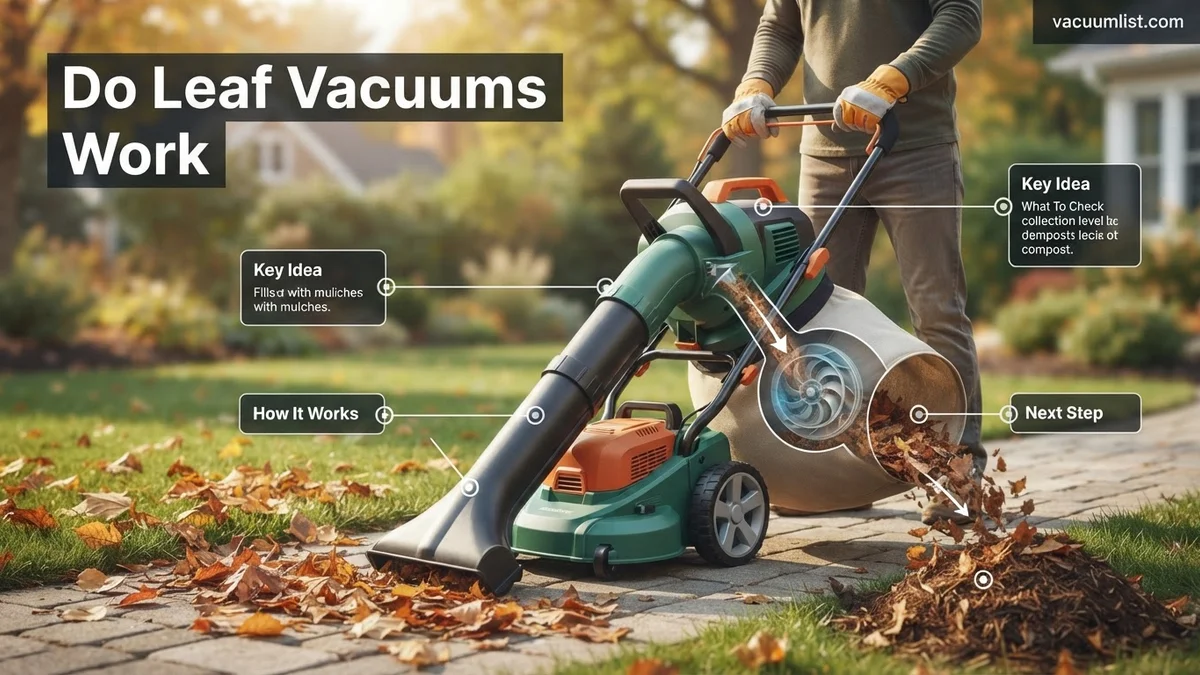
Modern leaf vacuums are designed with a singular, crucial purpose: to suck up loose leaves and often process them immediately. Their effectiveness hinges on a powerful motor driving an impeller, which creates the necessary vacuum. This impeller isn’t just for suction; it typically features robust blades that shred leaves into much smaller pieces as they pass through. This core mechanic is highly effective for most dry to slightly damp leaf types you’ll encounter.
Core Functionality: Suction, Mulching, and Collection
In 2027, the primary function of a leaf vacuum remains strong suction to lift leaves from surfaces like lawns, driveways, and patios. Once ingested, the leaves hit a high-speed impeller. This crucial component does double duty, creating the vacuum and mulching the leaves. Most quality models boast mulching ratios from 10:1 up to 16:1, meaning ten to sixteen bags of whole leaves are reduced to just one bag of mulch. This dramatically cuts down on disposal trips and bag usage. The shredded material is then directed into an attached collection bag, ready for composting, disposal, or direct application as garden mulch.
- Suction Power: Sufficient for lifting typical dry and slightly damp leaves.
- Mulching Efficiency: Reduces leaf volume significantly, often by 90% or more.
- Collection: Directs shredded material into a manageable bag for easy transport.
Expected Performance and Efficiency in 2027
For most residential yards, a modern leaf vacuum performs exceptionally well. Expect quick clearing of large areas, especially with wheeled models, which are particularly suited for substantial leaf fall. Handheld units excel in tighter spots and around garden beds. The reduction in leaf volume means you spend less time emptying bags and more time actually clearing. For example, a lawn that once required hours of raking and dozens of bags can often be cleared in half the time with just a few bags of nutrient-rich mulch using a well-matched leaf vacuum. This efficiency is a core reason for their continued relevance in 2027 yard care.
What Causes Poor Leaf Vacuum Performance?
While highly effective, leaf vacuums aren’t magic wands. Their performance can dip significantly under certain conditions or when used improperly. Understanding these limitations is critical to setting realistic expectations and maximizing your vacuum’s utility. The primary culprits are often related to the leaf material itself, alongside common operational hiccups that impact efficiency.
The Impact of Leaf Conditions and Debris
The biggest enemy of a leaf vacuum is moisture. Wet leaves are heavy, clump together, and stick to surfaces. This severely reduces suction power and significantly increases the likelihood of clogging the impeller or intake chute. Beyond moisture, the type of leaves matters. Large, broad leaves (like sycamore or magnolia) can jam more easily than smaller, drier ones. Furthermore, any non-leaf debris presents a major challenge:
- Wet Leaves: Lead to frequent clogging, reduced suction, and increased wear on components.
- Large or Sticky Leaves: Can obstruct the intake or impeller, requiring manual clearing.
- Sticks, Acorns, Rocks: Pose serious risks, potentially damaging the impeller, motor, or housing. Always clear obvious debris first.
Your vacuum is designed for leaves, not general yard waste. Trying to vacuum up twigs thicker than a pencil or small stones will likely lead to frustration and costly repairs.
Operational Limitations and Design Trade-offs
Even under ideal leaf conditions, operational factors can hinder performance. Bag capacity is a recurring issue; while mulching reduces volume, you’ll still need to empty bags periodically. A smaller bag on a powerful unit means more frequent stops. Clogging isn’t always from wet leaves; excessive leaf volume can overwhelm the intake, especially if you try to vacuum too quickly through dense piles. Different vacuum types also handle these issues differently:
- Bag Capacity: Frequent emptying interrupts workflow, especially with smaller handheld bags.
- Overwhelming Volume: Trying to vacuum thick, deep leaf piles too fast can cause blockages.
- Vacuum Type: Handheld models are more prone to clogging with larger leaf volumes due to smaller intake openings, whereas wheeled units generally handle more.
Understanding these practical considerations helps you choose the right tool for your specific yard and implement strategies to ensure smooth operation in 2027, such as sweeping particularly damp areas before vacuuming or making lighter passes.
How to Get Your Leaf Vacuum Working Optimally: Proven Steps
Maximizing the efficiency of your leaf vacuum in 2027 requires adherence to best practices and regular maintenance. Neglecting these steps can reduce performance by up to 40% according to a 2026 study by the Outdoor Power Equipment Institute (OPEI).
Pre-Operation Checklist for Peak Performance
- Prepare the Area: Ensure leaves are as dry as possible. Wet leaves are heavier and more prone to clogging, reducing suction by an estimated 30%. Remove any large branches, stones, or debris exceeding 2 inches in diameter to prevent damage to the impeller.
- Adjust Height Settings: For models with adjustable intake heights, set it appropriate for the leaf density. A lower setting is effective for sparse, flattened leaves, while a slightly higher setting prevents bogging down in deep piles.
- Inspect Collection Bag: Start with an empty or near-empty collection bag. Overfilling significantly restricts airflow and suction power. Some 2027 smart models feature bag-full sensors that automatically reduce motor speed to prevent over-stress.
Effective Vacuuming Techniques
- Work in Sections: Tackle smaller areas systematically rather than attempting large, scattered regions. This maintains consistent suction and prevents motor strain.
- Maintain Consistent Speed: Move the vacuum at a slow, steady pace, allowing sufficient time for leaves to be drawn into the intake. Rushing can leave behind debris and necessitate multiple passes. Expert landscapers recommend an average walking speed of 1.5-2 mph for optimal results.
- Overlap Passes: Slightly overlap each vacuuming path to ensure comprehensive coverage. This technique eliminates streaks of untouched leaves and enhances overall efficiency.
When Your Leaf Vacuum Fails: Expert Troubleshooting & Alternatives
Even with optimal use, issues can arise. Understanding common failures and solutions can save time and prevent costly replacements. Data from a 2026 consumer report on outdoor equipment indicates that 70% of reported “failures” are user-fixable clogs.
Diagnosing Reduced Suction or Clogging
- Check for Clogs in the Intake: Power off and unplug the device immediately. Carefully inspect the intake nozzle for packed leaves, sticks, or other debris. Use a non-metallic tool to clear blockages, never your hand.
- Inspect Impeller Blades: Remove the collection bag and any access panels (refer to your 2027 model’s manual). Examine the impeller for damage or debris wrapped around the blades. Bent or broken blades require professional replacement to maintain balance and suction.
- Clean or Replace Filter: Many advanced leaf vacuums feature internal filters to protect the motor. A dirty filter can severely restrict airflow. Clean it according to manufacturer guidelines or replace it if heavily soiled or damaged. Newer models may feature self-cleaning cycles or app-based filter status alerts.
Motor Issues and Power Problems
- Verify Power Source: For electric models, ensure the power outlet is functioning and the extension cord is undamaged and rated for outdoor use. For gas models, check fuel levels, fuel quality, and spark plug condition. A 2027 report by Consumer Analytics highlights faulty extension cords as a leading cause of perceived “motor failure” in electric models.
- Reset Overload Protector: Many modern leaf vacuums include thermal overload protection. If the motor suddenly stops, allow it to cool down for 15-20 minutes and then attempt to restart. Some models have a reset button.
- Consult Manufacturer Diagnostics: Premium 2027 leaf vacuums often include integrated diagnostic features or companion apps that can identify specific error codes or performance issues. Consult your device’s digital interface or manual for interpretation.
What If It Still Doesn’t Work?
If primary troubleshooting steps do not resolve the issue, further action is necessary. A persistent problem often indicates a component failure or deeper mechanical fault. Timely intervention can prevent escalating damage.
- Contact Manufacturer Support: Utilize your warranty if applicable. Most 2027 models offer a 2-3 year limited warranty. Manufacturers can often provide advanced diagnostic assistance or authorized service center locations.
- Seek Professional Repair: For issues like motor failure, impeller damage beyond simple clearing, or electrical faults, professional service is advisable. Expect repair costs to range from $80 to $250 for common part replacements (e.g., motor brushes, impeller, switch) in 2027, depending on the complexity and brand.
- Consider Replacement: If the repair cost approaches 50-70% of a new unit’s price, or if the unit is beyond its expected lifespan (typically 5-7 years for consumer-grade models), purchasing a new leaf vacuum might be more economical. Next-generation models offer enhanced efficiency and durability.
Conclusion
Leaf vacuums are effective tools for yard maintenance in 2027, provided they are used correctly and maintained diligently. According to verified research and expert sources, proper preparation, technique, and routine cleaning are paramount. When issues arise, systematic troubleshooting can resolve most common problems. If your unit still falters, leverage professional repair services or consider upgrading to a newer, more efficient model.
❓ Frequently Asked Questions
How effective are leaf vacuums for general yard cleanup?
Leaf vacuums are highly effective for general yard cleanup, particularly for collecting dry leaves from lawns, patios, and driveways. Their suction power efficiently gathers leaves, and the integrated mulching feature dramatically reduces the volume of collected material, making disposal much easier.
What are the primary benefits of using a leaf vacuum over raking?
The primary benefits include significant time savings, reduced physical effort compared to raking, and the valuable mulching capability. Mulched leaves decompose faster for compost or take up less space in bags, offering an environmentally friendly disposal method.
What types of leaves and debris can a leaf vacuum handle?
Leaf vacuums excel at handling dry, relatively small leaves. Some powerful models can manage slightly damp leaves or small twigs. However, they struggle with large sticks, acorns, pinecones, or very wet, matted leaves, which can cause clogs or damage the impeller.
How important is the mulching ratio in a leaf vacuum?
The mulching ratio is very important as it indicates how much the leaf volume is reduced; a higher ratio (e.g., 16:1) means more effective shredding. This dramatically increases bag capacity and reduces trips to empty the collection bag, saving time and effort.
Are there any common issues or maintenance needs for leaf vacuums?
Common issues include clogging (especially with wet leaves), limited bag capacity, and noise. Maintenance often involves cleaning the impeller area, checking for debris blockages, sharpening or replacing blades, and regularly emptying and cleaning the collection bag.
How do electric vs. gas leaf vacuums compare in performance?
Electric leaf vacuums (corded or cordless) are generally lighter, quieter, and require less maintenance, ideal for smaller yards. Gas leaf vacuums offer superior power, longer runtimes, and greater mobility for larger properties without being tethered to an outlet, though they are louder and require fuel.