Is Robot Vacuum Worth It in 2026? A Real Guide
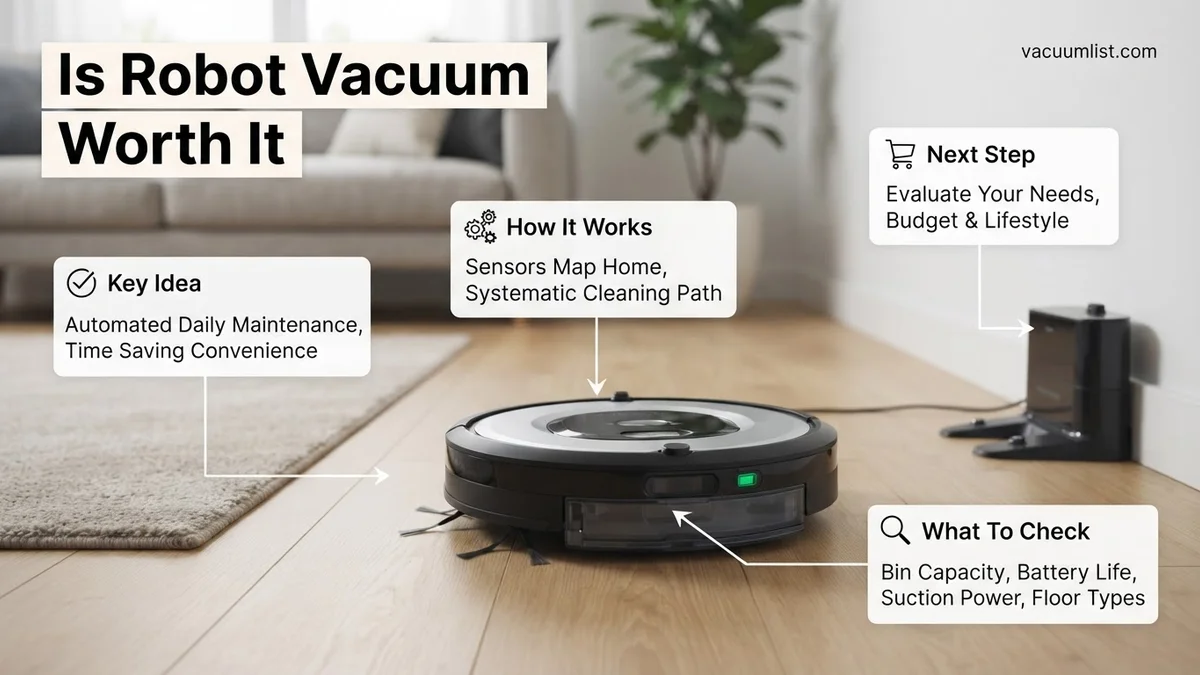
Robot vacuums are not magic machines, but they are highly effective maintenance tools that save significant time on daily floor upkeep. Whether they are worth the investment depends heavily on your home’s layout, flooring type, and tolerance for pre-cleaning floors before every run.
Yes, robot vacuums are genuinely worth it in 2026, but only if you buy the right model for your specific home layout. They will not replace your annual deep clean or handle catastrophic messes, but they permanently eliminate the chore of daily maintenance sweeping. If you hate coming home to pet hair tumbleweeds and crumbs underfoot, a modern autonomous vac buys back three to five hours of your week.
The core value of these machines isn’t hyper-powerful suction; it is consistency. By running a quiet cleaning cycle every single day while you are at work, they stop dust and debris from accumulating. This guide cuts through the marketing hype to help you decide if your floors, budget, and lifestyle actually justify the investment.
Key Takeaways
- Robot vacuums excel at daily maintenance cleaning rather than heavy-duty deep cleaning tasks.
- Expect to regularly untangle hair and empty dustbins to keep the machine running smoothly.
- Open floor plans and hardwood surfaces yield the best cleaning results and navigation reliability.
- Homes cluttered with cables, socks, and toys will cause frequent robot vacuum error stops.
- Pet owners benefit the most, provided they invest in models designed to handle pet hair.
Diagnosing the Cleaning Problem: Why Traditional Sweeping Fails Busy Schedules
The Daily Dust Cycle
You probably sweep or pull out the upright vacuum once a week. In between those sessions, invisible dust, skin cells, outdoor pollen, and pet dander silently pile up on your floors. By day three, your clean floors already feel gritty. Traditional cleaning relies on bursts of intense manual labor, which usually means you live with dirty floors for six out of seven days.
The Friction of Manual Cleaning
Dragging out a heavy corded machine or even a cordless stick vacuum requires physical effort and conscious decision-making. When life gets busy, cleaning gets pushed to the weekend. Robot vacuums remove the friction of the chore entirely. They operate on a schedule, trapping surface-level debris before it gets ground into carpet fibers or pushed into hardwood floor crevices.
- Captures daily foot traffic dirt before it spreads to furniture
- Reduces airborne allergens by maintaining constant surface cleanliness
- Eliminates the mental fatigue of remembering when you last swept
How to Evaluate Your Home: A Step-by-Step Guide to Floor Layouts and Suitability
Hardwood Versus Carpet Performance
Your flooring type dictates whether a robot vacuum will feel like a miracle or a mild annoyance. On hard floors like tile, LVP, and hardwood, almost any modern 2026 model excels at sweeping up daily dust and pet hair. Carpets require more caution. Low-pile rugs are easy for robots to navigate, but thick, high-pile carpets often trap bot wheels, drain batteries quickly, and require heavy brush-roll agitation that budget models simply lack.
Layout Complexity and Thresholds
Take a hard look at your floor plan before buying. Open-concept living spaces are an absolute dream for autonomous vacuums. However, heavily cluttered rooms with loose cables, scattered toys, and dining chairs with tricky furniture legs will cause navigation failures. You also need to measure your furniture clearance and check your door thresholds. If your transitions are higher than three-quarters of an inch, your robot might get permanently stuck in the kitchen.
- Inspect your floors for chronic cord clutter and low-hanging chair bases
- Check vertical clearance under couches and media consoles
- Evaluate transition strips between different flooring materials
How to Choose the Right Model: Weighing Cost, Suction Power, and Maintenance Needs
Choosing the correct autonomous floor cleaner in 2026 requires balancing upfront investment against daily convenience. Consumer research from top testing laboratories indicates that entry-level models under $250 often lack advanced mapping capabilities. These budget units navigate randomly, which frequently results in missed spots and repeated docking failures.
Assessing Suction Power and Battery Specs
Modern homes with dense carpeting demand higher performance specifications. Look for models boasting at least 4,000 to 8,000 Pa of suction power to effectively extract embedded dust and pet dander from high-pile fibers. Battery capacity is equally critical; lithium-ion packs offering 150 to 180 minutes of runtime ensure the device can clean a 2,000-square-foot home on a single charge.
Calculating Long-Term Maintenance Costs
Upfront pricing tells only half the story. Industry data shows that recurring expenses—such as HEPA filters, side brushes, and specialized cleaning solutions—average $60 to $120 annually. Furthermore, advanced self-emptying docks require proprietary dust bags, adding another layer of ongoing operational expenditure that must be factored into your purchasing decision.
What If Your Robot Vacuum Gets Stuck Constantly? Troubleshooting Floor Obstacles
Even the most sophisticated navigation systems struggle with specific household environments. If your device frequently reports errors or requires manual rescue, targeted adjustments to your floor plan and hardware settings can drastically improve autonomy.
Mapping and Obstacle Avoidance Adjustments
Modern AI-driven cameras and LiDAR sensors rely on clear pathways to generate accurate digital floor maps. To minimize entrapment events, follow this diagnostic process:
- Clear all low-hanging electrical cords, charging cables, and loose rug tassels off the floor before initiating a cleaning cycle.
- Access the companion smartphone application and draw explicit “No-Go Zones” around notoriously problematic areas, such as chair bases with deep grooves or unstable threshold transitions.
- Update the device’s firmware to the latest 2026 release, which typically includes patch notes for enhanced obstacle recognition algorithms.
- Inspect and clean the cliff sensors and front-facing camera lenses with a dry microfiber cloth to prevent false drop-off warnings.
- Run a manual mapping run in bright lighting conditions so the optical sensors can accurately register permanent furniture layouts.
What If It Still Doesn’t Work?
If hardware reboots, factory resets, and sensor cleanings fail to resolve persistent navigation errors or motor failures, deeper intervention is required. Consider these fallback steps:
- Contact the manufacturer’s technical support line to initiate a remote diagnostic session via your paired application account.
- Verify the status of your limited hardware warranty; most major brands provide a one-year baseline covering mechanical and electrical defects.
- Take the unit to an authorized service center if wheel encoders or internal drive belts have suffered physical wear and tear.
- Evaluate repair estimates against current replacement costs; if professional out-of-warranty labor exceeds $150, investing in a new 2026 model is often more financially prudent.
Conclusion
Determining whether a robot vacuum is worth the investment depends heavily on your household layout, flooring types, and tolerance for routine maintenance. While premium models eliminate manual sweeping entirely, they require thoughtful environment preparation and ongoing filter replacements to perform optimally. According to verified research and expert consumer testing sources, modern units save the average household over 100 hours of cleaning time annually. Your actionable next step is to evaluate your specific room layouts against current 2026 pricing tiers to select a model that aligns with your lifestyle.
❓ Frequently Asked Questions
Are robot vacuums worth the money for pet owners?
Robot vacuums are exceptionally useful for pet owners because they tackle daily shedding and dander continuously. However, you must choose a model with a rubber brush roll to prevent hair from wrapping tightly around the roller.
Why do robot vacuums get stuck so often?
Robot vacuums frequently get stuck on loose items like phone charging cables, shoelaces, thick rug tassels, and low-clearance furniture. Preparing your floor by clearing small objects drastically reduces these navigation errors.
How long do robot vacuums typically last?
A standard robot vacuum lasts between 4 to 6 years with proper maintenance. Batteries and brush rolls will eventually degrade and require replacement during this lifespan.
Do I need a model with a self-emptying base?
Self-emptying docks eliminate the most tedious part of robot vacuum ownership, making them worth the extra upfront cost. If you dislike maintenance tasks, a self-emptying model is strongly recommended.
Can robot vacuums handle homes with multiple floors?
Most modern robot vacuums can save multiple floor maps, but you must manually carry the unit between levels. They cannot climb stairs on their own.
Do robot vacuums really mop well, or is it just a gimmick?
Basic dragging-pad models only wipe light dust, but high-end units with vibrating scrubbers or rotating pads clean dried spills surprisingly well. They remain a supplement to, rather than a full replacement for, manual mopping.