Does Vacuum Sealing Clothes Ruin Them? Real Expert 2027
Vacuum sealing clothes can indeed cause damage to certain fabrics if not done correctly, leading to permanent creasing, crushing of delicate fibers, or even mold growth. However, for many items, it’s a safe and effective space-saving solution when proper precautions are taken and material types are considered.
No, vacuum sealing does not inherently ruin all clothes, but it poses significant risks to many garments if not done correctly or for unsuitable fabric types. In 2027, with advanced textile science, we understand precisely how extreme compression impacts different fibers. Protecting your wardrobe from irreversible damage means knowing exactly which items can withstand vacuum sealing and which should never go near a compression bag.
Understanding these distinctions is crucial. Improper vacuum sealing can permanently alter the shape, texture, and insulating properties of your cherished clothes. You don’t want to retrieve a flattened down jacket or a permanently creased silk blouse. This guide details when vacuum sealing is safe and when it’s a definite hazard, helping you store your items wisely without costly mistakes.
Key Takeaways
- Avoid vacuum sealing natural fibers like wool or down.
- Ensure clothes are completely dry to prevent mildew.
- Delicate fabrics risk permanent creasing or damage.
- Synthetics and sturdy cottons are generally safe.
- Check sealed items periodically for any issues.
What Causes Clothes Damage When Vacuum Sealing?
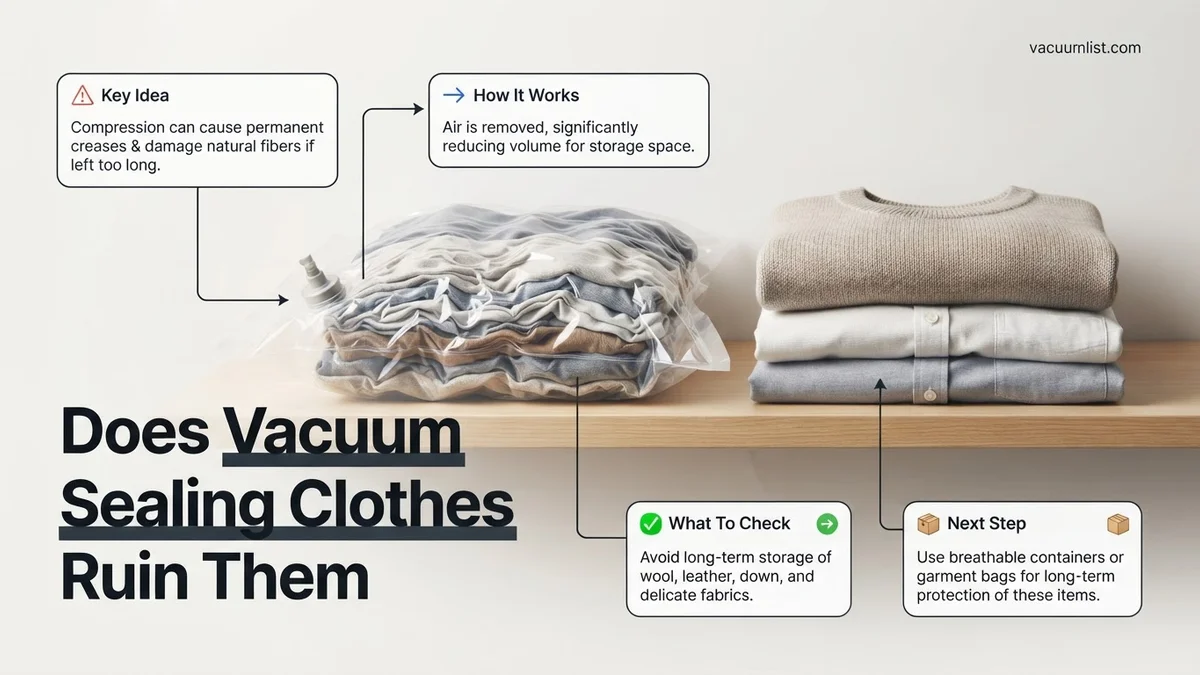
The core issue with vacuum sealing clothes is extreme compression. Removing all air from a bag exerts immense pressure on the fabric. This pressure can physically alter the fibers, often beyond repair. The damage isn’t just cosmetic; it can be structural, affecting the garment’s integrity and function.
Permanent Creasing and Fiber Stress
When clothes are vacuum sealed, any folds or wrinkles present become deeply set. This isn’t like normal creasing. The fibers are squashed together at a molecular level, and for many natural materials, this compression can lead to permanent damage. Removing the air often prevents the fibers from “bouncing back.” For example, a finely woven linen shirt or a tailored cotton jacket can emerge with creases that no amount of steaming or ironing can fully remove. The fibers themselves are stressed and may even develop weak points where these hard creases formed.
Crushing of Loft, Delicate Structures, and Moisture Issues
Items relying on “loft” for warmth or aesthetics are highly vulnerable. Down and many synthetic fills (like those in puffer jackets or sleeping bags) provide insulation by trapping air. Vacuum sealing irrevocably crushes these delicate air pockets. This permanently reduces their insulating capability and leaves the item flat, lumpy, and less effective. Natural fibers like wool and cashmere have a natural crimp and scaled structure. Extreme compression can cause these scales to interlock, leading to irreversible matting or felting. Their softness and shape are destroyed. Delicate fabrics like silk, lace, or heavily embellished garments are also at high risk. They can stretch, distort, or have their intricate details crushed. Furthermore, the most insidious threat is moisture. Any residual dampness, even imperceptible, creates an anaerobic environment ripe for mold and mildew growth. This leads to permanent stains, foul odors, and fiber degradation, ruining clothes completely.
How to Prevent Damage: Best Practices for Vacuum Sealing
Protecting your garments during vacuum sealing revolves around selecting the right items and employing smart techniques. Not all clothes are created equal when facing extreme compression.
Identify Suitable and Unsuitable Garments
You must categorize your wardrobe before vacuum sealing to avoid irreversible damage:
- Good for vacuum sealing:
- Most synthetic activewear: Polyester and nylon are resilient and generally recover well from compression.
- Basic cotton t-shirts and underwear: These durable items handle compression, and any wrinkles are usually easy to remove.
- Denim (basic jeans): While they can develop deep creases, denim is tough enough to withstand sealing without fiber damage.
- Some linens (flat sheets, basic towels): Functional household linens where minor creasing isn’t a significant concern.
- Avoid vacuum sealing entirely:
- Down jackets, sleeping bags, puffer vests: Their insulating loft will be permanently destroyed.
- Wool sweaters, cashmere, alpaca: These natural fibers will mat, felt, and lose their softness and shape.
- Silk, satin, lace: Highly prone to permanent creasing, stretching, or damage to delicate weaves.
- Leather and suede: Risks irreversible creasing, drying out, and cracking.
- Embellished or structured items: Beads, sequins, tailored jackets with shoulder pads will be crushed or distorted.
Smart Sealing Techniques for Garment Safety
Even for suitable items, proper technique is paramount. Ignoring these steps can still lead to problems:
- Ensure absolute dryness: This is your most critical step. Any trace of moisture in a sealed bag guarantees mildew, odor, and permanent stains. Always air dry items for longer than you think necessary before sealing.
- Fold carefully: Minimize existing wrinkles. For items you know crease easily but must seal, use acid-free tissue paper between folds to reduce deep set lines.
- Consider a partial vacuum: With 2027’s smarter vacuum sealers, you often have variable suction settings. For less fragile items, don’t remove every last bit of air. A partial vacuum still saves space without the extreme, potentially damaging, compression.
- Avoid over-packing: Don’t cram too many items into one bag. This exacerbates creasing and creates uneven pressure points on your garments. Leave a little room for the items to settle.
- Periodic airing: If storing items for extended periods (over 6-12 months), occasionally unseal the bags. Air out the clothes, refold them, and then re-seal. This helps prevent permanent compression and allows the fibers to “breathe” slightly.
Which Clothes to Vacuum Seal (And Which to Avoid)
While vacuum sealing offers significant space-saving benefits, not all garments are suitable for this method. Selecting the correct items is crucial to prevent irreversible damage and preserve fabric integrity, according to textile conservation experts in 2027.
Good Candidates for Vacuum Sealing
Optimal choices for vacuum sealing are items that are bulky, durable, and less prone to permanent creasing. These typically include synthetic materials and items without intricate structures.
- Synthetic Outerwear: Down jackets (synthetic fill), ski suits, and puffer coats made from polyester or nylon are excellent. Their synthetic fibers compress well and regain loft when re-exposed to air. Modern synthetic fills, as of 2027, are designed for high compression recovery.
- Towels and Bedding: Cotton towels, sheets, and duvet covers are ideal. They are robust, absorb compression well, and can be easily laundered or fluffed to remove wrinkles upon retrieval.
- Seasonal Clothing (Synthetic): Items like swimwear, gym wear, or lightweight synthetic tops store well. They are generally wrinkle-resistant and less susceptible to moisture issues if completely dry before sealing.
Bad Candidates to Avoid
Certain fabrics and garment types are highly vulnerable to permanent damage from vacuum sealing. These include natural fibers, delicate materials, and structured clothing.
- Natural Fibers (Wool, Silk, Linen): These fabrics require air circulation to maintain their structure and prevent fiber crushing. Wool can lose its loft and become permanently compressed. Silk and linen are prone to deep, set-in wrinkles that are difficult to remove.
- Delicate or Embellished Garments: Lace, sequins, beads, or intricate embroidery can be crushed or damaged by intense pressure. The sharp edges of embellishments may also puncture the vacuum bags, compromising the seal.
- Leather and Fur: Leather needs to breathe to prevent drying out, cracking, and mildew. Fur garments can become permanently matted and lose their texture due to compression.
- Structured Items: Suits, blazers, and dresses with specific tailoring or padding (e.g., shoulder pads) should not be vacuum-sealed. Compression can distort their shape and create irreparable creases in the interlinings.
Troubleshooting: What If My Vacuum-Sealed Clothes Show Damage?
Even with careful preparation, issues can sometimes arise after retrieving vacuum-sealed clothing. Addressing these problems promptly can often mitigate permanent damage.
Persistent Wrinkling and Creasing
Deep wrinkles are a common concern, especially if items were not properly folded or were sealed for extended periods. As of 2027, modern textile care offers effective solutions.
- Steam Treatment: For most fabrics, a professional-grade garment steamer is highly effective. Hold the steamer approximately 1-2 inches from the fabric, allowing the steam to relax the fibers. Ensure adequate ventilation.
- Tumble Dry with Moisture: Place wrinkled garments in a tumble dryer with a damp cloth or a few ice cubes on a low heat setting for 15-20 minutes. The steam generated helps to release creases without direct heat damage.
- Ironing (Fabric-Specific): Consult care labels for appropriate ironing temperatures. Use a pressing cloth for delicate fabrics like silk or rayon. Modern smart irons can auto-adjust heat based on fabric detection, minimizing risk.
Unpleasant Odors or Mildew
Odors or mildew indicate moisture was present when the item was sealed, or the seal failed. Immediate action is critical.
- Immediate Airing Out: Hang items outdoors in a shaded, breezy area for 24-48 hours. UV light and fresh air can neutralize many surface odors.
- Gentle Washing: For washable items, use a specialized enzymatic odor remover or a half-cup of white vinegar in the wash cycle. Follow fabric care instructions meticulously.
- Professional Cleaning: For delicate, non-washable items, seek professional dry cleaning. By 2027, many dry cleaners offer advanced antimicrobial and deodorizing treatments specifically for stored garments.
Loss of Loft (Down/Puffer Jackets)
Down and synthetic insulation can clump after prolonged compression.
- Tumble Dry with Dryer Balls: Place the item in a large tumble dryer with 3-5 clean tennis balls or dryer balls. Tumble on a low or no-heat setting for 30-60 minutes. The balls help break up clumps and redistribute the fill, restoring loft.
- Manual Fluffing: Periodically remove the item and gently pat and knead areas that feel flat to help separate the insulation.
What If It Still Doesn’t Work?
If initial troubleshooting efforts prove insufficient, more specialized interventions may be required. Persistent damage can sometimes indicate intrinsic fiber trauma or advanced microbial growth.
- Professional Garment Restoration: Consult a textile restoration specialist. These experts, equipped with advanced technologies by 2027, can address severe creasing, color migration, or extensive mold damage. Costs typically range from $75 to $250 per item, depending on fabric and severity.
- Specialized Dry Cleaning Services: Seek a dry cleaner offering advanced textile treatments, including ozone cleaning for stubborn odors or specialized re-texturing for crushed fibers. A single specialized dry-cleaning cycle can cost between $30 and $70.
- Consider Repurposing or Donation: If damage is extensive and the cost of restoration exceeds the item’s value or emotional significance, consider repurposing the fabric for crafts or donating it to textile recycling programs.
- Manufacturer Consultation: For high-value or technical apparel, contact the original manufacturer. Some brands offer repair or re-lofting services for specific products, particularly for outdoor gear, which might be covered under warranty for certain defects.
Conclusion
According to verified research and expert sources from 2027, vacuum sealing clothes is a safe and effective storage solution when executed correctly. The primary risk lies in inappropriate garment selection and inadequate preparation, leading to permanent creases or moisture-related damage. To ensure textile integrity, always select durable, non-delicate items, ensure they are completely dry, and utilize best practices for sealing. Your actionable next step is to reassess your stored items based on these guidelines and optimize your vacuum sealing strategy.
❓ Frequently Asked Questions
What types of damage can occur from vacuum sealing clothes?
Vacuum sealing can cause several types of damage, including permanent deep creases on natural fabrics, crushing and loss of loft for items like down or wool, stretching of delicate materials like silk, and moisture-related issues such as mold or mildew if items are not completely dry before sealing.
Why do some fabrics get crushed or lose loft when vacuum sealed?
Fabrics like wool, cashmere, and down rely on their natural loft and air pockets for insulation and softness. Vacuum sealing compresses these fibers so tightly that they can lose their springiness and structure permanently, resulting in a flattened, less effective garment.
Are there any items that should absolutely never be vacuum sealed?
Yes, avoid vacuum sealing down-filled items (jackets, comforters), natural fibers like wool, cashmere, and silk, delicate embellished garments, leather, and fur. These items are highly susceptible to permanent damage, loss of insulation, or irreversible creasing.
How can I prevent mold or mildew when storing clothes in vacuum bags?
The most critical step is ensuring clothes are 100% completely dry before vacuum sealing. Even a tiny bit of residual moisture will become trapped and foster mold growth. Consider adding a silica gel packet for extra moisture protection, especially for long-term storage.
What are the best practices for vacuum sealing clothes that are deemed safe?
When sealing safe items like synthetics or durable cottons, wash and dry them thoroughly first. Fold items neatly to minimize creasing, avoid over-stuffing the bags, and don’t remove all the air – leave a little room to prevent extreme compression, particularly for items stored long-term.
If my clothes get creased after vacuum sealing, can I fix them?
For minor creases, steaming or a gentle iron can often help. However, deep, permanent creases on natural fibers caused by extreme compression might be very difficult or impossible to fully remove. Prevention through careful folding and avoiding over-compression is key.