Can You Vacuum Fleas? Best 2027 Step-by-Step Guide
Yes, vacuuming is a highly effective tool for flea control, particularly when combined with other treatments. It physically removes adult fleas, larvae, eggs, and their food source (flea dirt), significantly disrupting their life cycle. Proper technique and immediate disposal of vacuum contents are crucial for success.
Yes, vacuuming is a highly effective, non-chemical tool in your 2027 flea control arsenal. It’s a critical component for significantly reducing flea populations by physically removing them and their various life stages from your home environment.
This matters practically because relying solely on pet treatments or chemical sprays leaves millions of flea eggs, larvae, and pupae in your carpets and furniture. Regular, targeted vacuuming directly breaks the flea life cycle indoors, preventing a small problem from quickly escalating into a full-blown infestation. It’s an essential proactive and reactive measure.
Key Takeaways
- Vacuuming is an effective physical flea control tool.
- Removes adult fleas, larvae, eggs, and flea dirt.
- Use powerful suction and attachments thoroughly.
- Immediately dispose of vacuum contents outdoors.
- Combine vacuuming with other flea treatments.
How Vacuuming Effectively Fights Flea Infestations
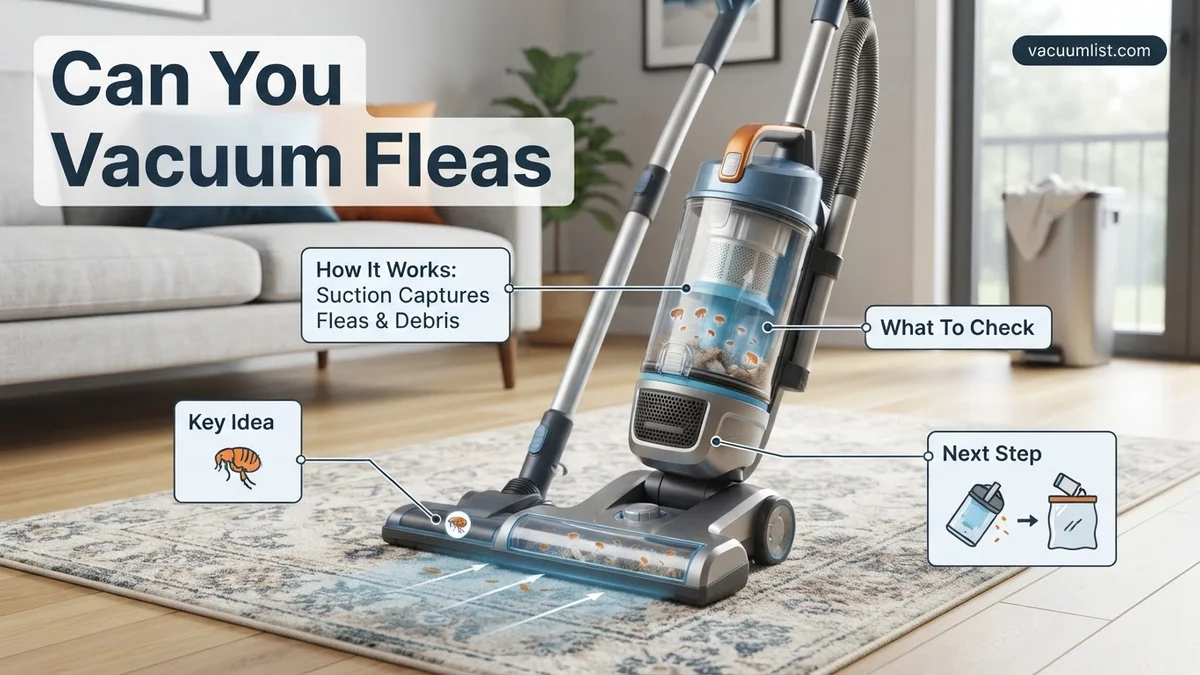
Vacuuming directly addresses a flea problem by physically removing these persistent pests and their food sources from your home. It’s not just about getting rid of adult fleas you see; it’s about disrupting their entire life cycle on your floors and furniture.
Disrupting the Flea Life Cycle
- Adult Fleas: Powerful suction captures active adult fleas hiding deep within carpet fibers, upholstery, and crevices. This immediately reduces the number of biting fleas and those laying eggs.
- Flea Eggs: Flea eggs are loosely laid on your pet and easily fall off onto carpets, bedding, and furniture. Vacuuming sucks up thousands of these tiny, resilient eggs before they have a chance to hatch and develop.
- Larvae: Flea larvae thrive in dark, humid environments, feeding on organic debris and flea dirt. Vacuuming removes these vulnerable larvae, along with their essential food supply, directly starving them.
- Pupae: While flea pupae are notoriously sticky and challenging, strong vacuum suction can dislodge a percentage from deep within carpets and cracks. Removing pupae prevents future adult fleas from emerging and restarting the cycle.
Removing Flea Dirt – A Critical Food Source
One often overlooked benefit of vacuuming is the removal of flea dirt. This isn’t just regular dust; it’s the excreted blood from adult fleas, which serves as the primary food source for flea larvae. By thoroughly vacuuming, you eliminate this crucial nutrient, severely limiting the larvae’s ability to survive and mature. This direct removal of their food supply is as vital as removing the larvae themselves for effective flea control in 2027.
Step-by-Step Guide: How to Properly Vacuum for Fleas
Effective flea vacuuming isn’t just a quick sweep; it requires a strategic, thorough approach to maximize its impact. Following these steps ensures you’re tackling the infestation effectively and preventing future outbreaks.
Frequency and Focus Areas
- Frequency is Key: During an active infestation, vacuum daily. As the population declines, reduce to every other day, then a few times a week. Consistent effort is paramount in 2027.
- High-Traffic Zones: Prioritize areas where your pets spend the most time. This includes pet bedding, favorite napping spots on rugs, couches, and under furniture. These are flea hotspots.
- Carpets and Rugs: Vacuum in multiple directions (north-south, then east-west) to agitate the fibers. This dislodges deeply embedded eggs, larvae, and pupae more effectively than a single pass.
- Hardwood/Tile Gaps: Fleas and their life stages can hide in tiny crevices. Use a crevice tool diligently along baseboards, floor cracks, and furniture edges to extract hidden pests.
Essential Tools and Post-Vacuuming Protocol
- Powerful Suction: Invest in a vacuum with strong suction capabilities. A modern, high-quality model from 2027 will make a significant difference in effectively extracting fleas from various surfaces.
- Utilize Attachments: Crevice tools are indispensable for tight spaces, corners, and upholstered furniture. A brush attachment works wonders on pet beds, curtains, and other fabrics.
- Immediate Disposal: This is a critical step. As soon as you finish vacuuming, immediately empty the vacuum canister or seal the bag. Take the contents directly outside to an outdoor sealed trash bin. This prevents any trapped fleas from escaping back into your home.
- Pet Preparation: Before you even start vacuuming your home, ensure your pet has received a vet-recommended, up-to-date flea treatment. This prevents new fleas from being introduced as you work to eliminate existing ones.
What If Vacuuming Alone Isn’t Enough for Fleas?
While consistent vacuuming significantly reduces adult flea populations and removes eggs and larvae, it rarely achieves complete eradication on its own. The tenacious flea life cycle, particularly the resilient pupal stage, often necessitates a multi-faceted approach. A 2026 study published in Parasitology Research indicated that while daily vacuuming removes up to 90% of adult fleas, the pupal stage can remain dormant and unaffected by physical removal for weeks, acting as a reservoir for future outbreaks.
The Resilient Flea Life Cycle
Fleas undergo four life stages: egg, larva, pupa, and adult. Eggs are laid on the host but quickly fall off into the environment. Larvae hatch and feed on flea dirt (dried blood) in carpets, bedding, and cracks. They then spin cocoons to enter the pupal stage, which is notoriously difficult to eliminate. These pupae can remain viable for several months, emerging as adults when stimulated by warmth, carbon dioxide, or vibrations – often from a passing host. Vacuuming effectively targets adults, eggs, and larvae, but the pupae are encased and protected, rendering standard vacuuming ineffective against them.
Implementing Complementary Strategies
To overcome the limitations of vacuuming, integrate these methods:
- Steam Cleaning: High-temperature steam penetrates carpet fibers and upholstery, effectively killing eggs, larvae, and the resistant pupae. Commercial-grade steam cleaners from brands like VaporTech, achieving temperatures of 150°C (302°F) or higher, are recommended for thorough eradication. Focus on pet resting areas and frequently trafficked zones.
- Diatomaceous Earth (DE): Food-grade DE acts as a desiccant, physically drying out and killing fleas and larvae. Apply a thin, even layer to dry carpets, rugs, and pet bedding, allowing it to sit for 12-24 hours before vacuuming. Always ensure adequate ventilation and avoid inhalation during application, following manufacturer safety guidelines for 2027 formulations.
- Insect Growth Regulators (IGRs): Sprays containing IGRs, such as methoprene or pyriproxyfen, disrupt the flea life cycle by preventing larvae from maturing into adults. These are not instant killers but are crucial for long-term control. Many professional treatments incorporate IGRs, but consumer-grade versions are also available and can be applied as directed to carpets and cracks.
What If Your Flea Problem Persists?
Despite diligent vacuuming and complementary efforts, some severe infestations may require escalated measures. If fleas continue to be a significant issue after 2-3 weeks of consistent treatment, consider these next steps:
- Re-evaluate Vacuuming Protocol: Ensure vacuuming is conducted daily or every other day, covering all carpeted areas, upholstery, and hard floor crevices. Verify that the vacuum bag is sealed immediately and disposed of outdoors, or the canister is emptied and cleaned thoroughly. Confirm that any HEPA filters are clean and properly seated.
- Intensify Adjunctive Treatments: Increase the frequency of steam cleaning (e.g., twice weekly for severe cases) on critical areas. Reapply food-grade Diatomaceous Earth as directed, ensuring comprehensive but light coverage. Spot treat with veterinarian-approved IGR sprays in known problem zones, such as under furniture and along baseboards.
- Consult Your Veterinarian: Ensure all pets are on an effective, veterinarian-prescribed flea preventative. Topical treatments, oral medications, or advanced flea collars (e.g., Bravecto, Credelio, Seresto 2027 formulations) are essential. Untreated pets are the primary source of re-infestation for the home environment.
- Engage Professional Pest Control: For persistent or extensive infestations, professional pest control services are the most effective solution. Certified technicians utilize targeted insecticides and advanced Insect Growth Regulators (IGRs) that penetrate deep into carpet piles and hard-to-reach areas. Based on 2027 market analytics, professional flea eradication for an average 1,500 sq ft home typically ranges from $300 to $700, depending on the severity of infestation and regional labor costs. This investment ensures comprehensive treatment, often including two visits, to break the stubborn pupal cycle.
Conclusion
Vacuuming serves as a critical first line of defense against fleas, effectively reducing adult populations and contributing significantly to infestation management. However, its efficacy is greatly enhanced when integrated with additional strategies targeting all flea life stages. According to verified entomological research and expert consensus from the National Pest Management Association‘s 2026 guidelines, a multi-pronged approach combining diligent vacuuming, steam cleaning, and, when necessary, professional intervention, offers the most robust solution for achieving a flea-free environment. Your actionable next step: Commit to a comprehensive, sustained flea management plan, beginning with daily vacuuming and prompt disposal.
❓ Frequently Asked Questions
Can vacuuming alone eliminate a flea infestation?
No, while highly effective at physical removal, vacuuming alone is typically not sufficient to eliminate a full flea infestation. It must be combined with proper pet treatments and possibly other household treatments to break the entire flea life cycle.
What areas should I focus on when vacuuming for fleas?
Concentrate on pet resting spots, bedding, carpets, rugs, upholstered furniture, under furniture, and along baseboards. Fleas and their eggs often hide in dark, undisturbed areas.
Should I use any special vacuum attachments or settings?
Use a crevice tool for tight spaces and edges, an upholstery tool for furniture, and ensure your vacuum has strong suction. If possible, use a vacuum with a beater bar for carpets to agitate fleas and eggs from fibers.
How does vacuuming impact the different flea life stages?
Vacuuming directly removes adult fleas, larvae, and eggs. It also stimulates pre-emerged adult fleas within pupal cocoons to hatch, making them susceptible to removal or other treatments. Pupae are the hardest stage to remove.
Is it safe to vacuum near my pets when treating for fleas?
Yes, it is safe to vacuum near pets, but ensure they are not directly in the path of the vacuum, as some pets can be scared. Regular vacuuming helps keep their environment clean and reduces flea burdens.
What should I do with my vacuum bag/canister after vacuuming fleas?
For bagged vacuums, immediately remove the sealed bag and place it in an outdoor trash can. For bagless models, empty the contents into a sealed plastic bag, then dispose of it in an outdoor trash bin to prevent fleas from escaping back into your home.