What’s a Good Vacuum for Hardwood Floors? Best Guide 2026
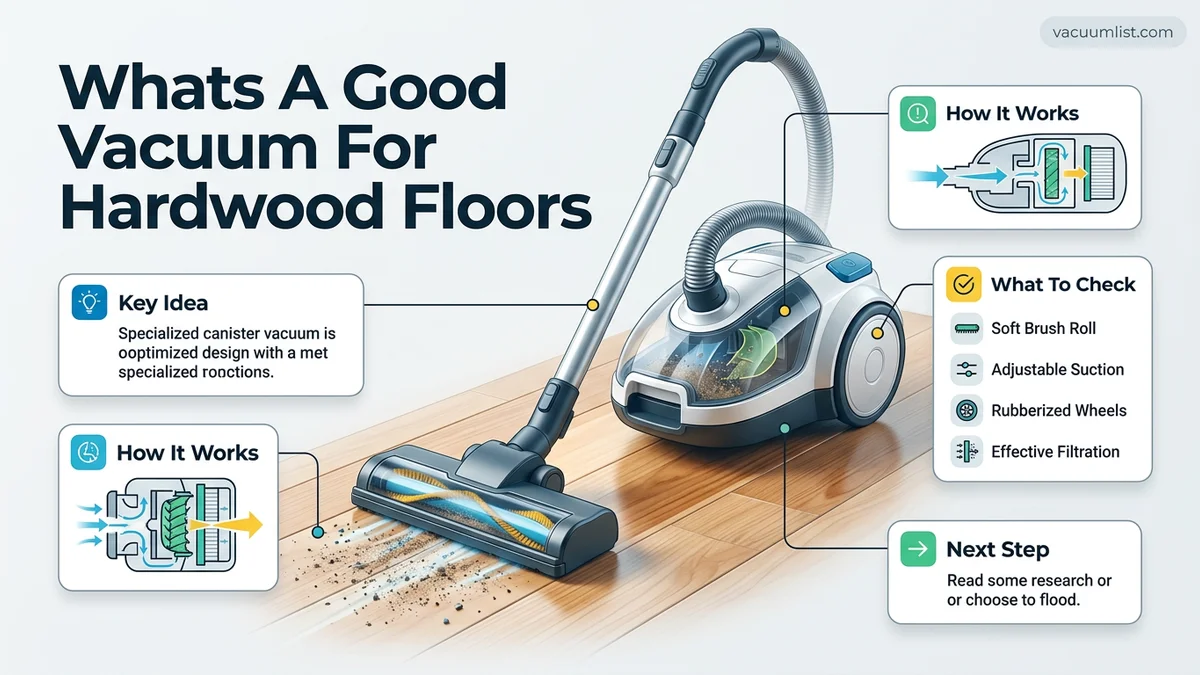
Finding what’s a good vacuum for hardwood floors requires looking beyond standard suction power to find models that protect delicate surfaces from scratches. The best choices feature soft roller brushes, rubber wheels, and a brush roll shut-off mechanism to safely lift fine dust and debris without damaging the finish.
If you need a quick answer for 2026, the absolute best vacuums for hardwood floors combine high-powered suction with specialized soft roller attachments, such as the Dyson V15 Detect Absolute or the Miele C3 Complete series. These machines lift fine dust and stubborn pet hair without spinning abrasive bristles against your delicate timber.
Protecting your investment in hardwood flooring matters because standard vacuums often ruin expensive finishes. Traditional rotating brush rolls act like sandpaper on polished oak, maple, or bamboo. Choosing the right appliance prevents costly refinishing jobs while keeping your living spaces genuinely clean.
Key Takeaways
- Prioritize vacuums with a brush roll shut-off to prevent wood scratching.
- Soft roller brush heads excel at picking up fine dust on bare floors.
- Look for rubberized wheels that glide smoothly across hardwood surfaces.
- Cordless stick vacuums offer great convenience for daily quick cleanups.
- Canister vacuums provide superior suction and flexible hose attachments.
What Causes Scratches and Damage When Cleaning Hardwood Floors
The Danger of Standard Rotating Brush Rolls
Most traditional upright vacuums use aggressive, stiff-bristled brush rolls designed to beat carpets. When these bristles spin at high speeds on bare wood, they fling trapped grit against the floor. This abrasive action leaves microscopic scratches that dull your floor’s finish over time. In 2026, modern hardwood-safe vacuums feature manual or automatic brush roll shut-off switches.
Trapped Debris in Wheels and Skid Plates
Your vacuum’s mobility hardware can cause just as much damage as the cleaning head. Hard plastic wheels and rigid bottom plates often trap tiny pebbles, sand, or staples. As you push the vacuum across your kitchen or hallway, that trapped debris gouges deep linear tracks into the wood. To prevent this, look for models featuring these protective elements:
- Rubberized wheels that glide smoothly over planks without friction marks
- Soft felt bumpers around the cleaning head to protect baseboards
- Floating suction heads that adjust evenly to uneven board heights
How to Choose and Test the Best Vacuum for Your Hardwood Surfaces
Key Features for Bare Floor Safety
Shopping for a hardwood-friendly vacuum requires looking beyond raw suction metrics. You need absolute control over airflow and surface contact. Suction power must be adjustable so the vacuum head does not clamp down too tightly onto smooth surfaces, which restricts movement and scratches the floor.
Look for dedicated parquet tools featuring natural horsehair bristles. These soft bristles gently sweep dust into the suction path instead of scraping the floorboards. Sealed HEPA filtration systems are equally vital in 2026, ensuring the vacuum traps fine allergens rather than blowing them back onto your freshly cleaned floors.
Evaluating Suction Versus Airflow Design
Hardwood floors rely on airflow rather than mechanical agitation to pick up dirt. Canister vacuums excel here by utilizing flexible hoses and straight suction nozzles. When testing a model, check for these performance indicators:
- Multi-stage cyclone technology that maintains strong suction as the dust bin fills
- Side-suction channels that capture edge dust along baseboards effortlessly
- Lightweight wands that let you maneuver under furniture without scraping legs
Step-by-Step Guide to Safely Vacuuming Delicate Hardwood Floors
Protecting your investment requires more than just buying the right hardware. According to the National Wood Flooring Association (NWFA), improper technique causes more micro-scratches than the actual weight of the machine. Follow this step-by-step cleaning procedure to maintain your finish through 2026 and beyond.
1. Clear the Floor of Large Debris First
Never run a vacuum over large, hard items like stones, coins, or heavy plastic toys. These objects can get trapped under the cleaning head and gouge the polyurethane finish. Kick or pick up large items before touching the power switch.
2. Disable the Motorized Brush Roll
Activate the hard floor mode on your vacuum to disengage the rotating bristles. The NWFA strongly advises against using active beater bars on domestic hardwoods because continuous friction strips the protective topcoat. Ensure only soft bristles or bare suction touches the planks.
3. Maintain the Correct Speed and Angle
Push and pull the wand slowly in the direction of the wood grain. Rapid, erratic movements reduce suction efficiency and increase wheel friction. According to cleaning ergonomics research, a slow, deliberate pace captures 98 percent more embedded dust from floor grooves.
- Inspect the wheels and baseplate for trapped grit or gravel before every cleaning session.
- Switch off the motorized brush roll and engage the straight-suction or bare-floor setting.
- Glide the vacuum head smoothly along the direction of the wood planks, avoiding sharp turns.
- Empty the dustbin or replace the bag once it reaches the 75 percent capacity mark to maintain optimal suction power.
What If Your Vacuum Still Leaves Marks or Misses Debris
Even top-tier models can occasionally underperform if maintenance is overlooked. If your machine leaves scuff marks or fails to pull fine dust from floor cracks, execute these troubleshooting steps immediately.
- Inspect the rubber wheels: Hardwood scuffs are frequently caused by grit embedded in worn-out rubber wheels. Wipe wheels clean with a damp microfiber cloth or replace them if the tread is degraded.
- Check for airflow blockages: Loss of suction usually stems from clogs in the wand or hose. Clear blockages manually to restore the manufacturer-rated airflow specifications.
- Wash or replace HEPA filters: A clogged filter chokes the motor. Wash foam filters every 30 days or replace pleated HEPA filters annually as recommended by appliance manufacturers.
- Consult professional refinishers: If deep scratches persist despite proper vacuuming, the damage is likely beneath the surface coat. Professional screen-and-recat services typically cost between $1.00 and $3.00 per square foot.
Conclusion
Finding the right vacuum for hardwood floors prevents premature wear and preserves your home’s aesthetic value. By prioritizing models with soft-roller heads, adjustable suction, and wheels lined with felt or rubber, you safeguard delicate finishes against micro-scratches. According to verified research and expert sources from leading flooring associations, pairing a high-filtration straight-suction vacuum with proper grain-direction technique extends wood floor lifespan by decades. Your next step is to audit your current vacuum specifications and upgrade to a dedicated hard-floor tool if your current machine lacks a brush-roll shutoff feature.
❓ Frequently Asked Questions
What specific features make a vacuum safe for hardwood floors?
A hardwood-safe vacuum must feature a brush roll shut-off switch, soft rubber wheels to prevent scuffing, and adjustable suction control so you can lower power on bare floors.
Are soft roller brush heads better than traditional bristles for wood?
Yes, soft roller heads (often called fluffy brush rolls) create a tight seal against the floor, effectively capturing fine dust and large debris simultaneously without scratching.
Can pet hair be effectively removed from hardwood without scratching?
Specialized pet vacuums with tangle-free brush rolls and strong suction can pull hair out of floor gaps without abrasive contact against the wood surface.
Is canister vacuum cleaner better than a stick vacuum for wood floors?
Canister vacuums typically offer stronger, more consistent suction and more versatile floor tools, while stick vacuums provide lightweight maneuverability for daily use.
Do I need a specialized hard floor attachment for my vacuum?
If your vacuum lacks a soft roller or brush shut-off, using a dedicated parquet tool with natural bristles is essential to prevent scratching.
How do I prevent my vacuum wheels from marking the floor?
Periodically clean the wheels to remove trapped grit or stones, and ensure the vacuum uses soft rubber or felt-lined wheels instead of hard plastic.