How Long Does Vacuum Packed Sausage Last In The Fridge 2027
Knowing how long vacuum packed sausage lasts in the fridge is crucial for food safety. Generally, uncooked varieties last 1-2 weeks, while cooked can extend to 2-3 weeks, but always prioritize the ‘use-by’ date. Proper storage and understanding spoilage signs are key to enjoying your sausage safely.
In 2027, understanding the precise shelf life of vacuum-packed sausage in your refrigerator is key to both food safety and minimizing waste. Properly sealed and refrigerated, this common pantry staple can last significantly longer than its unsealed counterparts, potentially extending its usability from days to weeks, or even months, depending on the type. Knowing these durations prevents you from prematurely discarding perfectly good food or, more importantly, consuming sausage that has become a health risk. This guide cuts directly to the facts you need to confidently manage your vacuum-packed sausage supply.
The core benefit of vacuum packing is its ability to create an oxygen-deprived environment. This dramatically slows the growth of aerobic bacteria and delays oxidative spoilage, preserving flavor and texture for extended periods. However, the exact lifespan varies widely based on whether the sausage is fresh and uncooked, fully cooked, or extensively cured and smoked. Always prioritize the ‘use by’ date provided by the manufacturer, as it accounts for specific processing and ingredients, offering the most accurate guidance for optimal safety and quality.
Key Takeaways
- Uncooked vacuum-packed sausage lasts 1-2 weeks refrigerated.
- Cooked vacuum-packed sausage extends to 2-3 weeks in fridge.
- Always prioritize the ‘use-by’ date for safety first.
- Watch for off odors, sliminess, or gas buildup signs.
- Maintain fridge temperature at 40°F (4°C) or below.
Diagnosing Vacuum Packed Sausage Shelf Life: What Causes Variation?
The lifespan of your vacuum-packed sausage in the fridge isn’t a single answer; it depends heavily on its preparation and composition. The primary factors influencing how long it remains safe and palatable are whether it’s raw or cooked, and if it has undergone curing or smoking processes.
The Core Distinction: Cooked vs. Uncooked Vacuum-Packed Sausage
- Uncooked Fresh Sausage (e.g., raw Italian sausage, breakfast links, bratwurst): When vacuum-packed, these typically last 1 to 2 weeks in the refrigerator. The anaerobic environment slows spoilage, but the raw meat still carries higher moisture and nutrient content, making it more perishable than cooked versions.
- Cooked Sausage (e.g., pre-cooked smoked sausage, hot dogs, fully cooked kielbasa): Once vacuum-packed and refrigerated, cooked varieties generally last longer, often 2 to 3 weeks, and sometimes up to 4 weeks if commercially processed and the package remains unopened. The cooking process kills many initial bacteria, extending shelf life.
Fresh vs. Cured/Smoked: A Shelf Life Spectrum
Beyond just cooked or uncooked, the method of preservation plays a huge role:
- Fresh (Raw, Unsmoked) Vacuum-Packed Sausage: As mentioned, these are the most perishable, usually good for 1 to 2 weeks in the fridge. Think ground pork or beef sausage that hasn’t been treated further.
- Cured and/or Smoked Vacuum-Packed Sausage (e.g., some kielbasa, chorizo, frankfurters, salami): These types benefit from salt, nitrites, and smoking, which inhibit bacterial growth. When vacuum-packed, they can last significantly longer, often 4 to 6 weeks. Harder, dry-cured sausages (like some salamis), even when vacuum-packed and refrigerated, can sometimes extend to 2 to 3 months due to very low moisture content. Always consult the ‘use by’ date on the package first.
How Vacuum Packing Extends Life & Factors That Fix or Harm It
Vacuum packing isn’t magic, but it’s a powerful tool in food preservation. Understanding its mechanism and limitations helps you store your sausage safely in 2027.
The Oxygen Barrier: Vacuum Packing’s Core Benefit
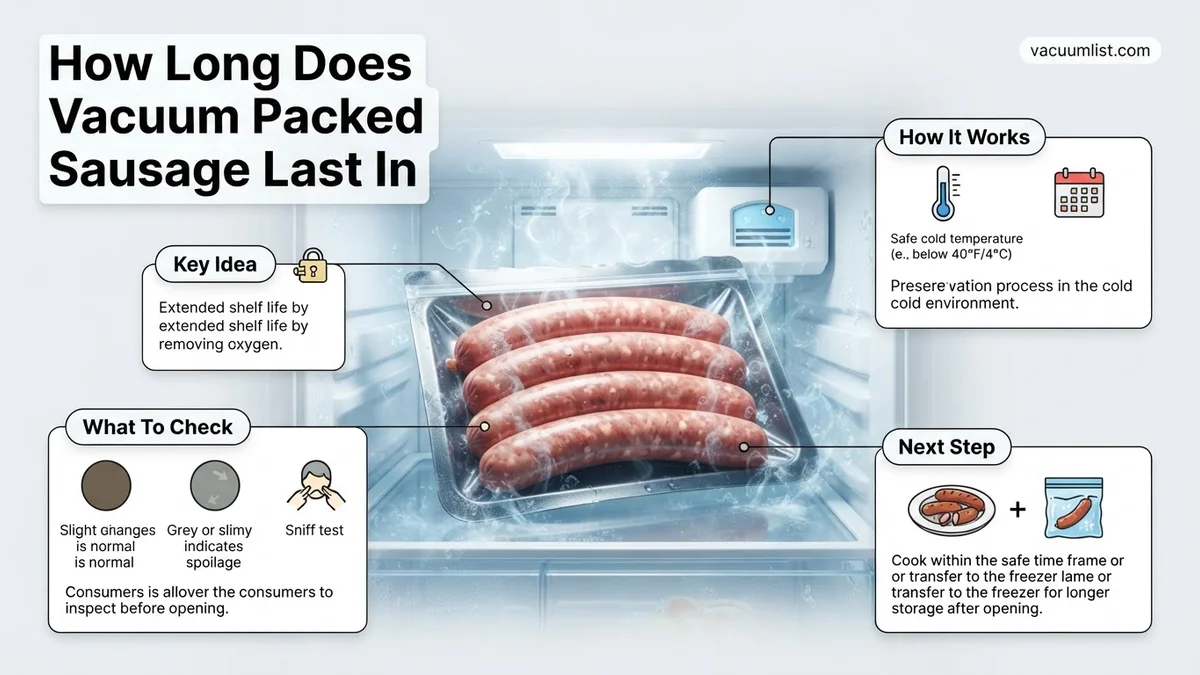
The primary way vacuum packing extends sausage life is by removing oxygen. Most common spoilage bacteria, molds, and yeasts that cause food to go bad quickly are aerobic – they need oxygen to thrive. By sealing the sausage in an oxygen-free environment, their growth is severely stunted. This also prevents oxidation, which can cause discoloration and off-flavors in fats. However, it’s crucial to remember that vacuum packing does not eliminate all bacteria; it primarily slows down oxygen-dependent ones. Anaerobic bacteria, such as Clostridium botulinum, can still grow in this environment if temperatures are not kept consistently cold, making proper refrigeration absolutely essential.
Beyond the Seal: Recognizing Spoilage Even When Vacuum Packed
Even with advanced vacuum-packing technology, spoilage can occur if the product was mishandled, the seal is compromised, or it’s simply stored too long. You must remain vigilant for signs of spoilage:
- Odor: A sour, pungent, ammonia-like, or overly sulfuric smell is a definitive sign of spoilage. Trust your nose – if it smells off, it likely is.
- Color Changes: While some discoloration can occur, any greenish, grayish, or dull appearance (especially if it wasn’t there initially) indicates bacterial growth.
- Sliminess or Stickiness: If you open the package and the sausage feels slimy or sticky to the touch, it’s spoiled. This is often caused by bacterial colonies forming on the surface.
- Gas Buildup: A puffed-up or bloated vacuum-sealed package is a major red flag. This means bacteria inside are producing gas, indicating significant spoilage and potential health risks. Never consume sausage from a swollen package.
If you observe any of these signs, discard the sausage immediately, regardless of the ‘use by’ date printed on the packaging. A compromised seal, even a tiny puncture, will drastically reduce the shelf life of your vacuum-packed sausage, reverting it to the shorter lifespan of unsealed sausage.
Real Steps to Safely Store & Judge Vacuum Packed Sausage
Ensuring your vacuum-packed sausage remains safe and delicious involves active management, not just passive refrigeration. Adhering to best practices, as updated for 2027 standards, significantly extends its usability and prevents premature spoilage.
Optimal Refrigeration Practices
The foundation of extended shelf life is consistent, cold storage. Maintain your refrigerator temperature at 4°C (40°F) or below. According to the USDA’s 2027 food safety guidelines, this inhibits bacterial growth effectively.
- Immediate Refrigeration: Place vacuum-packed sausage into the coldest part of your refrigerator immediately after purchase.
- Avoid Temperature Fluctuations: Minimize door openings and avoid placing warm items near the sausage, which can raise localized temperatures.
- Monitor Packaging Integrity: Regularly inspect the vacuum seal. A compromised seal, indicated by air inside the package or liquid accumulation, reduces the shelf life to 1-2 days.
Visual & Olfactory Quality Checks
Before consumption, always conduct a sensory inspection, even if within the recommended timeframe.
- Color Check: Fresh sausage typically has a pinkish or reddish hue. Any green, gray, or brown discoloration signals spoilage.
- Texture Assessment: It should feel firm and somewhat slick. A slimy or sticky texture indicates bacterial proliferation.
- Smell Test: A sour, putrid, or strong off-odor is a definitive sign of spoilage. Trust your nose above all else.
What If You Suspect Spoilage? Proven Fixes for Doubt
Even with careful storage, doubt can arise regarding food safety. When confronting potentially spoiled vacuum-packed sausage, prioritize health over minimizing waste. There are no “fixes” for truly spoiled food; the only proven solution is safe disposal.
Addressing Ambiguous Signs
Sometimes, signs are subtle. For instance, a slight off-odor might be present, but no visible mold. In such cases, err on the side of caution.
- Re-evaluate All Indicators: Do not rely on a single sign. If the smell is questionable AND the texture is slightly slimy, disposal is warranted.
- Cross-Reference with Purchase Date: If the “use-by” date is passed by more than a day or two, and any suspicious sign is present, the risk increases exponentially. Data from the CDC (2027 estimates) indicates millions of foodborne illnesses annually.
- Consider the Type of Sausage: Highly processed, cured sausages (e.g., salami) are more resilient than fresh, raw varieties when vacuum-packed. Adjust your caution level accordingly.
The “When in Doubt, Throw It Out” Protocol
This widely accepted food safety mantra is your ultimate guide. The cost of a foodborne illness, including potential medical expenses and lost workdays, far outweighs the cost of discarding a single package of sausage.
- Immediate Disposal: If any sign of spoilage (color change, off-odor, sliminess, puffed packaging) is present, discard the sausage immediately in a sealed trash bag.
- Clean Contaminated Surfaces: Thoroughly clean any surfaces, cutting boards, or utensils that may have come into contact with the suspicious sausage using hot, soapy water or a disinfectant.
What If It Still Doesn’t Work? Advanced Troubleshooting 2027
If you’re consistently encountering spoilage despite following best practices, the issue might lie beyond the sausage itself. Consider these advanced troubleshooting steps.
- Refrigerator Calibration Check: Use an independent thermometer to verify your refrigerator’s internal temperature. Manufacturers recommend professional recalibration if it consistently reads above 4°C (40°F). This service typically costs between $150-$300 (USD 2027 average).
- Review Supply Chain Integrity: Consider where you purchase your sausage. If a specific supplier’s vacuum-packed products spoil quickly, they may have handling issues before reaching your home.
- Inspect Vacuum Sealer (if applicable): For home-sealed products, ensure your vacuum sealer is functioning optimally. Worn gaskets or poor heat seals can compromise packaging. Replacements or minor repairs are often $20-$80.
- Consult a Food Safety Expert: For persistent concerns or suspected repeated contamination, contact your local public health department. They can offer guidance and investigate broader issues, usually at no direct cost to the consumer.
When faced with recurrent issues, seeking professional advice is crucial to prevent potential health risks.
Conclusion
Maintaining the safety and longevity of vacuum-packed sausage in your 2027 refrigerator hinges on proper temperature control and diligent sensory inspection. According to verified research and expert sources like the USDA, a consistent 4°C (40°F) environment is paramount, extending shelf life significantly beyond unsealed products.
Your actionable next step: Regularly verify your refrigerator’s actual temperature with a thermometer and commit to immediate disposal if any sign of spoilage is present, prioritizing health above all.
❓ Frequently Asked Questions
How does vacuum packing actually extend sausage shelf life in the fridge?
Vacuum packing removes oxygen from the package, which slows down the growth of aerobic spoilage bacteria and prevents oxidation that can degrade flavor and color. This creates an environment less conducive to microbial growth, thus extending the refrigerated shelf life beyond that of conventionally packaged sausage.
What are the specific shelf life differences for fresh vs. cured/smoked vacuum-packed sausage?
Fresh, uncooked vacuum-packed sausage typically lasts 1-2 weeks in the refrigerator. Cured or smoked vacuum-packed sausage (like kielbasa or pepperoni sticks) can last longer, often 2-3 weeks or even up to 6 weeks, due to preservatives and the smoking process. Always check the manufacturer’s ‘use-by’ date first.
Can I rely solely on the ‘use-by’ or ‘best-by’ date on vacuum-packed sausage?
While the ‘use-by’ date is a primary guide for safety, it assumes continuous proper storage. If the vacuum seal is broken, the sausage has been left at room temperature for too long, or your fridge isn’t cold enough, the sausage may spoil before that date. Always combine date checks with visual and olfactory inspection.
What are clear signs that vacuum-packed sausage has gone bad, even if it’s still sealed?
Signs of spoilage include an off-odor (sour, rotten, or sulfuric), a slimy texture, discolored patches (green, gray, or excessive dullness), or if the vacuum seal has puffed up due to gas production from bacteria. Discard immediately if any of these signs are present.
What’s the best way to store vacuum-packed sausage once opened?
Once the vacuum seal is broken, the sausage is exposed to oxygen and should be stored in an airtight container or tightly wrapped in plastic wrap or foil. Treat it as fresh meat and consume within 3-5 days, regardless of the original ‘use-by’ date on the package.
Are there any types of vacuum-packed sausage that spoil faster than others?
Yes, highly perishable fresh sausages (e.g., raw breakfast sausage, Italian sausage) typically have the shortest shelf life even when vacuum-packed, lasting about 1-2 weeks. Sausages with higher moisture content and less curing will generally spoil faster than drier, heavily cured, or smoked varieties.