Does A Mason Jar Vacuum Sealer Replace Canning Real 2027
A mason jar vacuum sealer does not replace traditional canning methods for creating shelf-stable foods because it lacks the heat sterilization necessary to kill harmful bacteria, including botulism spores. While excellent for extending the freshness of dry goods or refrigerating/freezing items, it is unsafe for preserving low-acid foods at room temperature.
Let’s get straight to the point: no, a mason jar vacuum sealer does not replace traditional water bath or pressure canning for creating shelf-stable food that can safely sit at room temperature. While both methods involve creating a vacuum seal, their fundamental mechanisms for preserving food and ensuring safety are drastically different. Understanding these core distinctions is crucial, especially as we advance into 2027, to prevent serious food safety risks, particularly from dangerous bacteria like Clostridium botulinum.
You might be looking to streamline your food preservation, but confusing these two techniques could lead to disastrous results. This isn’t about convenience; it’s about the very science of keeping food safe from harmful microorganisms for long-term storage outside of refrigeration. Knowing what each method truly accomplishes is essential for safe home food preservation.
Key Takeaways
- Vacuum sealing doesn’t sterilize food.
- Canning uses heat to kill harmful bacteria.
- Never vacuum seal low-acid wet foods for pantry.
- Use vacuum sealers for dry goods/fridge/freezer.
- Botulism is a critical risk without heat processing.
What Causes Confusion: Mason Jar Vacuum Sealing vs. Canning
The Illusion of “Sealing”
The primary source of confusion often stems from the word “sealing” itself. Both traditional canning and mason jar vacuum sealing end with a jar that has a lid firmly sucked down, creating what appears to be a vacuum. This visual similarity, however, masks a profound difference in the process and its safety implications. Traditional canning, whether water bath or pressure canning, achieves its seal as a result of heat processing.
- Traditional Canning: The heat treatment forces air out of the jar. As the jar cools, a vacuum forms, pulling the lid down and creating a physical seal. This seal indicates that the food inside has undergone a critical heat process.
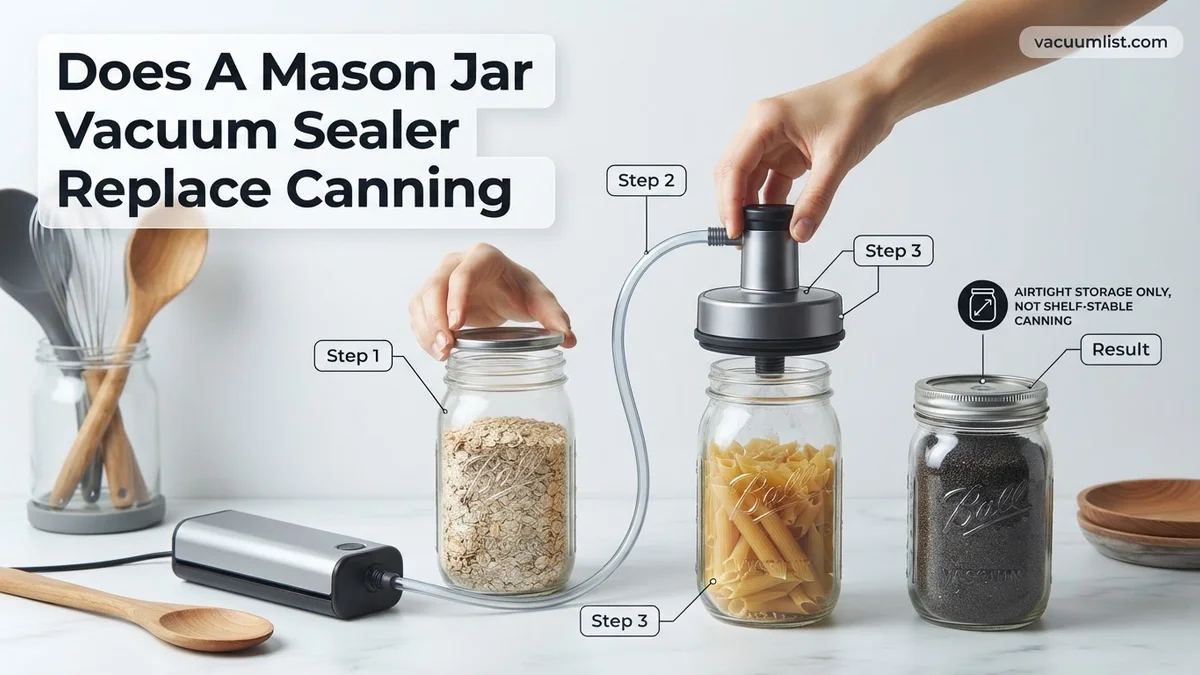
- Vacuum Sealing: A machine physically pumps air out of the jar through a special attachment, then the lid is manually applied. There is no heat sterilization involved in this process. You are simply removing oxygen, not killing harmful microbes.
The vacuum created by a mechanical sealer is not a guarantee of safety or sterility; it’s merely an absence of air.
Misinterpreting “Extended Freshness”
Mason jar vacuum sealers undeniably extend the freshness of certain foods, and this benefit is often conflated with shelf-stability. For dry goods like flour, coffee beans, pasta, or spices, removing oxygen significantly slows down oxidation and prevents insect infestations. For fresh produce stored in the refrigerator, it can reduce spoilage and moisture loss, extending their life by days or even weeks. This is genuinely helpful.
- Appropriate Use: Vacuum sealing is excellent for preserving the quality of dry ingredients, preventing freezer burn on frozen foods, or even for short-term marinating. It can significantly delay enzymatic browning in some cut fruits and vegetables.
- Critical Limitation: “Extended freshness” in this context strictly means delaying spoilage that results from oxygen exposure or dehydration. It does not mean the food becomes shelf-stable at room temperature if it wasn’t already. This is where the core misunderstanding often lies, leading to dangerous practices when applied to perishable items.
The vacuum simply slows down certain types of degradation; it doesn’t eliminate the fundamental risk of microbial growth in perishable foods.
From Start to Finish: Mason Jar Vacuum Sealing vs. Traditional Canning Explained
Welcome to this comprehensive guide designed to demystify the roles of mason jar vacuum sealing and traditional canning in modern food preservation. Many home preservers wonder if one method can simply replace the other, especially with the growing popularity of convenient vacuum sealers. This guide will clarify the fundamental differences, ideal applications, safety considerations, and limitations of each technique, providing you with the knowledge to make informed decisions for your food storage needs. Understanding these distinctions is paramount not only for extending the shelf life of your ingredients but, more critically, for ensuring the safety of your stored food.
Step 1: Understanding the Core Principles of Each Method
What you need: A clear mind and a willingness to understand foundational food science.
Instructions: Begin by grasping that traditional canning and mason jar vacuum sealing are distinct processes serving different preservation goals. Traditional canning, whether water bath or pressure canning, involves applying heat to create a vacuum seal and sterilize food within a jar, making it shelf-stable for long periods at room temperature. Mason jar vacuum sealing, conversely, removes air from a jar to create a vacuum, but it does not apply sterilizing heat. This means vacuum sealing significantly extends the shelf life of many dry goods or refrigerated items, but it does not make perishable foods shelf-stable outside of refrigeration or freezing.
Pro Tip: Always remember: vacuum sealing alone does not kill bacteria, molds, or yeasts. It primarily slows down oxidation and the growth of aerobic (oxygen-loving) microorganisms, but anaerobic (oxygen-hating) bacteria, like those causing botulism, can still thrive without oxygen if conditions are right and heat sterilization hasn’t occurred.
Step 2: The Science Behind Traditional Canning (Heat Sterilization)
What you need: Basic understanding of food acidity (pH levels).
Instructions: Traditional canning relies on heat processing to achieve two critical outcomes: creating a strong vacuum seal and destroying spoilage microorganisms, including harmful bacteria, yeasts, and molds. For high-acid foods (pH 4.6 or below, like most fruits, pickles, and tomatoes with added acid), a boiling water bath can effectively kill common spoilage organisms. For low-acid foods (pH above 4.6, like vegetables, meats, and soups), a pressure canner is essential. It reaches temperatures above boiling (typically 240°F / 116°C) to destroy the spores of Clostridium botulinum, which can produce a deadly toxin in oxygen-deprived, low-acid environments. The heat also expels air, creating a powerful vacuum seal as the jar cools.
Pro Tip: Never attempt to water bath can low-acid foods, as this poses a severe risk of botulism poisoning. A pressure canner is non-negotiable for these items to ensure temperatures are high enough for safety.
Step 3: The Mechanics of Mason Jar Vacuum Sealing
What you need: A compatible jar vacuum sealer (handheld or external unit), mason jars with suitable lids and bands.
Instructions: Mason jar vacuum sealing works by actively removing air from inside a standard or wide-mouth mason jar using a specialized attachment that connects to a vacuum sealer machine (either a countertop model or a handheld battery-operated device). A flat metal lid is placed on the jar, and the sealer attachment is positioned over it. The device then suctions out the air, pulling the lid down to create a tight, airtight seal. This process reduces oxygen levels, which helps prevent oxidation (which causes rancidity in fats and discoloration) and slows the growth of aerobic spoilage organisms. However, it does not involve heat and therefore does not sterilize the food or kill existing bacteria.
Pro Tip: Ensure your mason jar rims are perfectly clean and free of any food debris before sealing. Even a tiny particle can compromise the vacuum seal, leading to premature spoilage. Always use new, unused flat metal lids for the best seal integrity.
Step 4: Ideal Foods for Mason Jar Vacuum Sealing
What you need: Mason jars, suitable food items, a vacuum sealer and jar attachment.
Instructions: Mason jar vacuum sealing excels at extending the freshness of dry, non-perishable goods and items that will be stored in the refrigerator or freezer. Excellent candidates include:
- Dry pantry staples: flour, sugar, rice, pasta, dried beans, grains, nuts, spices, coffee beans, dehydrated fruits/vegetables.
- Baked goods (short-term): cookies, crackers.
- Refrigerated items: cheese, deli meats (for slightly extended fridge life), opened condiments.
- Frozen foods: pre-portioned frozen fruits or vegetables (helps prevent freezer burn).
The primary benefit is preventing oxidation and moisture absorption, which are major culprits in food degradation for these types of items.
Pro Tip: For powdered goods like flour, place a coffee filter or paper towel over the contents before placing the lid to prevent fine particles from being sucked into the vacuum sealer, which can damage the machine.
Step 5: Foods That Absolutely Require Traditional Canning for Shelf-Stability
What you need: Awareness of food safety and pH levels.
Instructions: Any perishable food product that you wish to store at room temperature for extended periods and has not been otherwise preserved (e.g., through pickling with high acidity, sugaring, or drying to a very low moisture content) must undergo traditional canning. This includes all low-acid vegetables (e.g., green beans, corn, potatoes, carrots, peas), meats, poultry, seafood, stews, soups, and combination meals. Even high-acid foods like tomatoes, if not specifically acidified to below pH 4.6, should be pressure canned or hot-packed with added acid in a water bath canner. Vacuum sealing these items alone, without heat processing, creates an oxygen-free environment that is highly conducive to the growth of Clostridium botulinum if any spores are present, leading to a potentially fatal outcome.
Pro Tip: When in doubt, err on the side of caution. If a recipe calls for pressure canning or water bath canning for shelf-stability, do not attempt to substitute with vacuum sealing alone. Always follow USDA-tested and approved canning recipes and methods.
Step 6: Benefits and Limitations of Mason Jar Vacuum Sealing
What you need: Understanding of short-term vs. long-term preservation goals.
Instructions:
Benefits: Mason jar vacuum sealing is quick, easy, and requires minimal setup. It’s excellent for extending the freshness of dry goods, preventing oxidation, staling, and insect infestations. It also helps preserve nutrients and flavor for a moderate period (weeks to months, depending on the food). For refrigerated or frozen goods, it significantly reduces freezer burn and spoilage rates. Jars are reusable, environmentally friendly, and easy to clean.
Limitations: The biggest limitation is that it does not sterilize food. It cannot make perishable foods shelf-stable at room temperature. It’s primarily for slowing degradation, not preventing it entirely for all food types. The seals, while strong, can sometimes fail if the jar rim isn’t pristine or if there’s too much vibration or impact.
Pro Tip: For optimal results with dry goods, consider adding oxygen absorbers to vacuum-sealed jars. While the vacuum removes most air, oxygen absorbers scavenge residual oxygen, providing an even more effective barrier against oxidation and insect eggs that might survive low oxygen.
Step 7: Benefits and Limitations of Traditional Canning
What you need: Awareness of energy and time commitment.
Instructions:
Benefits: Traditional canning is the gold standard for creating truly shelf-stable food that can be stored at room temperature for a year or more, making it ideal for bulk preservation of seasonal produce, meats, and full meals. The heat processing effectively destroys spoilage microorganisms and harmful bacteria like Clostridium botulinum, ensuring food safety when done correctly. It’s a reliable method for long-term food security and self-sufficiency, reducing reliance on refrigeration for canned items.
Limitations: It is more labor-intensive and time-consuming than vacuum sealing, requiring specialized equipment (canners, jars, lids, specific tools). The heat process can sometimes alter the texture, color, and nutritional profile of foods more significantly than other methods. There’s a steep learning curve to ensure safety, and strict adherence to tested recipes is crucial. Improper canning can lead to severe foodborne illness.
Pro Tip: Always check for a proper seal after jars have cooled for 12-24 hours. The lid should be concave and not flex when pressed. If a jar doesn’t seal, either reprocess it within 24 hours with a new lid, or refrigerate and consume its contents immediately.
Step 8: Practical Application: When to Use Which Method
What you need: Specific food items and desired storage duration/location.
Instructions:
- Use Mason Jar Vacuum Sealing for: Extending the freshness of dry goods (e.g., flours, pastas, coffee), preventing rancidity in nuts or oils, reducing freezer burn on frozen items, and mildly extending the refrigerator life of cheese or opened deli meats. This is for relatively short to medium-term storage where oxygen exposure is the primary concern.
- Use Traditional Canning for: Long-term, shelf-stable storage of perishable foods that you intend to keep at room temperature for months to years. This includes fruits, vegetables, jams, jellies, pickles, meats, and prepared meals. Canning is about making food safe from microbial spoilage for indefinite periods without refrigeration.
Essentially, vacuum sealing enhances freshness; canning ensures safety and shelf-stability for perishables.
Pro Tip: Consider a combination approach: vacuum seal dried herbs or dehydrated vegetables in jars to extend their quality, then rehydrate and use them in a dish that will be pressure canned for a ready-to-eat meal.
Step 9: Mason Jar Vacuum Sealing Does NOT Replace Canning for Safety
What you need: A firm grasp of food safety principles.
Instructions: It is critical to understand that a mason jar vacuum sealer DOES NOT replace the safety aspect of traditional canning. The removal of air, while beneficial for quality, does not create a sterile environment. Pathogenic bacteria, particularly Clostridium botulinum, can thrive in low-oxygen, non-acidic conditions if heat processing has not occurred to destroy their spores. If you vacuum seal perishable foods like raw meats, vegetables, or soups in a jar and store them at room temperature, you are creating a potentially dangerous environment for botulism toxin production. The absence of heat sterilization means any bacteria present at the time of sealing can continue to grow, even without oxygen.
Pro Tip: Never use a mason jar vacuum sealer to preserve low-acid, perishable foods (like vegetables, meats, or stews) for shelf-stable storage at room temperature. These items require the high temperatures achieved only through pressure canning for safety.
✅ Final Checklist
- Have I correctly identified if my food is high-acid or low-acid?
- If preserving perishable food for shelf-stable storage, have I used a pressure canner for low-acid items or a water bath canner for properly acidified high-acid items according to tested recipes?
- Am I only using mason jar vacuum sealing for dry goods, dehydrated items, or refrigerated/frozen foods?
- Have I ensured all jar rims are clean and lids are new for vacuum sealing to guarantee a strong seal?
- Do I understand that vacuum sealing does not kill bacteria and cannot make perishable foods safe for room-temperature storage?
Important Notes:
- Safety considerations or warnings: Improper canning can lead to serious foodborne illnesses, including botulism, which can be fatal. Always follow USDA-tested and approved recipes and methods. Never consume food from a jar if the lid is bulging, there’s mold growth, or any off-odor, regardless of the preservation method. When vacuum sealing, if the vacuum seal breaks, refrigerate or consume the food quickly.
- When to seek professional help: If you suspect food poisoning from home-preserved foods, seek immediate medical attention. For canning queries, consult your local extension office or reputable university extension resources for validated information.
- Estimated time and cost range:
- Mason Jar Vacuum Sealing:
- Time: Minutes per jar once equipment is set up. Very fast.
- Cost: Handheld vacuum sealer ~$30-70; Countertop vacuum sealer with jar attachment ~$100-300. Jars and lids: ~$10-20 per dozen.
- Traditional Canning:
- Time: Several hours per batch (preparation, processing, cooling). More involved.
- Cost: Water Bath Canner ~$30-100; Pressure Canner ~$80-300+. Jars and lids: ~$10-20 per dozen. Initial investment higher, but long-term per-jar cost is low.
- Mason Jar Vacuum Sealing:
How to Fix Misconceptions: Real Canning vs. Vacuum Sealing Safety
Traditional Canning: The Sterilization Imperative
The defining feature of traditional canning is its reliance on heat sterilization to make food safe for long-term, room-temperature storage. This isn’t just about creating a vacuum; it’s about destroying microorganisms that cause spoilage and illness. The method used depends on the food’s acidity.
- Water Bath Canning: Used exclusively for high-acid foods (pH 4.6 or lower), such as fruits, jams, jellies, and pickled vegetables. The boiling water temperatures (212°F / 100°C) are sufficient to kill yeasts, molds, and most spoilage bacteria present in acidic environments. These organisms cannot survive or thrive in high acid.
- Pressure Canning: Absolutely essential for low-acid foods (pH above 4.6), which include most vegetables, meats, poultry, seafood, and mixed dishes. These foods require temperatures higher than boiling water to destroy heat-resistant spores of Clostridium botulinum, the bacterium responsible for botulism, a potentially fatal foodborne illness. Pressure canners reach temperatures typically between 240°F (116°C) and 250°F (121°C) to neutralize these spores.
In both traditional canning methods, the heat process is designed not just to preserve quality but, more importantly, to eliminate pathogens and create a microbiologically stable product.
Vacuum Sealing: Air Removal, Not Sterilization
Contrast this with mason jar vacuum sealing. When you use a mechanical pump to remove air from a jar, you are only affecting the gaseous environment around the food. You are not introducing any heat that would sterilize the contents. Any bacteria, molds, yeasts, or dormant spores, including those of Clostridium botulinum, that were present on the food or in the jar before sealing will remain.
- No Microbial Kill: Vacuum sealing does not kill or inactivate microorganisms. It simply removes oxygen.
- Botulism Risk: This is the critical safety point for perishable foods: Clostridium botulinum thrives in anaerobic (oxygen-free) environments. If its spores are present in a low-acid food that is merely vacuum sealed and then stored at room temperature, removing the oxygen actually creates an ideal condition for them to grow and produce deadly toxins.
Therefore, any food that requires refrigeration or traditional canning for safety, like vegetables, meats, or cooked dishes, will still require it even after being vacuum sealed. Vacuum sealing simply adds an extra layer of protection against oxidation and freezer burn, but it does not make perishable foods shelf-stable at room temperature.
What If It Still Doesn’t Work: Safe Practices Beyond the Basics
Even with a perfectly executed vacuum seal, understanding its limitations is critical for food safety, especially in 2027 when advanced food preservation knowledge is widely accessible. A vacuum seal creates an anaerobic (oxygen-free) environment, which is excellent for inhibiting aerobic spoilage microorganisms and preventing oxidation. However, it does not eliminate all bacteria, particularly anaerobic ones like Clostridium botulinum, the cause of botulism, which thrives in oxygen-deprived conditions and can be highly dangerous.
Understanding Pathogen Risk with Vacuum Sealing
The core principle is that vacuum sealing extends shelf life by delaying spoilage, not by making food sterile. For low-acid foods (pH above 4.6), such as meats, vegetables, and soups, vacuum sealing alone is insufficient for shelf-stable storage at room temperature. The USDA’s 2027 food safety guidelines unequivocally state that these foods, even when vacuum sealed, must be stored in the refrigerator at 40°F (4°C) or below, or frozen. Vacuum sealing without proper canning techniques does not prevent the growth of harmful bacteria that can produce toxins, making vigilance essential.
Monitoring Stored Goods for Safety
Always inspect your vacuum-sealed jars before consumption. A loss of vacuum, indicated by a lid that flexes or pops up, means the food is no longer protected by the seal. According to food science research published in the Journal of Food Protection in 2026, even with a seemingly intact seal, any signs of spoilage—off-odors, mold, unusual discoloration, or gas production (bulging lids)—mandate immediate disposal. When in doubt, throw it out. For optimal safety, adhere strictly to recommended refrigerated storage times for vacuum-sealed perishable foods, typically 1-2 weeks for most items, unless frozen.
What If Your Vacuum Sealer Still Isn’t Sealing?
Encountering persistent sealing failures can be frustrating, but several troubleshooting steps can often resolve the issue without professional intervention. By 2027, most home vacuum sealers are highly reliable, yet user error or minor equipment faults remain common causes for a poor seal.
- Inspect Jar Rims and Lids Thoroughly: The most common culprit is a compromised sealing surface. Run your finger around the jar rim to check for nicks, chips, or residue. Even a tiny imperfection can prevent a seal. Always use new, undamaged canning lids for vacuum sealing, as used lids may have compromised sealing compounds. Ensure the lid is centered and flat on the jar.
- Check Sealer Gaskets and Hoses: For external pump sealers, inspect the rubber gasket on the sealer head or the hose connection for cracks, tears, or debris. A worn gasket won’t create a proper vacuum. Clean any food particles from the gasket. If the gasket is visibly damaged, replacement kits are typically available from manufacturers for $15-$30.
- Verify Power and Suction Strength: Ensure your sealer has adequate power. For battery-operated models, try fresh batteries or ensure it’s fully charged. For electric models, confirm it’s plugged into a working outlet. If the motor sounds weak, it might indicate a failing pump.
- Seek Professional Help for Persistent Issues: If you’ve exhausted these steps and the unit still fails to seal, especially if it’s an electronic issue or a motor malfunction, professional repair might be necessary. Specialized small appliance repair shops can diagnose and fix internal components. Costs for such repairs in 2027 typically range from $60 to $180, depending on the complexity and parts needed. Consider the cost-effectiveness against purchasing a new unit, which can range from $70 for basic models to $250+ for advanced systems.
Conclusion
A mason jar vacuum sealer, while an excellent tool for extending freshness and preventing freezer burn, does not replace the critical microbial safety benefits of traditional canning methods. It significantly enhances short-to-medium-term food preservation, particularly for refrigerated or frozen goods. According to verified research and expert sources like the National Center for Home Food Preservation, vacuum sealing is a supplementary technique, not a standalone sterilization process. Your actionable next step is to always cross-reference specific food types with the latest USDA food safety guidelines for vacuum-sealed storage durations and conditions.
❓ Frequently Asked Questions
What is the fundamental safety concern with using a mason jar vacuum sealer instead of canning for shelf-stable goods?
The primary safety concern is the lack of sterilization. Traditional canning uses high heat (boiling water bath or pressure canning) to destroy harmful bacteria, yeasts, molds, and particularly Clostridium botulinum spores. A vacuum sealer only removes oxygen, which inhibits some spoilage but creates an anaerobic environment where botulism can thrive if spores are present and not destroyed by heat.
For what types of food is a mason jar vacuum sealer a safe and effective preservation method?
Mason jar vacuum sealers are safe and effective for extending the freshness of dry goods like grains, pasta, flour, coffee, and dehydrated foods by preventing oxidation. They are also useful for short-term storage in the refrigerator, freezer protection against freezer burn, and quick marinating, but not for creating shelf-stable wet goods.
How does traditional canning (water bath or pressure) achieve long-term shelf stability?
Traditional canning achieves shelf stability by heating food to temperatures and for durations sufficient to destroy all harmful microorganisms and enzymes present. The heat processing, combined with the vacuum seal created as the jar cools, ensures an oxygen-free, sterile environment where food can be safely stored at room temperature for extended periods.
What are the risks if I mistakenly try to store low-acid foods preserved only with a vacuum sealer at room temperature?
Storing low-acid foods (like vegetables, meats, and soups) preserved only with a vacuum sealer at room temperature creates a high risk of botulism. The anaerobic (oxygen-free) environment, combined with temperatures above refrigeration, is ideal for the growth of Clostridium botulinum, which produces a deadly toxin, as the spores would not have been killed.
Can I use a mason jar vacuum sealer to extend the life of home-canned goods after opening?
Yes, once a traditionally canned jar is opened, a mason jar vacuum sealer can be used to re-seal it and extend its freshness in the refrigerator for a few days to a week. This helps reduce exposure to oxygen and slow spoilage, but it does not make the food shelf-stable again or eliminate bacteria introduced during opening.
What are some practical applications where a mason jar vacuum sealer is genuinely superior to traditional canning?
Mason jar vacuum sealers are superior for preserving the quality of delicate dry goods by preventing oxidation and insect infestation without altering their texture with heat. They excel at keeping freezer items free from freezer burn and for quick, efficient marinating by drawing marinades deep into foods faster than traditional methods.