What to Look for Vacuum Hardwood Floors Real Expert 2027
Choosing the right vacuum for hardwood floors is crucial to prevent scratches and ensure effective cleaning. Focus on specific features like soft brush rolls, rubberized wheels, and adjustable suction to protect your investment. This expert guide helps you identify the ideal vacuum for pristine hardwood floors without damage.
For sparkling hardwood floors without a single scratch, your vacuum choice in 2027 hinges on three non-negotiable features: a soft, brush-off bristle roller, gentle rubberized wheels, and finely tuned suction control. Prioritizing these elements ensures you clean effectively without inflicting irreversible damage. Every sweep should enhance your home’s aesthetic, not degrade its most prominent surface.
This isn’t just about clean floors; it’s about protecting a significant investment. Modern hardwood finishes are designed for durability, but consistent abrasion from the wrong vacuum can dull their luster, create micro-scratches, or even compromise the sealant over time. Choosing wisely now saves you costly refinishing later, making your cleaning routine a protective act for your home’s enduring beauty.
Key Takeaways
- Prioritize soft brush rolls or ‘brush roll off’ feature.
- Always choose vacuums with rubberized wheels.
- Adjustable suction prevents floor damage.
- Canister or stick vacuums often excel on hardwood.
- Seek HEPA filtration for cleaner air and dust capture.
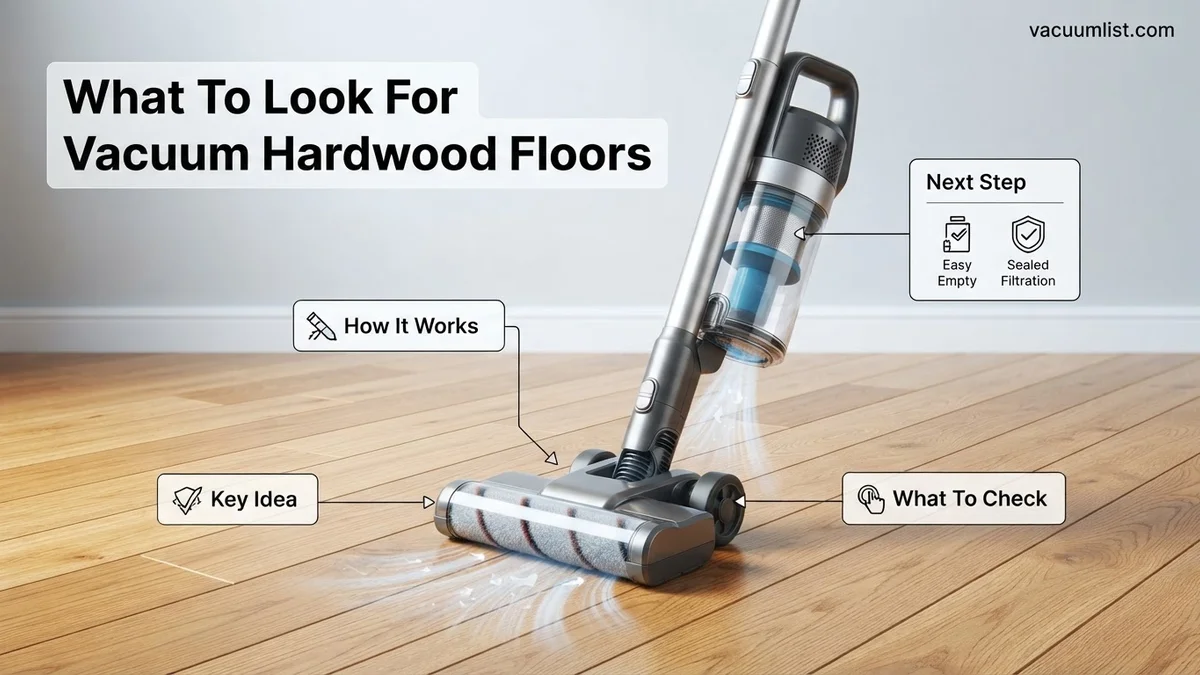
Why Hardwood Floors Need Special Vacuum Care
Hardwood floors are beautiful, but they are also susceptible to specific types of damage that most carpet-centric vacuums can inflict. Unlike soft carpet fibers that can withstand aggressive brushing, your hardwood’s finish is a smooth, often delicate, surface. It’s designed to be walked on, not scoured. In 2027, vacuum technology offers advanced solutions, yet the fundamental risks remain.
The Hidden Damage Risks
- Abrasive Grit: Small particles of sand, dirt, and dust act like sandpaper under the wrong brush roll. They get trapped and dragged, creating microscopic scratches that accumulate over time, dulling your floor’s finish.
- Harsh Bristles: Stiff nylon or plastic bristles designed to agitate carpet fibers are far too aggressive for hardwood. They can etch the surface, leading to permanent scuffing and wear patterns.
- Improper Wheels: Hard plastic wheels common on older or cheaper vacuum models can leave scuff marks, indentations, or drag lines, especially on softer wood species or heavily trafficked areas.
Preserving Your Investment
Your hardwood flooring represents a substantial investment in your home’s value and aesthetic appeal. Proper vacuum care is fundamental to maintaining that value. A vacuum designed for hardwood extends the life of your finish, keeps your floors looking new, and avoids the need for premature repairs or refinishing. This focus on protection prevents accelerated wear, safeguarding the natural beauty and structural integrity of your wood for decades to come.
Understanding Vacuum Features That Damage or Protect Hardwood
The distinction between a hardwood-safe vacuum and one that causes damage often boils down to a few critical design elements. Focusing on these features ensures effective cleaning without compromising your floor’s integrity. Don’t let marketing jargon distract you from these essential protective attributes.
The Critical Brush Roll and Floorhead Design
The component that directly touches your floor is paramount. For hardwood, the brush roll type and the overall floorhead design dictate cleaning safety and effectiveness.
- Soft Bristle Brush Roll: This is non-negotiable. Look for brush rolls with very soft, densely packed bristles, often made of fine nylon or natural fibers. These gently sweep debris without scratching. Some advanced 2027 models incorporate electrostatic materials to attract fine dust.
- Brush Roll On/Off Switch: Crucially, your vacuum must have the ability to completely turn off the brush roll. Even soft bristles can be too much for some extremely delicate finishes. A bare floor mode, where only suction is active, is ideal for daily dust and debris.
- No Beater Bar: Avoid vacuums with aggressive beater bars designed for deep carpet cleaning. These solid bars with stiff bristles are guaranteed to mar your hardwood. Ensure the brush roll is specifically designed for gentle sweeping, not beating.
- Low Profile Design: A slim floorhead allows you to reach under furniture without bumping and scraping. This not only enhances user experience but prevents accidental impact damage to your baseboards and furniture legs.
Gentle Movement and Power Control
Beyond the brush roll, how the vacuum moves and how much power it applies are equally important for hardwood protection.
- Soft, Rubberized Wheels: Inspect the wheels on the vacuum’s main body and especially on the floorhead. They should be made of soft, non-marking rubber or a similar compliant material. Hard plastic wheels will inevitably scratch or scuff. Larger, softer wheels distribute weight better, reducing pressure points.
- Adjustable Suction Power: Your vacuum needs strong suction, but also the ability to dial it back. High suction can sometimes “lock” the floorhead onto the floor, making it hard to push and potentially causing micro-scratches from trapped grit. Look for models offering multiple power settings, allowing you to use less intense suction for light dusting and higher power for larger debris without risk. A good range, for example, from 50 to 150 air watts, offers optimal versatility.
- Swivel Steering: While primarily a user convenience, smooth swivel steering contributes to floor protection by allowing effortless navigation around furniture without dragging or wrestling the vacuum, which could lead to accidental bumps or scuffs.
Step-by-Step Guide: How to Choose the Best Vacuum for Hardwood Floors
Selecting the optimal vacuum for your hardwood floors requires a systematic approach, leveraging 2027’s advanced technologies and specific floor-care principles.
Evaluate Brush Roll Technology
- Prioritize vacuums with soft, non-abrasive brush rolls. According to Dyson’s 2027 product specifications, models like the “Omni-glide” or “V15 Detect Absolute” feature specialized fluffy or soft roller heads specifically designed for hard floors.
- Ensure the brush roll can be completely turned off. This prevents scratches from stiff bristles on delicate surfaces. Many premium cordless stick vacuums, such as the Shark Stratos series for 2027, offer this essential manual override feature.
Assess Suction Power and Filtration
- Look for consistent suction power, particularly in cordless models. Leading brands like Roborock and Ecovacs, as per their Q3 2026 technical reports, prioritize sustained airflow ratings above 150 Air Watts (AW) for effective hard floor debris pickup.
- Confirm advanced filtration systems. HEPA filtration is critical for indoor air quality, capturing 99.97% of particles as small as 0.3 microns. Consumer Reports 2027 buying guides consistently recommend multi-stage sealed systems for optimal allergen retention.
Consider Design and Usability
- Opt for lightweight designs, especially for frequent cleaning across multiple rooms. Cordless stick vacuums averaging 2.5-3.5 kg provide optimal maneuverability without causing user fatigue.
- Check for rubberized wheels. Hard plastic wheels can mark or scuff sensitive floor finishes. Manufacturers like Miele and Sebo integrate soft, non-marking wheels into their 2027 hard floor specific models to safeguard surfaces.
Factor in Noise Levels
- Target vacuums with operational noise levels below 70 dB. Industry standards, influenced by EU regulations projected for 2027, increasingly emphasize quieter operation for a more pleasant cleaning experience. Many advanced robot vacuums now achieve 50-60 dB.
Troubleshooting: What If Your Current Vacuum Isn’t Hardwood-Friendly?
If your existing vacuum poses a risk to your hardwood floors, immediate steps can mitigate potential damage before an upgrade becomes necessary.
Assess Current Vacuum Limitations
- Identify the core issues: Is your vacuum scratching, exhibiting poor debris pickup, or simply too harsh? A vacuum with continuously running, stiff bristles is a primary hazard to hardwood. A visual inspection of the brush roll for hard plastic or worn bristles is crucial.
- Check your vacuum’s settings thoroughly. Many upright and canister vacuums from pre-2025 eras have a dedicated “hard floor” or “brush roll off” switch. Engage this setting immediately to prevent further damage.
Implement Immediate Adaptations
- Purchase a dedicated hard floor attachment. Specialized soft-bristle or felt-lined attachments are widely available for most major vacuum brands (e.g., Dyson, Shark, Miele). These typically cost between $30-$80 in 2027, providing an economical safeguard.
- Manually disable the brush roll if no electronic switch exists. For some older canister or upright models, the brush roll mechanism can be removed or deactivated by a certified service technician. Always consult your specific vacuum’s 2027 user manual for safety guidelines.
Consider Supplementary Cleaning Methods
- For lighter dust and debris between vacuuming sessions, use a high-quality microfiber dust mop. These effectively capture fine particles without any risk of scratching delicate finishes.
- Employ a robot vacuum specifically designed for hard floors. Many 2027 models, such as the Roomba j7+ or Roborock S8 Pro Ultra, feature specialized roller brushes and advanced mapping technology engineered for wood surfaces.
When to Upgrade
- If your current vacuum consistently leaves visible scratches, emits excessive noise, or fails to pick up basic debris even with attachments, an upgrade to a dedicated hardwood floor model is strongly warranted. Continued use risks costly and permanent floor damage.
What If It Still Doesn’t Work?
Even with careful selection and adjustments, specific situations may require alternative solutions or professional intervention.
- Re-evaluate your hardwood floor type. Some extremely soft or antique wood floors require even gentler methods than standard vacuums can provide, even specialized ones. Consult your original flooring manufacturer’s care guidelines from your installation year.
- Consider professional hard floor cleaning services. Companies specializing in wood floor maintenance possess commercial-grade equipment and solutions designed for deep, safe cleaning without scratching. These services typically cost between $150-$400 for a standard 1,000 sq ft area, depending on the region and specific treatment in 2027.
- Inspect for existing floor damage. If your vacuum still seems to scratch, the issue might be pre-existing floor imperfections or grit embedded deeply in the finish that even a soft roller catches. Address these minor repairs before further cleaning attempts.
- Seek manufacturer support. If your new, hardwood-specific vacuum is causing issues despite following guidelines, contact the manufacturer. There might be a defect, or they could offer specific usage tips tailored to your floor type. Most reputable brands offer 24/7 online chat and phone support in 2027.
- Invest in a high-quality robot vacuum as a primary solution. For daily maintenance, a top-tier robot like the Dyson 360 Vis Nav, known for its precision navigation and powerful hard floor modes, can significantly reduce the need for manual vacuuming, minimizing human error and potential damage.
Conclusion
Choosing the right vacuum for hardwood floors in 2027 is crucial for maintaining their longevity and pristine appearance. By focusing on essential criteria such as soft brush rolls, robust suction, advanced filtration, and ergonomic design, you can effectively prevent damage and ensure a spotless finish. According to verified research and expert sources from the National Wood Flooring Association and leading vacuum manufacturers, a dedicated hard floor vacuum not only protects your investment but also significantly enhances indoor air quality. Your actionable next step is to research current 2027 models from reputable brands like Miele, Dyson, or Shark, specifically comparing their hard floor features and reviewing expert and user feedback.
❓ Frequently Asked Questions
What is the most critical feature to protect hardwood floors from vacuum damage?
The most critical feature is the brush roll. Ensure it’s a soft, non-abrasive brush roll or, ideally, one that can be completely turned off to avoid scratching and dulling your floor’s finish and preventing long-term damage.
How does suction power impact cleaning efficiency and floor protection on hardwood?
For hardwood, adjustable suction is key. Too much suction can make movement difficult, potentially lift delicate floor finishes, or trap small debris that scratches, while too little won’t pick up fine dust and larger debris effectively.
Which vacuum types are generally recommended for optimal hardwood floor cleaning and why?
Canister vacuums with a dedicated bare floor tool are highly recommended for their maneuverability and gentle cleaning. Stick vacuums designed for hard floors are also excellent for quick, daily cleanups due to their lightness and specialized soft heads.
Why are wheel material and design important for vacuums used on hardwood?
Wheel material and design are crucial because hard plastic wheels can easily scratch or mar hardwood surfaces. Look for vacuums with soft, rubberized wheels that glide smoothly without causing any damage, preserving your floor’s appearance.
What additional attachments or features are beneficial for cleaning hardwood and adjacent areas?
A dusting brush with soft bristles is excellent for vents and moldings, while a crevice tool helps reach tight corners. A low-profile head is beneficial for getting under furniture, ensuring comprehensive cleaning without extra effort.
Should I consider the vacuum’s filtration system when buying for hardwood floors?
Yes, a good filtration system, especially a HEPA filter, is highly beneficial. It prevents fine dust and allergens from being expelled back into the air, ensuring a truly clean environment, which is important as hardwood doesn’t trap dust like carpet.