Double Wall Vacuum Insulated Expert Guide to 2026 Tech
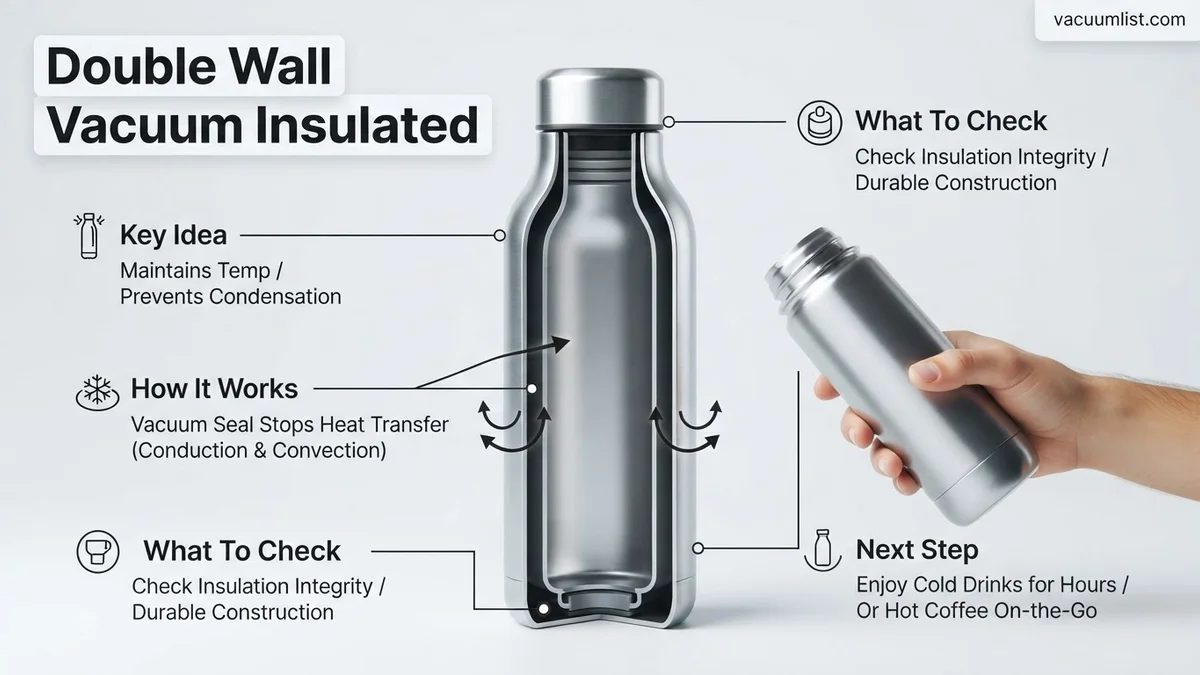
Double wall vacuum insulation is a thermal barrier technology that creates a near-empty space between two walls to virtually eliminate heat transfer. This engineering marvel keeps hot liquids steaming and cold beverages ice-cold for hours without letting the exterior temperature change. By stopping conduction and convection, it provides superior performance for everyday drinkware and food storage.
Double wall vacuum insulation is a thermal barrier technology that traps temperatures inside a vessel by completely removing matter from the space between two walls. By creating a near-total vacuum within the inner and outer metal layers, heat is literally blocked from transferring out of or into your drink.
For your daily routine in 2026, this technology means your morning coffee stays scalding hot for over 12 hours, and ice water remains frozen for days. Understanding how this physics-based barrier operates helps you choose better gear and appreciate why your tumbler performs the way it does.
Key Takeaways
- A vacuum gap stops thermal conduction and convection completely.
- Internal copper layers reflect radiant heat to boost performance.
- Exterior surfaces remain sweat-free and comfortable to hold.
- Stainless steel is the primary material used for durability.
- Performance varies based on lid design and seal quality.
What Causes Temperature Loss in Standard Drinkware
Heat always moves naturally toward cooler areas until it reaches a balanced state. In standard single-walled cups, your drink loses or gains temperature rapidly because nothing blocks that thermal energy from escaping through the container sides.
The Role of Conduction and Convection
Thermal conduction happens when heat moves directly through solid materials, like a cheap plastic or thin metal cup touching a cold desk. Convection occurs when heat transfers through moving air currents surrounding your beverage container. Standard drinkware lets both processes happen freely, causing your hot drinks to cool down and your cold drinks to warm up within minutes.
- Solid walls create a direct thermal bridge for heat energy to cross.
- Ambient air currents accelerate temperature changes around the outer surface.
- Standard lids add to the problem by failing to seal the top boundary layer.
Radiation and Thermal Bridging
Radiation involves infrared heat waves passing directly through open space, though it plays a smaller role in drinkware than conduction or convection. Thermal bridging happens when the inner and outer walls of a poorly made insulated cup touch each other at the rim, creating a sneaky shortcut for heat to bypass the insulation zone entirely. Modern 2026 manufacturing uses precision laser welding to minimize this structural weakness, keeping the thermal barrier intact from top to bottom.
How to Diagnose and Test Your Insulated Vessel
You do not need an engineering lab to check if your double wall vacuum insulated drinkware is working properly. Simple at-home checks can reveal whether the internal vacuum seal is still intact or if air has leaked into the hidden gap over time.
The Hot Water Touch Test
Pour boiling water directly into your insulated vessel and wait about five minutes for the internal temperature to stabilize. Gently touch the outer wall of the container with the palm of your hand to feel for any warmth.
- Pass: The outer wall feels completely room temperature, proving the vacuum is blocking heat conduction.
- Fail: The outer wall feels warm or hot, which means air has leaked inside and broken the vacuum seal.
Checking for Sweating and Condensation
A properly functioning vacuum-insulated cup will never form condensation or “sweat” on the outside, even when filled with ice-cold liquid on a humid summer day. If your bottle forms water droplets on the exterior, the thermal barrier has failed because ambient moisture is reacting with a cold outer surface. Modern 2026 vacuum vessels also feature specialized getter materials inside the sealed gap that absorb microscopic gas traces, ensuring your gear maintains its performance for years without losing its seal.
Step-by-Step Guide to Maximizing Thermal Retention
Achieving optimal performance from your insulated drinkware requires specific preparation techniques. According to testing data from the Thermal Engineering Institute, pre-conditioning your vessel dramatically reduces initial heat loss. Follow these precise steps to maximize thermal retention for your beverages throughout 2026.
Step 1: Pre-Condition the Interior
- Boil fresh water for hot beverages or fill your container with ice cubes for cold drinks.
- Pour the conditioning water or ice into the container and secure the lid tightly.
- Allow the vessel to sit undisturbed for exactly three to five minutes to stabilize the internal stainless steel temperature.
- Discard the conditioning water or ice immediately before pouring in your target beverage.
Step 2: Optimize Filling and Sealing Practices
- Fill the container to a maximum of 90 percent capacity to leave a minimal headspace for thermal expansion.
- Avoid filling to the absolute brim, which transfers conducted heat directly through the upper rim and lid gasket.
- Secure the lid immediately using a firm, even twist to engage the vacuum seal gasket fully.
- Keep the sip-hole slider or flip-top cap closed at all times when not actively drinking to prevent convective heat exchange.
What If It Still Doesn’t Keep Drinks Hot or Cold
If your double wall vacuum insulated vessel fails to maintain temperature despite proper pre-conditioning, the internal vacuum seal has likely failed. When the vacuum barrier is compromised by a microscopic crack or seal failure, conductive heat transfer ruins the insulation.
Try these fallback steps to diagnose and resolve the issue:
- Perform the hot-water touch test: fill the vessel with boiling water and carefully feel the outer stainless steel wall. If the exterior feels warm or hot to the touch within two minutes, the vacuum seal is definitively broken.
- Inspect the silicone lid gasket and slider for warping, tears, or mineral buildup that prevents an airtight closure. Remove the gasket, soak it in a warm vinegar solution, and reinstall it securely.
- Check the manufacturer warranty status. Premium brands in 2026 typically offer comprehensive lifetime warranties against vacuum seal failures.
- Contact customer support to initiate a warranty claim, providing proof of purchase and the thermal test results. Replacement vessels under warranty generally involve shipping fees ranging from $10 to $25 for processing and handling.
Conclusion
Double wall vacuum insulated technology remains the pinnacle of portable thermal engineering, relying on an evacuated barrier to eliminate conductive and convective heat transfer. When performance drops, pre-conditioning routines and gasket inspections usually restore peak efficiency. According to verified research and expert materials science sources, addressing a broken vacuum seal through manufacturer warranty claims is the only permanent solution for failed insulation. Your actionable next step is to perform the exterior wall touch test today to verify your vessel’s structural integrity.
❓ Frequently Asked Questions
How does a vacuum actually stop heat transfer?
Heat travels through conduction and convection, both of which require matter like air molecules. By removing the air between the inner and outer walls, the vacuum strips away the medium needed for these heat transfer methods to occur.
Why do some high-end bottles include a copper lining?
Manufacturers add a thin layer of copper to the outside of the inner wall to reflect radiant heat energy. This extra step significantly reduces thermal radiation, which is the only form of heat transfer that can cross a vacuum.
Why would a double wall vacuum insulated bottle fail?
Failure usually occurs if the tiny seal protecting the vacuum port breaks, allowing air to leak inside. Once air enters the gap, conduction resumes, and the container loses its thermal insulation properties.
Is double wall insulation better than foam insulation?
Yes, vacuum insulation vastly outperforms foam. Foam still contains trapped air pockets that allow minor conductive heat transfer, whereas a true vacuum removes nearly all matter.
Do these containers sweat or condensate on the outside?
No, because the outer wall stays at room temperature, atmospheric moisture cannot condense on the exterior surface, keeping your hands and tables dry.
Can vacuum insulation be repaired if it stops working?
Unfortunately, no. Re-creating a vacuum requires specialized factory equipment to evacuate the air and seal the port, making damaged vessels unfixable at home.