What Is a Hose Bib Vacuum Breaker Expert Guide 2026
A hose bib vacuum breaker is a specialized backflow prevention device attached to outdoor faucets to keep contaminated water out of your drinking supply. It works by stopping dangerous siphoning effects when water pressure drops unexpectedly. Installing this device is a critical safety measure required by most plumbing codes to protect household health.
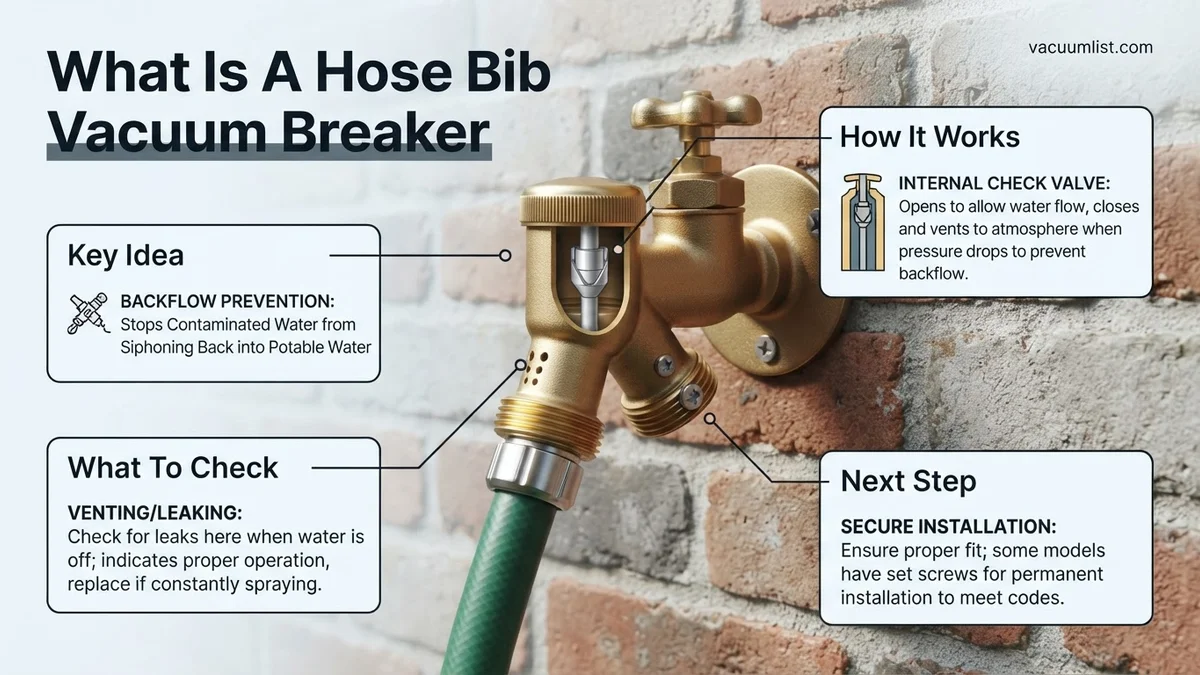
A hose bib vacuum breaker is a critical backflow prevention device screwed directly onto your outdoor faucet to stop contaminated water from being siphoned back into your home’s drinking water supply. Without this small mechanical valve, a sudden drop in municipal water pressure can pull dangerous substances like lawn fertilizers, pesticides, and stagnant garden hose water straight through your plumbing and into your kitchen sink.
As building codes strictly evolve through 2026, understanding and properly maintaining this device is no longer just a minor plumbing detail—it is a vital health safeguard for your household. Installing a vacuum breaker provides an affordable, physical barrier that separates your recreational water use from the clean water you drink every day.
Key Takeaways
- Prevents contaminated garden water from siphoning backward into clean indoor drinking supplies.
- Attaches easily to standard outdoor spigots using threaded connections and set screws.
- Required by plumbing codes in most residential areas to ensure public health safety.
- Stops dangerous chemicals, fertilizers, and bacteria from entering home plumbing systems.
- Relieves internal pressure automatically when the water is turned off at the source.
What Causes Backflow Hazards at Your Outdoor Faucet
The Physics of Siphoning and Pressure Drops
Backflow happens when a reversal of water pressure sucks external fluids back into the potable water system. Your outdoor garden hose is a primary vulnerability for this phenomenon. When you leave a hose lying in a puddle, attached to a chemical sprayer, or submerged in a swimming pool, it becomes a direct pipeline for contamination. If a water main breaks in your neighborhood, or if a nearby fire hydrant opens, a sudden negative pressure wave creates a powerful siphon effect. This suction pulls whatever is at the other end of your hose—bacteria, dirt, and chemical toxins—backward through the spigot and into your home’s pipes.
Common Backyard Contamination Risks
Everyday gardening habits frequently create high-risk cross-connections without you even realizing it. Consider these standard scenarios that trigger hazardous backflow:
- Attaching a hose-end fertilizer or weed-killer dispenser to treat your lawn
- Submerging the end of a running hose into a bucket of soapy water while washing your car
- Leaving a hose lying on the ground where pets, insects, or stagnant rainwater can enter the nozzle
- Connecting your outdoor spigot to an underground irrigation system without proper backflow controls
How to Install a Hose Bib Vacuum Breaker Safely
Step-by-Step Installation Process
Installing a standard atmospheric vacuum breaker requires zero specialized plumbing skills or complex tools. Most residential models feature a simple threaded collar that twists directly onto the threads of your existing outdoor hose bib. To ensure a tight, leak-free fit, follow these direct steps:
- Inspect the rubber washer inside the vacuum breaker inlet to ensure it is seated correctly.
- Screw the device clockwise onto your outdoor faucet threads by hand until it is snug.
- Use an adjustable wrench to give it an additional quarter-turn, ensuring a secure seal without stripping the brass threads.
- For tamper-resistant or anti-siphon models required by 2026 plumbing codes, tighten the set screw until the specialized head snaps off, permanently locking the device in place.
Best Practices for Maintenance and Freezing Prevention
Because vacuum breakers contain internal moving parts like rubber diaphragms and check valves, they require periodic inspection. Check your device seasonally to ensure the internal plunger moves freely and does not leak constantly while the hose is running. If you live in a region that experiences freezing temperatures, you must remove non-drainable vacuum breakers before the first hard freeze of the winter. Trapped water inside the metal housing expands as it freezes, which will crack the brass body and ruin the backflow preventer entirely.
Step-by-Step Fix for a Leaking or Stuck Vacuum Breaker
When a hose bib vacuum breaker begins leaking from the side relief ports or fails to shut off water flow properly, immediate maintenance is required. According to plumbing standards set by the American Society of Society of Sanitary Engineering (ASSE), standard atmospheric vacuum breakers must be replaced or repaired once internal rubber diaphragms degrade. Following a precise procedure ensures the plumbing system remains compliant with current 2026 backflow prevention codes.
Tools and Preparation Required
Gather standard plumbing tools before beginning the repair process to minimize water waste and structural damage to the siding. Standard requirements include an adjustable wrench, channel-lock pliers, penetrating oil for stubborn set screws, and a replacement vacuum breaker kit matching the exact thread specifications of the outdoor spigot.
- Shut off the main water supply: Locate the interior shut-off valve for the outdoor spigot and turn it completely off to relieve pressure.
- Drain the residual line pressure: Open the outdoor hose bib fully to let any trapped water drain out completely before attempting disassembly.
- Remove the locking set screw: Many modern code-compliant vacuum breakers feature a breakaway set screw designed to prevent unauthorized removal. Use a hacksaw or extraction tool if the security head has sheared off.
- Unscrew the unit counterclockwise: Apply steady pressure with an adjustable wrench on the body of the vacuum breaker while supporting the spigot pipe to prevent twisting inside the wall.
- Clean and inspect the threads: Clear away mineral scale, dirt, and old Teflon tape from the hose bib threads using a wire brush before installing the new unit.
What If It Still Doesn’t Work?
If replacing or servicing the vacuum breaker fails to stop persistent leaking or if the device continues to stick during operation, deeper plumbing issues may be present. Persistent failure often points to excessive municipal water pressure or internal damage to the frost-free sillcock itself. Homeowners encountering recurring backflow device failures should evaluate the following fallback steps:
- Test the home water pressure: Attach a pressure gauge to a working hose bib. According to plumbing code benchmarks, static water pressure exceeding 80 PSI forces vacuum breakers to leak prematurely. Install a pressure reducing valve (PRV) if readings are too high.
- Inspect for damaged spigot threads: Cross-threading during previous installations can distort brass threads, preventing the vacuum breaker from seating with the required airtight seal.
- Upgrade to an industrial-grade brass model: Cheap plastic internal components degrade rapidly under extreme UV exposure and freezing conditions. Switch to heavy-duty,ASSE-certified solid brass assemblies designed for longevity.
- Consult a licensed professional: If the sillcock pipe spins or leaks from behind the exterior wall, the internal solder joint or connection is broken. Professional plumbing intervention is required.
- Understand repair costs: Hiring a licensed plumber to replace a damaged frost-free hose bib and integrated vacuum breaker generally ranges from $150 to $350, depending on regional labor rates and interior wall accessibility.
Conclusion
A functional hose bib vacuum breaker remains a critical line of defense against dangerous chemical and bacterial cross-contamination in residential water systems. Addressing leaks and sticking mechanisms promptly protects household drinking water and ensures compliance with municipal safety codes. According to verified research and expert sources from the American Backflow Prevention Association, annual visual inspections of backflow hardware significantly reduce mechanical failure rates. Take the next step today by inspecting your outdoor spigots and replacing any worn or leaking vacuum breakers before peak seasonal watering begins.
❓ Frequently Asked Questions
What is the primary purpose of a hose bib vacuum breaker?
The main purpose is to prevent contaminated water from being siphoned backward from a garden hose into the clean municipal drinking water supply. This happens during a sudden drop in main water pressure, protecting your household from harmful chemicals and bacteria.
How do I know if my outdoor faucet already has a vacuum breaker?
Look directly behind the threads where you attach your garden hose. If you see a small, bell-shaped brass or plastic device with tiny side holes attached to the spigot spout, you have a vacuum breaker installed.
Why does water spray out of the vacuum breaker when I turn on the hose?
A small amount of leakage is normal until full water pressure forces the internal seal upward. If it continues to spray heavily, the internal rubber diaphragm may be worn out or clogged with mineral deposits.
How do you remove a vacuum breaker that has a set screw?
Many vacuum breakers use a breakaway set screw designed to snap off during installation for security. To remove it, you must carefully cut a slot into the screw head with a rotary tool or grip it tightly with locking pliers to unscrew it.
Will a vacuum breaker cause my hose pressure to drop?
No, a standard vacuum breaker is engineered to allow full water flow when the hose is running. It only restricts or redirects air and water when a backpressure or backsiphonage event occurs.
Should I remove my vacuum breaker before winter freezes arrive?
Yes, leaving a vacuum breaker attached during freezing temperatures can trap water inside the valve chamber. When that water freezes, it expands and can crack the housing or damage your outdoor faucet.