How Long Can Vacuum Sealed Meat Last in Refrigerator 2026
Vacuum sealing extends the refrigerator shelf life of meat significantly by removing oxygen, allowing beef, poultry, and fish to stay fresh for up to one to two weeks. However, strict temperature control below 40°F remains essential to prevent bacterial growth and ensure food safety.
Vacuum-sealed fresh meat generally lasts in the refrigerator for one to four weeks, depending on the specific cut and type of animal. This is roughly two to four times longer than standard butcher paper or grocery store plastic wrapping. For instance, while standard ground beef spoils within two days, vacuum-sealed ground beef can remain fresh and safe for up to a week or more.
Maximizing your refrigerator storage space without risking foodborne illness requires knowing these exact thresholds. As home food preservation tech and standards evolve into 2026, understanding the delicate balance between extended shelf life and strict food safety limits remains critical for meal planning and health.
Key Takeaways
- Vacuum-sealed beef lasts 1 to 2 weeks in the refrigerator, compared to 3 to 5 days normally.
- Poultry and ground meats last 4 to 6 days when vacuum-sealed in proper refrigeration.
- Maintain refrigerator temperatures at or below 40°F (4°C) to prevent dangerous bacterial growth.
- Check for a compromised seal, sour odors, or unusual discoloration before cooking stored meat.
- Never leave perishable vacuum-sealed meats at room temperature for extended periods.
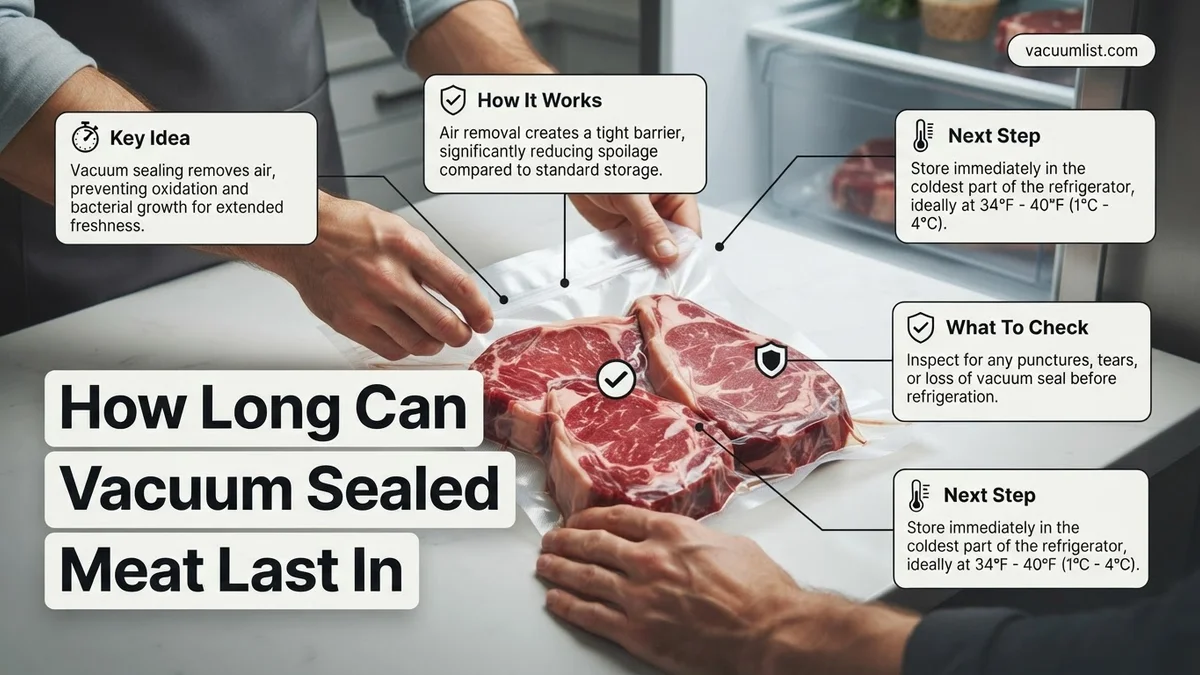
What Causes Rapid Meat Spoilage and How Vacuum Sealing Slows It Down
The Role of Oxygen in Bacterial Growth
Standard meat spoilage is primarily driven by aerobic spoilage bacteria and oxidation. When raw meat sits in a conventional refrigerator package, oxygen feeds these microorganisms. They multiply rapidly, causing discoloration, sour odors, and slimy textures within just a few days. Vacuum sealing physically extracts the air surrounding the cut, dramatically reducing the oxygen available for these aerobic bacteria to thrive on.
Understanding the Anaerobic Risk and Temperature Control
Removing oxygen creates an environment where anaerobic bacteria, such as Clostridium botulinum, can potentially grow if proper safety measures are ignored. Unlike aerobic bacteria, anaerobic strains do not need oxygen to multiply. However, they struggle to reproduce at temperatures below 40°F (4°C). This makes your refrigerator’s internal temperature control your primary defense mechanism.
- Keep your refrigerator strictly set at or below 38°F (3.3°C) for vacuum-sealed perishables.
- Never leave vacuum-sealed meat at room temperature to thaw; always transition it to the fridge.
- Discard any package that loses its airtight seal while sitting in the refrigerator.
How to Fix Storage Timelines: Exact Refrigerator Shelf Life by Meat Type
Beef, Pork, and Lamb Storage Limits
Red meats are naturally denser and handle the vacuum-sealing process exceptionally well. Standard refrigeration for fresh beef or pork roasts is normally three to five days. When properly vacuum sealed, you can safely extend that window considerably.
- Steaks and Roasts (Beef, Pork, Lamb): Last 10 to 14 days in the refrigerator.
- Ground Meats: Last 5 to 7 days, as grinding increases surface area for bacteria.
- Cured or Smoked Meats: Can last up to 3 to 4 weeks due to added preservatives and salt content.
Poultry and Seafood Refrigerator Timelines
Poultry and seafood are much more perishable than red meat due to higher moisture content and delicate muscle structures. Even with the air sucked out, these proteins demand careful monitoring.
- Chicken and Turkey (Whole or Parts): Last 4 to 7 days, compared to just 1 to 2 days in standard packaging.
- Ground Poultry: Lasts 3 to 4 days max; use caution and check for off-odors.
- Fresh Fish and Shellfish: Lasts 2 to 4 days. Seafood spoils faster than any other meat, so do not push the limits of your vacuum seal here.
What If It Still Doesn’t Work: Identifying Spoilage and Compromised Seals
Even with advanced 2026 vacuum sealing technology, seals can fail, and anaerobic bacteria can still proliferate under specific conditions. Knowing how to inspect your stored protein is critical for food safety.
Recognizing Seal Failures
Air leakage is the primary enemy of extended refrigerator storage. Inspect the package daily for the following indicators:
- Loss of Tightness: If the plastic film loosens and no longer tightly contours to the meat, air has re-entered the chamber.
- Moisture Pooling: Excessive liquid accumulating inside the package often signals a broken seal or internal pressure change.
- Cloudy Air Pockets: Micro-tears in the plastic can introduce oxygen, creating visible gas pockets.
Detecting Spoilage in Low-Oxygen Environments
Vacuum sealing suppresses normal aerobic spoilage indicators like strong odors. When a compromised seal occurs, anaerobic pathogens such as Clostridium botulinum or Listeria monocytogenes can activate. If you suspect a failure, evaluate the meat using strict safety protocols:
- Check for an unusual, sour, or sulfurous odor immediately upon opening the package.
- Examine the surface texture; slimy or excessively sticky residues indicate advanced bacterial degradation.
- Look for abnormal discoloration, such as a greenish or deep gray hue that does not disappear after a few minutes of oxygen exposure.
- When in doubt, discard the item immediately. Professional food safety testing services cost between $50 and $150, making disposal the safer and more economical choice for home kitchens.
Proven Safety Guidelines for Storing Raw Meat in Low Oxygen Environments
Maximizing the refrigerator shelf life of vacuum sealed meat requires strict adherence to temperature controls and processing standards established by food safety authorities.
Temperature and Placement Standards
The United States Department of Agriculture (USDA) and the FDA emphasize that refrigeration alone does not halt bacterial growth; it merely slows it. Implement these storage rules:
- Maintain your refrigerator internal temperature consistently at or below 40°F (4°C). Modern 2026 smart refrigerators with digital zone monitoring help ensure zero fluctuation.
- Place vacuum sealed meat on the lowest shelf of the refrigerator. This prevents any potential purge juices from dripping onto ready-to-eat foods if a seal fails.
- Avoid overcrowding the refrigerator compartments, as restricted airflow creates warm spots that accelerate spoilage.
Handling Post-Seal Best Practices
Once opened, the vacuum advantage is permanently lost. Treat the meat as fresh protein and cook or freeze it within 24 to 48 hours. Never re-seal raw meat that has been exposed to ambient kitchen air without proper sanitization and cooking steps first.
Conclusion
Vacuum sealing significantly extends the refrigerator shelf life of raw meat, pushing storage windows from standard limits of 3 to 5 days up to an impressive 10 to 14 days when paired with strict sub-40°F temperature controls. According to verified research and food safety authorities, maintaining proper seal integrity and continuous refrigeration are your best defenses against foodborne illness. For your next actionable step, invest in a digital refrigerator thermometer today to verify your appliance maintains the optimal 38°F threshold required for safe extended storage.
❓ Frequently Asked Questions
Why does vacuum sealed meat last longer in the refrigerator?
Vacuum sealing removes oxygen from the packaging, which significantly slows down the oxidation process and inhibits the growth of aerobic spoilage bacteria and mold. While it extends freshness, it does not stop natural enzymatic decay entirely.
Are there botulism risks with vacuum sealed meat in the fridge?
Clostridium botulinum thrives in oxygen-depleted environments. To prevent anaerobic bacterial multiplication, vacuum-sealed meat must be kept strictly below 40°F or transferred to the freezer for long-term storage.
How does store-bought vacuum-sealed meat differ from home-sealed meat?
Commercial meat is packaged in controlled, sterile environments with specialized gas flushes and industrial sealers, often giving it a longer commercial shelf life than typical home-sealed packaging.
Does the type of cut affect how long vacuum-sealed meat lasts?
Yes, whole cuts of beef generally last longer than ground meats or poultry. Ground meat has a larger surface area exposed to bacteria prior to sealing, resulting in a shorter overall refrigerator shelf life.
What should I do if the vacuum seal fails while in the refrigerator?
If the plastic loses its tight grip or balloons up, the anaerobic or aerobic environment has been compromised. Treat the meat according to standard non-sealed refrigeration timelines or cook it immediately.
Can I keep vacuum sealed marinated meat in the fridge for longer?
Acidic marinades can slow bacterial growth slightly, but you should still adhere to standard meat refrigeration guidelines of 3 to 7 days depending on the specific protein.