Does the Pore Vacuum Work? Real Expert Guide for 2026
Pore vacuums do not effectively clear deep blackheads or permanently shrink pores, often acting more as a marketing gimmick than a true skincare fix. While they may temporarily remove surface oil, improper suction poses a high risk of broken capillaries, bruising, and skin irritation. Dermatologists overwhelmingly recommend switching to proven chemical exfoliants instead of physical suction.
Pore vacuums do not actually suck out stubborn blackheads or clear deep-seated congestion, but they can easily rupture your capillaries and cause severe bruising if used incorrectly. If you have spent hours watching viral skincare videos featuring these suction devices lifting plugs of sebum, you are looking at clever editing rather than clinical reality.
By 2026, home skincare tech has advanced significantly, yet dermatologists consistently warn that mechanical suction is the wrong tool for treating pores. Understanding how these tools interact with your skin barrier will save you from permanent vascular damage and persistent irritation.
Key Takeaways
- Pore vacuums only remove surface oil, failing to clear deep-seated blackheads or sebum.
- High suction pressure frequently causes broken capillaries, bruising, and lasting skin damage.
- Leaving the device in one spot too long creates severe localized red marks.
- Salicylic acid offers a far safer, deeper chemical alternative for clearing clogged pores.
- Dermatologists advise against home suction tools in favor of professional extractions.
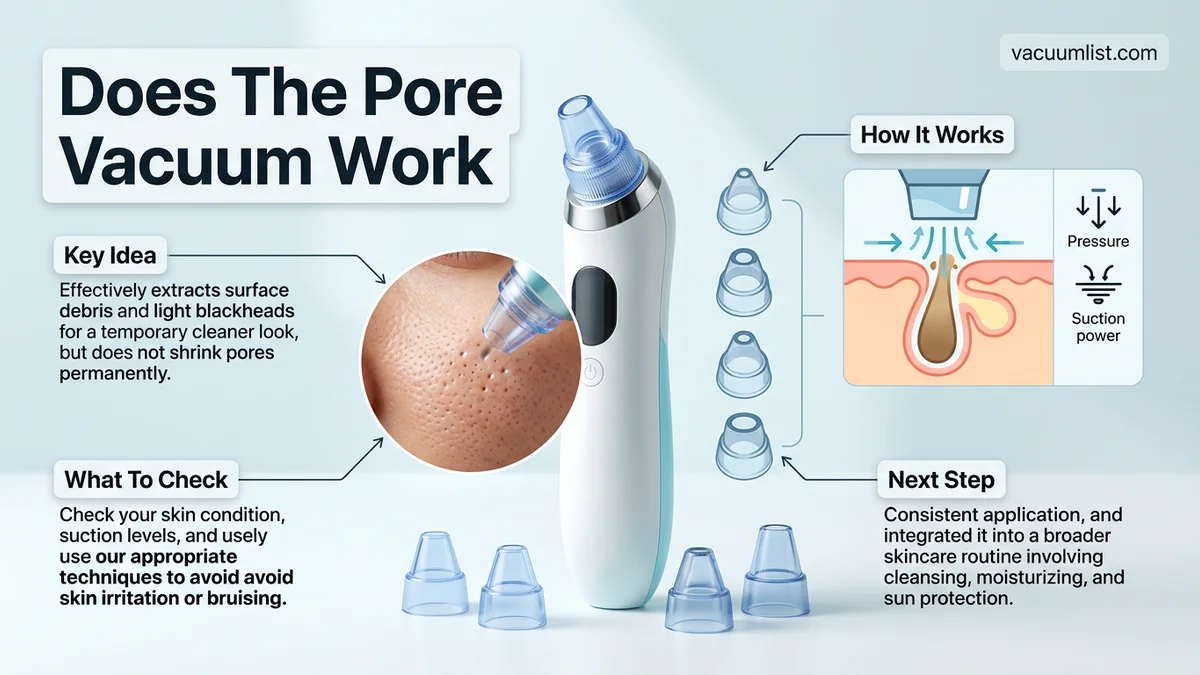
The Reality of How Pore Vacuums Work on Skin
Surface Oil vs. Deep Extraction
When you press a pore vacuum against your face, the device creates localized negative pressure. This suction can successfully pull out surface-level oil, sweat, and loose dead skin cells sitting immediately at the opening of the follicle. It gives your skin a temporary illusion of smoothness, which explains why users often think the tool is working.
However, true blackheads are oxidized plugs of sebum and keratin anchored deep inside the pore walls. The suction force required to yank a true blackhead out from the root would need to exceed 600mmHg, a pressure level that would instantly strip skin tissue and cause extreme trauma. Consumer-grade devices simply lack this mechanical strength, meaning they only skim the very top of your pores.
The Hidden Risks of Mechanical Suction
The primary issue with pore vacuums is the collateral damage they inflict on your vascular and structural skin network. Dermatologists see a sharp rise in skin injuries from improper suction technique:
- Broken capillaries: The suction force easily ruptures delicate superficial blood vessels, leaving permanent red or purple spider veins on your nose and cheeks.
- Severe bruising: Holding the device in one spot for more than a second creates circular hematomas that can take weeks to fade.
- Skin stretching: Repeatedly pulling on the skin elasticity matrix breaks down collagen and elastin over time.
- Worsened inflammation: Aggressive suction around active acne leads to ruptured pustules, spreading bacteria and causing deep scarring.
Why Pore Vacuums Fail to Clear Deep Blackheads
The Physics of Sebum Extraction
To understand why these gadgets fail, you have to look at how sebum behaves inside a pore. Sebum is naturally viscous and sticky, adhering tightly to the cellular lining of your hair follicles. A vertical pulling force like a vacuum creates tension perpendicular to the skin surface, but it cannot overcome the adhesive friction holding the plug inside the pore.
When you apply suction to a tight blackhead, the surrounding skin stretches and gives way long before the plug moves. The vacuum ends up distorting the follicular opening rather than extracting the contents. This dynamic explains why users often experience minor skin swelling that temporarily makes pores look bigger once the inflammation subsides.
Chemical Alternatives That Actually Work
Dermatologists universally recommend chemical exfoliants over mechanical suction because chemistry addresses the root cause of congestion. Instead of violently pulling at the surface of your skin, you need ingredients that dissolve oil from the inside out:
- Salicylic Acid (BHA): As an oil-soluble acid, BHA penetrates deep inside the pore lining to dissolve trapped sebum and dead skin cells.
- Retinoids: Prescription or over-the-counter retinoids speed up cellular turnover, preventing dead skin from clumping together in the first place.
- Oil Cleansing: Massaging a cleansing oil onto dry skin uses like-dissolves-like chemistry to safely coax surface plugs out without any physical trauma.
Step-by-Step Guide to Safely Clearing Pores Without Suction
Dermatologists emphasize that clearing stubborn sebaceous filaments safely requires chemical exfoliation rather than mechanical extraction. If you want to clear your pores without risking bruising or broken capillaries, follow a proven, gentle routine backed by 2026 skincare standards.
1. Gentle Cleansing and Preparation
Start by washing your face with a lukewarm, low-pH hydrating cleanser. Avoid hot water, which strips the natural moisture barrier and triggers excess sebum production. Pat your skin completely dry with a clean microfiber towel before applying any active ingredients.
2. Chemical Exfoliation with Salicylic Acid
Apply a leave-on liquid exfoliant containing 2 percent salicylic acid (BHA). Because BHA is oil-soluble, it penetrates deep inside the pore lining to dissolve trapped sebum and dead skin cells. Allow the product to absorb fully for five to ten minutes without rinsing.
3. Deep Hydration and Barrier Protection
Seal your pores and protect your skin barrier by applying a lightweight, non-comedogenic moisturizer containing ceramides or niacinamide. Niacinamide regulates sebum production over time, naturally reducing the appearance of enlarged pores without irritation.
What If At-Home Methods Still Don’t Clear Your Pores
When consistent chemical exfoliation fails to clear stubborn congestion or deep-seated blackheads, at-home routines may need professional reinforcement. Persistent clogs often require clinical interventions that safely target the root cause of follicular buildup.
- Consult a Board-Certified Dermatologist: Schedule an evaluation to rule out conditions like closed comedones or cystic acne that do not respond to over-the-counter treatments.
- Consider Professional Extractions: A licensed aesthetician can perform manual extractions using sterile metal loop extractors under controlled conditions, minimizing scarring risks. Professional extractions typically cost between $75 and $150 per session.
- Explore In-Office Chemical Peels: Dermatologists can apply medical-grade salicylic acid or TCA peels (ranging from $150 to $300) that resurface the skin much deeper than consumer products.
- Investigate Prescription Retinoids: Ask a provider about prescription tretinoin or adapalene to accelerate cellular turnover and permanently prevent future pore blockages.
Conclusion
Pore vacuums promise quick fixes, but verified research and expert dermatological sources confirm they frequently cause bruising, broken capillaries, and skin irritation. Safe, effective pore care relies on chemical exfoliants like salicylic acid rather than aggressive suction. According to verified research and expert sources, consistent barrier-supporting routines yield superior, long-lasting results. Take your next actionable step today by swapping out mechanical gadgets for a clinically proven 2 percent BHA treatment.
❓ Frequently Asked Questions
Does the pore vacuum work for shrinking pore size?
Pore vacuums cannot permanently shrink your pores because pore size is largely determined by genetics. While they might temporarily make pores look cleaner by removing surface oil, stretching the skin with suction can actually make pores appear larger over time.
How can I use a pore vacuum safely if I already own one?
If you choose to use one, always steam your skin first to soften sebum, keep the device moving constantly without lingering in one spot, and use the lowest suction setting. Never use a pore vacuum on active acne, broken skin, or rosacea-prone areas.
Why do blackheads come back immediately after using a pore vacuum?
Blackheads return quickly because pore vacuums only yank out the very top of the plug while leaving the root of the sebum and dead skin cells inside the pore. Without regulating oil production or using chemical exfoliants, the pore refills rapidly.
Can a pore vacuum cause broken capillaries?
Yes, the strong negative pressure exerted by these devices can easily rupture superficial blood vessels, especially on thin skin areas like the nose and cheeks. Once capillaries are broken, they usually require professional laser treatment to remove.
What ingredients work better than a pore vacuum for clear pores?
Beta-hydroxy acids (BHAs) like salicylic acid are oil-soluble, allowing them to penetrate deep inside the pore lining to dissolve sebum and dead skin cells. Regular use prevents clogs far more effectively than mechanical pulling.
When should I see a professional for clogged pores?
If you struggle with persistent cystic acne, deep-seated sebaceous filaments, or stubborn blackheads that do not respond to over-the-counter chemical exfoliants, visit a licensed esthetician or dermatologist for safe extractions.