How Long Does Vacuumed Sealed Meat Last in Freezer 2026
Vacuum-sealed meat lasts significantly longer than standard freezer storage, often remaining safe and high-quality for 1 to 3 years depending on the cut. Removing air completely prevents oxidation and freezer burn, dramatically extending the lifespan of beef, poultry, pork, and fish. Proper sealing, freezing temperatures, and safe thawing methods are essential to maintain maximum flavor and safety.
Vacuum-sealed meat lasts significantly longer than conventionally wrapped meat in the freezer, often stretching storage lifespans from months to several years without losing flavor or texture. While standard freezer bags allow moisture to escape and oxygen to creep in, vacuum sealing locks out the air that causes degradation.
As home cooks look for better ways to buy in bulk and minimize food waste heading into 2026, understanding exact freezer timelines is essential. Knowing how long your specific cuts of beef, poultry, pork, and seafood will stay fresh prevents you from needlessly throwing away safe meals or cooking compromised protein.
Key Takeaways
- Vacuum-sealed beef and game meats can last 2 to 3 years in the freezer.
- Poultry maintains optimal quality for 1 to 3 years when properly vacuum-sealed.
- Fatty fish should only be kept for 6 months due to natural lipid oxidation.
- Freezer burn happens when air contacts the meat, which sealing prevents.
- Always maintain a freezer temperature of 0°F (-18°C) or lower for storage.
What Causes Meat Quality Loss in Standard Freezers Versus Vacuum Sealing
To understand why vacuum sealing works so well, you need to look at the physics of standard home freezers. When you toss a standard grocery-wrapped steak into the freezer, two main enemies attack the meat: oxygen exposure and moisture sublimation.
The Problem With Oxygen and Moisture Loss
Oxygen causes fats in meat to oxidize, leading to rancidity, off-flavors, and discoloration. Meanwhile, cold freezer air is notoriously dry. It constantly pulls moisture out of exposed meat surfaces. This creates the classic gray, dehydrated, leathery patches known as freezer burn. While freezer-burned meat is technically safe to eat, the texture becomes dry and the taste turns cardboard-like.
How Vacuum Sealing Stops Freezer Burn
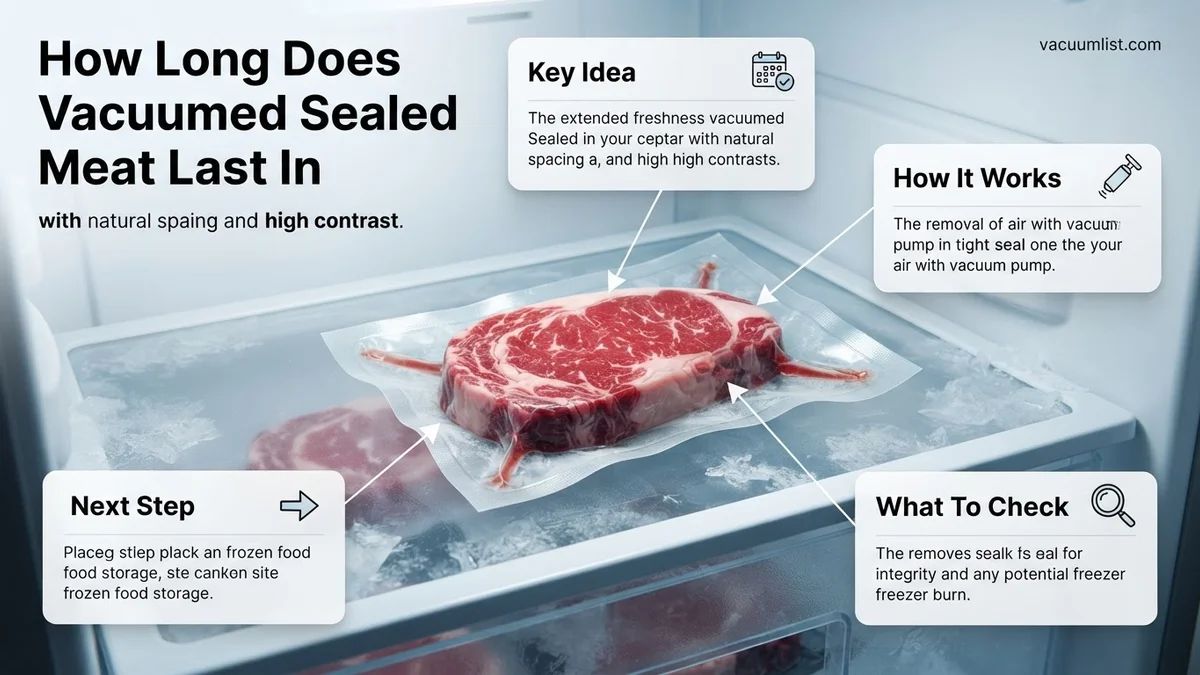
Vacuum sealers eliminate these issues by sucking nearly all the air out of the packaging before creating an airtight thermal seal. Without oxygen present, oxidation grinds to a halt. Because the plastic film clings tightly to every contour of the meat, moisture cannot sublimate or escape into the surrounding freezer air. Your meat stays as juicy and fresh on day 500 as it was on day one.
How Long Different Types of Vacuum-Sealed Meat Last in the Freezer
Not all vacuum-sealed meats age the same way in the freezer. Fat content, bone presence, and protein cellular structure all dictate maximum safe storage windows. In 2026, home food preservation standards confirm that while vacuum sealing keeps meat safe indefinitely at 0 degrees Fahrenheit, peak quality depends entirely on the type of meat.
Beef, Pork, and Lamb Timelines
Red meats handle the vacuum-sealing process exceptionally well due to their lower moisture content and dense muscle fibers.
- Beef steaks and roasts: 2 to 3 years of peak quality.
- Ground beef: 1 to 2 years (higher fat content accelerates minor flavor changes).
- Pork chops and roasts: 2 years.
- Cured or smoked meats (bacon, ham): 1 year (salt content can affect long-term storage).
Poultry and Seafood Timelines
Wider fat variations and delicate cellular structures mean poultry and fish have shorter optimal freezer lifespans, even when vacuum sealed.
- Whole chicken or turkey: 2 to 3 years.
- Chicken breasts and pieces: 1 to 2 years.
- Lean fish (cod, tilapia): 1 to 2 years.
- Fatty fish (salmon, tuna): 6 to 12 months (fish oils are prone to oxidation over long periods).
Step-by-Step Guide to Properly Prepping, Sealing, and Freezing Meat
Maximizing the freezer life of vacuum-sealed meat in 2026 requires meticulous preparation. According to food safety guidelines from the USDA and leading appliance manufacturers, skipping proper prep steps introduces moisture and bacteria that degrade quality over time.
1. Temperature and Hygiene Preparation
Always start with chilled meat kept at or below 40°F. Sanitize your work surface to prevent cross-contamination before handling raw beef, poultry, or pork.
2. Moisture Reduction and Portioning
Pat the meat completely dry with paper towels. Excess surface moisture interferes with the heat-seal strip, creating a weak bond that leads to air leaks during long-term freezing.
3. The Sealing and Freezing Process
- Insert the portioned meat into a heavy-duty, BPA-free vacuum sealer bag, leaving at least 3 to 4 inches of headspace between the meat and the top of the bag.
- Double-seal the bottom edge of custom-cut rolls if you are creating your own bags to prevent accidental seam blowouts.
- Place the open end of the bag into the vacuum channel of your machine, ensuring no liquid or folds obstruct the sealing strip.
- Activate the vacuum and seal cycle, monitoring the machine to ensure all air is extracted before the heat bar engages.
- Label the bag clearly with the exact date and cut of meat using a waterproof marker, then immediately transfer it to the coldest section of your freezer set to 0°F or below.
What If Your Vacuum Seal Fails or You Notice Freezer Burn
Even with advanced 2026 vacuum sealing technology, seals can occasionally fail or freezer burn can develop due to micro-punctures. If you notice ice crystals, discoloration, or a loose seal, do not panic. The meat is typically still safe to cook if it has remained frozen solid, but texture and flavor will suffer unless addressed immediately.
- Inspect the package thoroughly to locate the source of the air leak or compromised seal.
- Trim away any grayish-white, dried-out areas affected by freezer burn using a sharp knife before cooking.
- Repackage the meat immediately using a fresh vacuum sealer bag, ensuring a clean, dry sealing zone.
- If the appliance itself is failing to pull a proper vacuum, consult a professional appliance repair technician or replace faulty foam gaskets. Replacement gaskets typically cost between $15 and $40 depending on the model.
- Accelerate the consumption timeline for any compromised meat, using it within 48 hours if thawed or cooking it immediately from frozen.
Conclusion
Vacuum sealing is the gold standard for extending the freezer life of meat, pushing storage windows from months to years while locking in peak flavor. By controlling moisture, eliminating oxygen, and maintaining a steady 0°F freezer environment, you can safely preserve everything from delicate fish to robust beef roasts. According to verified research and food science experts from the USDA and major appliance laboratories, proper initial prep remains the single most critical factor in achieving long-term storage success. Your actionable next step for 2026 is to inventory your current freezer stock, check existing seals for integrity, and invest in heavy-duty commercial-grade bags for your next bulk meat purchase.
❓ Frequently Asked Questions
How long does vacuumed sealed meat last in freezer storage compared to regular packaging?
Standard plastic wrap or butcher paper typically keeps meat fresh for 6 to 12 months, whereas vacuum sealing removes oxygen to extend that timeline to 2 to 3 years for beef and poultry. This radical difference occurs because removing air halts oxidation and dehydration.
Why does vacuum-sealed fish have a shorter freezer lifespan than other meats?
Fish contains high levels of delicate polyunsaturated fats that remain susceptible to slow oxidation even at sub-zero temperatures. While beef and pork can easily last multiple years, vacuum-sealed fish is best consumed within 6 to 12 months to avoid rancidity.
What temperature should my freezer be set to for vacuum-sealed meat?
Your deep freezer or kitchen freezer must be maintained at a constant 0°F (-18°C) or lower. Fluctuating temperatures cause ice crystals to form inside the package, which can compromise the vacuum seal and degrade meat texture.
How can I tell if vacuum-sealed meat has gone bad after thawing?
Check the thawed meat for a sour or unusual odor, a slimy texture, or an uncharacteristic gray-green discoloration. If any of these signs are present, discard the meat immediately regardless of how long it was frozen.
Does ground meat last as long in a vacuum seal as whole cuts?
No, ground meat has a much larger surface area exposed during processing, making it more vulnerable to oxidation and bacteria before sealing. Vacuum-sealed ground beef or pork should be consumed within 1 to 2 years for best quality.
Can I refreeze vacuum-sealed meat if I thaw it?
You can safely refreeze meat if it was thawed properly in the refrigerator and has not spent more than a couple of days there. However, the repeated freezing cycles will degrade the cellular structure, resulting in a drier texture upon cooking.