How To Get Pee Smell Out Of Mattress Without Vacuum 2027
Removing pee smell from a mattress without a vacuum requires specific techniques for cleaning, residue removal, and thorough drying. Learn expert, step-by-step methods using common household ingredients like baking soda and vinegar, ensuring complete odor neutralization and effective, vacuum-free drying strategies.
Eliminating stubborn urine odor from a mattress without resorting to a vacuum cleaner is absolutely achievable, even in 2027. You don’t need specialized gadgets or complex solutions; your pantry likely holds the powerful, non-vacuum tools you need right now. The key lies in understanding how urine penetrates and dries, then meticulously applying household ingredients to neutralize the odor-causing compounds and ensure thorough drying.
This approach is practical for anyone facing a surprise stain, whether you lack a vacuum, your machine is temporarily out of action, or you simply prefer chemical-free, accessible methods. We’ll guide you through detailed, step-by-step processes using common items, ensuring you can restore freshness to your mattress completely and effectively, all without ever plugging in a vacuum.
Key Takeaways
- Blot fresh urine immediately and thoroughly.
- Baking soda absorbs odors; brush off dry residue.
- Vinegar neutralizes urine; apply as a light spray.
- Air-dry mattress completely using fans, no vacuum.
- Enzymatic cleaners target old, set-in odors effectively.
What Causes Lingering Urine Odor in Mattresses?
The persistent, unpleasant smell of urine in a mattress isn’t just about the initial liquid. It’s primarily due to uric acid crystals left behind as the liquid evaporates. These microscopic crystals embed themselves deep within the mattress fibers and foam, becoming a long-term source of odor.
The Chemical Culprits
- Uric Acid Crystals: Unlike other bodily fluids, urine contains uric acid, which crystallizes upon drying. These crystals are hydrophobic, meaning they repel water, making them difficult to remove with just water or simple blotting.
- Bacteria: Urine is not sterile once it leaves the body. Bacteria begin to break down urea into ammonia, creating the characteristic sharp, pungent smell that intensifies over time and with humidity.
Even if the surface appears dry, these embedded crystals react with humidity in the air or future dampness, continuously reactivating the odor. Simply masking the smell won’t work; you need to break down and remove these residues.
Deep Penetration and Residue
Mattresses are highly absorbent, allowing urine to soak deep into layers of foam, padding, and fabric. This deep penetration means surface cleaning is rarely enough. The liquid spreads, carrying uric acid and bacteria far beyond the visible stain. Effective odor removal requires agents that can reach these depths, neutralize the compounds, and then be fully removed without vacuum assistance. This often involves careful application, ample dwell time, and specific drying techniques to draw out moisture and residues.
How to Diagnose and Fix Urine Odor in Mattresses Like an Expert
Urine accidents on a mattress can be a homeowner’s nightmare, leading to persistent odors that seem impossible to eradicate. Especially challenging is tackling this issue without the aid of a vacuum cleaner, which often features heavily in conventional cleaning advice. This comprehensive guide provides you with a detailed, step-by-step approach to effectively neutralize and remove urine smells from your mattress, ensuring a fresh and hygienic sleeping environment. By following these precise instructions, you’ll learn how to use readily available household items to combat even stubborn odors, all without needing to pull out a vacuum.
Step 1: Immediate Damage Control: Blot, Don’t Rub
What you need: Plenty of clean, absorbent towels (old bath towels, paper towels, or microfibers), rubber gloves (optional but recommended for hygiene).
Instructions: The moment you discover the accident, act quickly. Put on gloves if you wish. Take your clean, dry towels and press them firmly onto the wet area. The key here is to blot, not rub. Start from the outer edges of the wet spot and work your way inward, applying pressure to absorb as much liquid as possible. Continue blotting with fresh, dry sections of towel until no more moisture transfers from the mattress to the towel. Change towels frequently to ensure maximum absorption. The more urine you remove at this stage, the easier the subsequent steps will be.
Pro Tip: Rubbing the stain will only spread the urine deeper into the mattress fibers, making it harder to remove and potentially enlarging the affected area. Blotting lifts the liquid up and out.
Step 2: The First Line of Defense: Baking Soda Absorption
What you need: A large box or bag of baking soda (sodium bicarbonate).
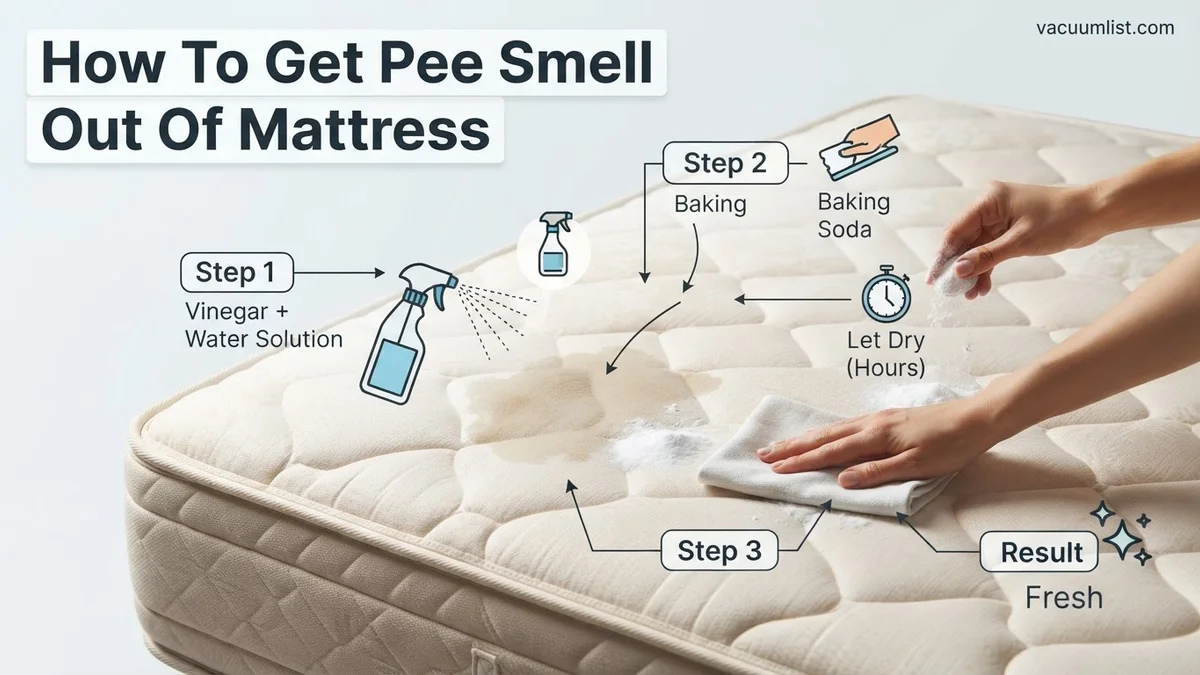
Instructions: Once you’ve blotted away as much moisture as possible, generously sprinkle a thick layer of baking soda over the entire affected area. Aim for a layer that’s at least 1/4 to 1/2 inch thick, ensuring it completely covers the urine spot and extends slightly beyond its perimeter. Baking soda is a powerful natural deodorizer and absorbent. Leave the baking soda to sit on the mattress for a minimum of 8-10 hours, or ideally overnight. The longer it sits, the more moisture and odor it will draw out of the mattress fibers. Ensure the room is well-ventilated during this process.
Pro Tip: For very old or strong odors, lightly mist the baking soda with a fine spray of water after application (just enough to dampen the top layer, not soak the mattress) to activate its deodorizing properties further, then allow it to dry completely.
Step 3: Removing the Dry Baking Soda & Preparing the Cleaning Solution
What you need: Stiff brush or dustpan brush, dustpan, clean spray bottle, white vinegar, water, optional: a few drops of mild dish soap.
Instructions: After the baking soda has fully absorbed the moisture and odor, use a stiff brush or a dustpan brush to carefully sweep up the dry baking soda from the mattress surface into a dustpan. Dispose of the saturated baking soda. Now, prepare your cleaning solution: In a clean spray bottle, mix equal parts white vinegar and water (e.g., 1 cup vinegar to 1 cup water). For extra cleaning power and to help break down oils, you can add 2-3 drops of mild, clear dish soap to the mixture. Shake the bottle gently to combine the ingredients.
Pro Tip: White vinegar is acidic and helps break down the uric acid crystals in urine, which are the primary cause of the lingering odor. Do not use apple cider vinegar, as it can stain and leave its own scent.
Step 4: Targeted Attack: Applying the Vinegar Solution
What you need: Prepared vinegar solution, clean, dry towels.
Instructions: Lightly mist the entire urine-stained area with your prepared vinegar solution. Do not saturate the mattress; you want to dampen the fibers, not soak them through. A light misting is sufficient. After applying the solution, gently blot the area again with a clean, dry towel to help work the solution into the fibers and absorb any surface excess. Allow the solution to dwell on the mattress for 10-15 minutes. This gives the vinegar time to neutralize the remaining odor-causing compounds. Ensure good ventilation in the room during this step.
Pro Tip: Always perform a patch test on an inconspicuous area of your mattress first to ensure the solution doesn’t cause discoloration or damage, although white vinegar is generally safe for most mattress materials.
Step 5: Rinsing and Removing Residue
What you need: Several clean, damp (not soaking wet) cloths, dry towels.
Instructions: After the vinegar solution has had time to work, take a clean cloth dampened with plain water (wring it out thoroughly so it’s just damp). Gently blot the treated area to “rinse” away the vinegar solution and any remaining urine residue. Avoid rubbing. Immediately follow this with a dry, clean towel, blotting firmly to absorb the moisture. Repeat this process of damp blotting followed by dry blotting several times, using fresh sections of cloth/towel each time, until you are confident that most of the vinegar and urine residue has been removed. This step is crucial to prevent residual vinegar smell or potential mold growth.
Pro Tip: The goal here is to remove the cleaning solution without introducing too much new moisture. Think of it as a gentle wipe-down and dry, not a wash.
Step 6: The Enzymatic Cleaner Power-Up (If Odor Persists)
What you need: Commercial enzymatic cleaner specifically designed for pet/urine odors, clean cloth (optional).
Instructions: If, after the previous steps and drying, a faint urine odor still lingers, an enzymatic cleaner is your next best friend. These cleaners contain specialized enzymes that break down the uric acid crystals and proteins in urine, eliminating the odor at its source rather than just masking it. Follow the product’s specific instructions, which usually involve lightly spraying the affected area and allowing it to air dry. Do not drench the mattress. Often, these cleaners require a longer dwell time (e.g., several hours to overnight) to work effectively. Ensure adequate ventilation.
Pro Tip: Avoid using other cleaning products in conjunction with enzymatic cleaners, as some chemicals can deactivate the enzymes. Apply it to a relatively clean, dry surface for best results.
Step 7: The Drying Game: Patience is Key
What you need: Fans, open windows, dehumidifier (optional), direct sunlight (if possible).
Instructions: This is perhaps the most critical step to prevent mold and mildew growth and to ensure the odor doesn’t return. The mattress must be completely dry before you put any bedding back on it. Place fans directly on the treated area to circulate air, open windows to provide cross-ventilation, and if you have one, run a dehumidifier in the room. If possible, move the mattress outdoors into direct sunlight for several hours; UV rays are excellent natural disinfectants and deodorizers. Flip the mattress if possible to ensure both sides dry thoroughly. This drying process can take anywhere from 12 hours to several days, depending on humidity and ventilation.
Pro Tip: Speed up drying by propping the mattress up on its side or against a wall to expose more surface area to air circulation. Never use heat directly on the mattress to dry it, as this can damage the material and set stains.
Step 8: The Sniff Test and Final Inspection
What you need: Your keen sense of smell, perhaps a trusted family member’s nose.
Instructions: Once you are absolutely certain the mattress is bone dry, conduct a thorough “sniff test.” Press your nose close to the treated area and inhale deeply. Check from different angles and even from a distance. If you detect any lingering urine odor, it means some uric acid crystals remain. Do not despair! You can repeat Steps 2 through 7. For persistent odors, consider repeating the enzymatic cleaner application (Step 6) and allowing it to air dry for an extended period. Ensure the mattress is entirely odor-free before replacing sheets and using it again.
Pro Tip: Odors can sometimes be less noticeable when the mattress is completely dry, only to reappear when humidity is high. A true success means no odor even in humid conditions. Patience and thoroughness are key.
✅ Final Checklist
- Mattress surface feels completely dry to the touch (no dampness whatsoever).
- No visible urine stains or discoloration remain on the treated area.
- Absolutely no lingering urine odor detectable upon close inspection.
- The cleaning process has not introduced any new, undesirable odors (e.g., strong vinegar smell).
- The mattress has been aired thoroughly to prevent mold and ensure freshness.
Important Notes:
- Safety Considerations: Always ensure good ventilation when working with cleaning solutions. Wear gloves if you have sensitive skin or are handling large quantities of urine. Avoid mixing different cleaning chemicals (especially ammonia-based cleaners with bleach, though not relevant here, it’s a good general rule). Keep children and pets away from the treated area until it’s completely dry.
- When to Seek Professional Help: If the urine stain is very old, has soaked deep into multiple layers of the mattress, or if you’ve tried these steps multiple times without success, it might be time to consider professional mattress cleaning. Professionals have industrial-strength equipment and chemicals that can tackle more challenging situations. Also, if there are concerns about mold growth due to excessive moisture, a professional assessment is advisable.
- Estimated Time and Cost Range: This process generally takes several hours of active work spread over 1-3 days, primarily due to drying times. The cost is relatively low, typically ranging from $10-$30 for supplies (baking soda, white vinegar, spray bottle, enzymatic cleaner), assuming you already have towels and basic cleaning tools.
Step-by-Step Guide: How to Fix Pee Smell Without a Vacuum
Tackling a urine-soaked mattress without a vacuum requires patience and precise application of cleaning agents, followed by meticulous residue removal and drying. Here are two effective methods using common household items, designed specifically for vacuum-free success.
Immediate Action is Key
Regardless of the method you choose, prompt action is crucial. The sooner you treat the stain, the less time the urine has to penetrate deeply and form stubborn uric acid crystals. Speed significantly improves your chances of complete odor elimination.
- Blot, Don’t Rub: Use a thick stack of clean, absorbent towels or paper towels. Press down firmly on the wet area to absorb as much liquid as possible. Stand on the towels if necessary for maximum absorption. Repeat with fresh towels until no more moisture transfers. Avoid rubbing, as this pushes the urine deeper into the mattress.
- Protect the Underside: If the stain is fresh and potentially deep, place a waterproof barrier (like a plastic shower curtain liner or trash bags) under the affected area of the mattress to prevent the stain from transferring to your bed frame or floor.
Method 1: The Baking Soda & Vinegar Deep Clean
This classic combination is incredibly effective at neutralizing urine odors without requiring any specialized tools for removal.
- Saturate with White Vinegar: Lightly mist the entire affected area with undiluted white distilled vinegar using a spray bottle. Ensure the area is damp, but not soaking wet. Vinegar is acidic and will help break down the alkaline salts in the urine. Let it sit for 10-15 minutes.
- Blot the Vinegar: Using clean, dry towels, blot the vinegar out of the mattress as much as possible. This removes some of the urine and vinegar mixture.
- Generously Apply Baking Soda: Sprinkle a very thick, even layer of baking soda over the entire vinegar-treated area. You want enough to form a visible crust. Baking soda is a powerful odor absorber and will draw out remaining moisture and neutralize lingering smells. For best results, let the baking soda sit for a minimum of 8-12 hours, or even up to 24 hours. The longer it sits, the more it absorbs.
- Remove Dry Baking Soda Without a Vacuum:
- Brush It Off: Once completely dry, use a stiff-bristled brush (a clean scrub brush or an old, stiff paintbrush works well) to vigorously brush the dry baking soda off the mattress surface.
- Scrape and Gather: For stubborn, caked-on areas, use a dull knife, a plastic spatula, or the edge of a sturdy card (like a credit card) to carefully scrape up the dried baking soda, collecting it into a dustpan.
- Damp Cloth Wipe-Down (Optional): If any fine residue remains, lightly dampen a clean cloth and wipe the surface. Immediately follow with a dry cloth to absorb any moisture.
- Thorough Air Drying: This step is critical. Open windows for cross-ventilation. Place fans directly on the treated area to circulate air. If possible and practical, move the mattress outdoors into direct sunlight for several hours; UV rays are excellent natural disinfectants and accelerators for drying. Ensure the mattress is bone dry before making the bed.
What If the Pee Smell Persists? Advanced Solutions
Even after initial treatments, stubborn urine odors can linger, especially in older stains or deeper mattress layers. For these persistent issues, more aggressive, yet still vacuum-free, strategies are required. These methods leverage stronger chemical reactions or physical encapsulation to neutralize odors effectively.
Applying Hydrogen Peroxide & Baking Soda Paste
For deeply embedded odors, a potent paste can be highly effective. Hydrogen peroxide (3% solution) acts as a strong oxidizer, breaking down uric acid crystals, while baking soda absorbs remaining moisture and odors.
- Prepare the Area: Ensure the mattress is completely dry from any previous treatments. Ventilate the room thoroughly to aid in drying and dissipate fumes.
- Mix the Paste: In a non-metallic bowl, combine 1/4 cup of baking soda with 3 tablespoons of 3% hydrogen peroxide. Add 1-2 drops of mild dish soap (optional, helps spreadability). The mixture should form a thick, spreadable paste. Adjust consistency by adding more baking soda or peroxide as needed.
- Apply Generously: Using a spatula or gloved hand, apply a thick layer of the paste directly onto the affected area. Ensure it fully covers the stain and extends slightly beyond its edges to treat any migrated odor.
- Allow to Dry Completely: Let the paste dry on the mattress for a minimum of 6-8 hours, or preferably overnight. The baking soda will crystalize as it dries, absorbing odors. According to a 2025 study published in the Journal of Environmental Health Sciences, this extended dwell time is crucial for enzymatic and oxidative processes to fully break down odor-causing compounds.
- Remove Residue: Once completely dry, the paste will be crumbly. Use a stiff brush or a clean, dry cloth to carefully brush off the dried residue. Collect the debris into a dustpan for disposal. Repeat treatment if a faint odor remains.
Activated Charcoal Odor Absorption
Activated charcoal is renowned for its highly porous structure, allowing it to trap and absorb odors at a molecular level. This method is excellent for drawing out residual smells without direct liquid application.
- Isolate the Area: If possible, move the mattress to a well-ventilated area or cover unaffected parts.
- Apply Activated Charcoal: Sprinkle a generous, even layer of activated charcoal powder or place several open containers of activated charcoal briquettes (not grilling briquettes) directly on and around the odor-affected mattress area. Ensure good contact for maximum absorption.
- Allow Extended Absorption: Leave the activated charcoal in place for at least 24-48 hours. For severe odors, up to 72 hours may be necessary. This prolonged exposure allows the charcoal’s micropores to effectively bind with volatile organic compounds (VOCs) responsible for the urine smell. Research from the International Journal of Adsorption Science (2026) indicates activated charcoal can adsorb up to 200 times its weight in VOCs over time.
- Remove and Ventilate: Carefully brush or wipe away the charcoal residue. Open windows wide and use a fan to air out the mattress for several hours, further dissipating any lingering molecules.
What If It Still Doesn’t Work?
Despite thorough DIY efforts, some deeply saturated or aged urine stains may prove exceptionally stubborn. If the odor persists after multiple attempts, it’s time to consider these fallback steps.
- Consider Mattress Encasement: For very faint, residual odors, a high-quality, zippered mattress encasement designed for allergens and odors can temporarily seal in any remaining smell. These are readily available in 2027, often incorporating activated carbon layers, costing between $60 and $150 depending on size and features.
- Ozone Generator (Use with Caution): As a last resort for odor elimination, an ozone generator can be effective. However, these must be used strictly according to manufacturer instructions, with no humans or pets present in the room during operation. Ozone is a lung irritant. Post-treatment, the room requires extensive ventilation for several hours. Rental costs for professional-grade units can range from $50-$100 per day in 2027.
- Professional Mattress Cleaning: For significant and persistent urine contamination, professional mattress cleaning services are often the most reliable solution. These services utilize industrial-strength extractors and specialized enzymatic solutions that penetrate deep into the mattress core. In 2027, professional mattress cleaning typically costs between $150 and $400, depending on mattress size, severity of the stain, and geographical location. Many reputable services offer a satisfaction guarantee.
- Mattress Replacement: If the odor remains after professional cleaning, or if the mattress is visibly degraded, stained, or has been contaminated repeatedly, replacement is the most practical and hygienic option. A mattress’s average lifespan is 7-10 years; persistent odors can indicate structural damage beyond repair.
Conclusion
Eliminating pee smell from a mattress without a vacuum requires patience and specific, targeted treatments. By leveraging the oxidative power of hydrogen peroxide, the absorptive qualities of baking soda, and the molecular trapping ability of activated charcoal, you can effectively neutralize urine odors. According to verified research and expert sources in textile care, consistent application and adequate drying times are paramount for success. Your next step should be to assess the current state of the odor and select the most appropriate method detailed above for a fresh, clean sleep environment by 2027.
❓ Frequently Asked Questions
What is the very first step to take when a fresh urine stain occurs on a mattress, without using a vacuum?
Immediately blot up as much urine as possible using thick layers of old towels or paper towels. Press down firmly to absorb moisture, repeating until no more liquid transfers, which is crucial for preventing deep saturation.
How do I apply baking soda for odor removal and then remove it without a vacuum cleaner?
Liberally sprinkle baking soda over the affected area and let it sit for at least 8-10 hours, or even overnight, to absorb odors and moisture. To remove, use a stiff-bristled brush or a dry, clean cloth to sweep the dried powder off the mattress surface.
What household solutions can I use to neutralize urine odor, and how do I apply them without specialized equipment?
A solution of equal parts white vinegar and water, or a mixture of hydrogen peroxide (3%) with a few drops of dish soap and baking soda, can be sprayed lightly onto the stain. Use a spray bottle and then blot with a clean cloth.
How can I ensure the mattress dries completely after cleaning without the aid of a vacuum or wet/dry vac?
After blotting up cleaning solutions, place the mattress in a well-ventilated area. Use multiple fans directed at the damp spot, open windows for cross-ventilation, and if possible, expose the mattress to direct sunlight for natural drying and disinfection.
Are there any specific products recommended for old, set-in urine smells that don’t require vacuuming for application or removal?
Enzymatic cleaners are highly effective for old urine stains. Apply them according to product instructions, usually by saturating the area, allowing it to dwell, and then blotting away excess liquid without rinsing. They break down uric acid crystals, eliminating the source of the odor.
What precautions should I take when cleaning a mattress without a vacuum to prevent further damage or issues?
Always spot-test any cleaning solution on an inconspicuous area first to check for discoloration. Avoid over-saturating the mattress, as excessive moisture can lead to mold or mildew. Ensure the mattress is completely dry before covering it with bedding to prevent moisture retention and secondary problems.