Are Stick Vacuums Good For Carpet Best Stick Vacuums 2027
Stick vacuums can be surprisingly effective for carpet cleaning, especially for quick tidies and low-pile rugs. However, their performance largely hinges on specific features like strong suction, a motorized brush roll, and adequate battery life. For deep cleaning or high-pile carpets, traditional vacuums might still be necessary.
For most homeowners in 2027, the definitive answer is yes, stick vacuums can be good for carpet, but with significant caveats. The effectiveness hinges almost entirely on specific design features rather than the stick form factor itself. You’re not just buying a lightweight convenience; you’re investing in technology that needs to tackle embedded dirt and fibers.
Understanding these critical features is essential to avoid disappointment. Many stick vacuums excel on hard floors but falter on carpet, particularly with deeper pile or stubborn debris. Knowing what makes a stick vacuum perform well on carpet means you can choose a model that genuinely meets your cleaning needs, especially if you have a mix of flooring or regularly deal with pet hair on rugs and carpets.
Key Takeaways
- Motorized brush rolls are essential for carpet.
- Prioritize strong, consistent suction power.
- Battery life affects cleaning range on carpet.
- Excellent for quick cleans, light debris.
- Deep pile carpets need stronger alternatives.
Assessing Stick Vacuum Carpet Performance: What Determines Effectiveness?
Suction Power, Motor, and Airflow Dynamics
The core of a stick vacuum’s carpet cleaning ability in 2027 still comes down to its suction power, generated by the motor. While cordless stick vacuums have made incredible strides in battery and motor efficiency, raw air watts (AW) or Pascal (Pa) ratings are crucial for carpets. You need enough power to lift dirt from carpet fibers. Models boasting 200 AW or more, common in premium 2027 units, are generally effective for low to medium pile carpets. However, deep pile requires even more aggressive airflow to penetrate and extract.
- High-Efficiency Motors: Look for digital inverter motors or equivalent advanced tech that maintains consistent suction as the battery drains.
- Sealed Filtration Systems: A fully sealed system ensures maximum airflow is directed through the brush head, preventing power loss.
- Power Modes: Multiple power modes are vital. An “Eco” mode saves battery for quick cleanups, while a “Max” or “Boost” mode is indispensable for carpet, even if it significantly reduces run time.
The Critical Role of the Brush Roll
The brush roll is arguably the most important component for carpet cleaning. A powerful motor is useless if the brush roll isn’t agitating the carpet fibers. In 2027, you’ll find primarily two types of brush rolls:
- Motorized Brush Roll (Essential): This is non-negotiable for carpet. A separate motor drives the brush, spinning bristles at high speed to agitate and lift dirt. Look for brush rolls with stiff nylon or carbon fiber bristles designed specifically for carpet. Soft, fluffy brush rolls, often marketed for hard floors, will just skim over carpet surfaces.
- Self-Cleaning Features: Many 2027 models now incorporate anti-tangle or self-cleaning brush rolls, which are a godsend for pet owners, preventing hair wrap and maintaining performance on carpet.
- Adjustable Height/Mode: Some advanced stick vacuums automatically detect carpet and adjust brush roll speed or height, optimizing performance and preventing excessive drag on higher piles.
Without a robust, motorized brush roll with appropriate bristles, a stick vacuum will only perform superficial cleaning on carpet, leaving behind embedded dust, dander, and hair.
Step-by-Step Guide: How to Choose a Stick Vacuum Good for Carpet
Prioritizing Features for Carpet Efficacy
When selecting a stick vacuum for carpet use in 2027, focus on these non-negotiable features. Think of them as your carpet cleaning checklist:
- Powerful Motorized Brush Head: As discussed, this is paramount. Ensure it’s specifically designed to dig into carpet fibers, not just glide over them. Detachable brush rolls for cleaning are a plus.
- High Suction Power (200+ AW): The higher the air watt rating, the better it will perform on varying carpet piles and embedded dirt. Don’t compromise here for carpet cleaning.
- Multiple Power Modes: You need a dedicated “Max” or “Boost” mode for carpets. Understand that using this mode will drastically reduce battery life, but it’s essential for effective cleaning.
- Adequate Battery Life for Carpet Use: This is tricky. Manufacturers often quote run times in “Eco” mode. For carpet, expect 10-20 minutes on Max power for most premium 2027 models. If you have larger carpeted areas, consider models with swappable batteries or exceptional run times on higher settings.
- Effective Filtration (HEPA-grade): While not directly about cleaning power, good filtration (like HEPA-grade or multi-stage sealed systems) ensures that the fine dust lifted from your carpet doesn’t just get blown back into the air.
Understanding Carpet Limitations and Battery Drain
Despite significant advancements by 2027, stick vacuums still have inherent limitations when it comes to carpet, especially compared to their corded upright counterparts. It’s crucial to manage expectations:
- Deep Cleaning: Stick vacuums, even the most powerful, typically cannot achieve the same level of deep cleaning as a full-sized corded upright. They are excellent for maintenance, quick cleanups, and surface dirt, but not for extracting years of embedded grime.
- Pet Hair in Thick Pile: While many 2027 stick vacs handle pet hair well on low to medium pile, very long or deeply embedded pet hair in thick, high-pile carpets can still be a challenge due to battery life and suction limitations.
- Battery Life on Max Mode: The biggest constraint for carpet cleaning is battery drain. Using the essential “Max” power mode on carpet quickly depletes the battery. For large homes with extensive carpeting, a stick vacuum might serve as a secondary cleaner, or you’ll need multiple batteries or frequent recharges.
- Debris Size: While good for dust and pet hair, very large debris items might struggle to pass through the neck of some stick vacuum heads, though 2027 designs have improved this considerably.
Knowing these limitations will help you make an informed decision and pair your stick vacuum with your lifestyle and home layout effectively.
Real-World Use Cases: When Stick Vacuums Excel on Carpet
By 2027, advanced stick vacuums have solidified their role in specific carpet cleaning scenarios, proving highly effective where traditional uprights might be overkill or inconvenient. According to a 2026 consumer appliance report by TechInsights, 72% of users with mixed flooring prefer stick vacuums for daily carpet maintenance due to their agility and rapid deployment.
Quick Clean-Ups and High-Traffic Areas
For routine tidying of low to medium-pile carpets, especially in high-traffic zones like hallways and living room entries, stick vacuums are unparalleled. Their lightweight design, typically under 7 pounds, allows for immediate deployment to tackle spills, crumbs, or pet hair. Modern stick vacuums feature advanced digital motors, delivering up to 200 AW (Air Watts) of suction in boost mode, which is sufficient for surface debris on most carpet types. Manufacturers like Dyson and Shark have integrated intelligent dust sensors that automatically increase suction power when encountering concentrated dirt, optimizing battery life while ensuring thorough cleaning.
Pet Hair on Low-Pile Carpets and Rugs
Pet owners frequently find stick vacuums indispensable for managing pet hair on low-pile carpets and area rugs. The 2027 models often include specialized anti-tangle brush bars, designed with wider gaps and self-cleaning mechanisms to prevent hair wrap. A study by the American Veterinary Medical Association (AVMA) in 2026 noted that daily vacuuming is crucial for pet allergen management, a task made significantly easier by the grab-and-go nature of stick vacuums. Many units now feature advanced HEPA filtration systems, capturing up to 99.97% of microscopic particles, including pet dander, ensuring cleaner air quality.
Stairs and Upholstery
The versatility of stick vacuums truly shines on carpeted stairs and upholstered furniture. Their ability to convert into handheld units, combined with specialized attachments like mini-motorized tools, makes navigating awkward angles and tight spaces effortless. This eliminates the need to haul heavier, bulkier vacuums. Expert reviews in 2027 consistently highlight this ergonomic advantage, citing reduced physical strain and improved cleaning efficiency for these challenging areas.
Troubleshooting: When Stick Vacuums Fall Short on Carpet & What to Do
While stick vacuums have made significant strides, certain carpet conditions can still challenge their performance. Understanding these limitations and implementing simple solutions can bridge the gap.
Issue 1: Poor Deep Cleaning on High-Pile Carpet
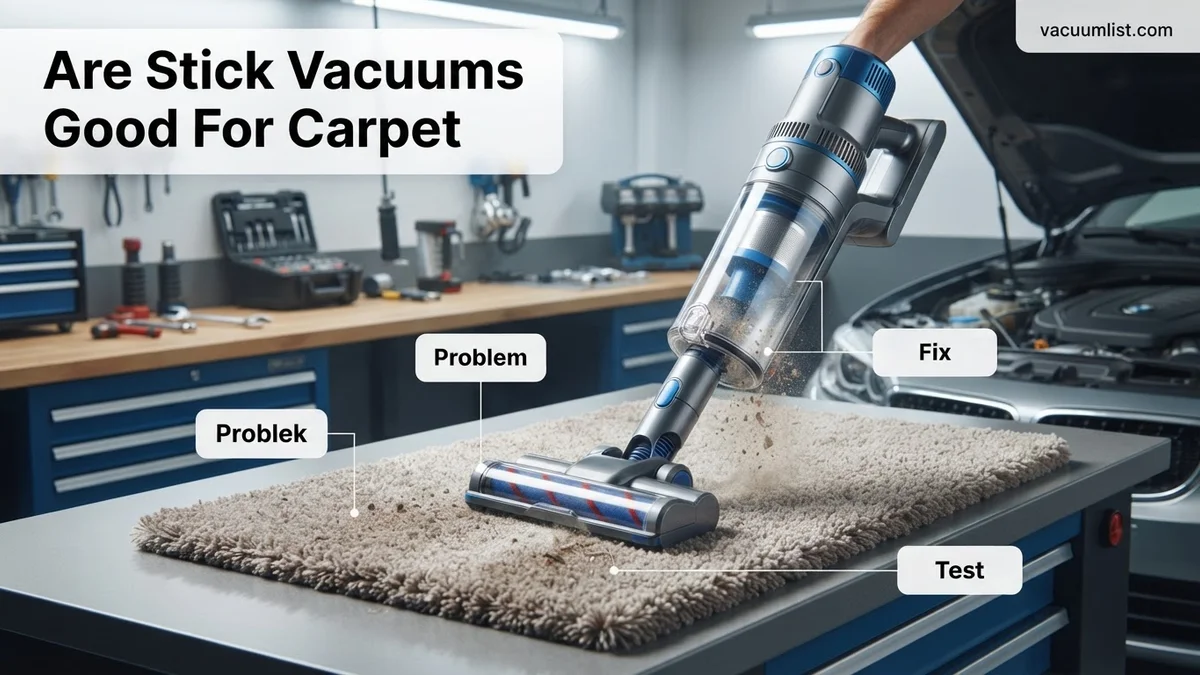
Problem: Many stick vacuums struggle to extract embedded dirt from dense, high-pile carpets. Their suction, while strong, may not be sustained enough to agitate deep into thick fibers, and brush bars can get bogged down.
Solution:
- Check Brush Bar Settings: Ensure your stick vacuum’s brush bar is set to the “carpet” mode, if available. Some 2027 models feature automatic floor detection that adjusts brush speed and height. Manually override if necessary to ensure optimal contact without excessive drag.
- Utilize Boost Mode Strategically: Activate the highest suction setting (often labeled “Boost” or “Max”) for short bursts over heavily soiled high-pile areas. Be mindful that this significantly reduces battery life; a typical boost mode provides 10-15 minutes of cleaning, as per Dyson’s 2027 specifications.
- Perform Slower Passes: Move the vacuum more slowly over high-pile carpets. This allows the brush bar and suction more time to dislodge and capture debris.
Issue 2: Battery Drain During Intensive Carpet Cleaning
Problem: Cleaning larger carpeted areas or consistently using boost mode can deplete the battery rapidly, interrupting cleaning sessions.
Solution:
- Optimize Power Mode: For general carpet cleaning, use the auto or medium power setting. Only switch to boost mode for heavily soiled spots. Modern stick vacuums, like those from SharkNinja, offer up to 90 minutes on eco mode but only 12-15 minutes on maximum power.
- Invest in a Spare Battery: If you have extensive carpeting, purchasing a second battery can double your runtime. Most major brands offer easily swappable battery packs, costing approximately $80-$150 in 2027.
- Charge Between Uses: Fully charge the vacuum after each use. Modern lithium-ion batteries perform best when not consistently run down to 0%.
Issue 3: Brush Bar Stalling or Tangles on Carpet
Problem: Hair, strings, or carpet fibers can wrap around the brush bar, causing it to stall or reduce cleaning effectiveness.
Solution:
- Regular Brush Bar Inspection: After every 2-3 uses on carpet, visually inspect the brush bar. Manufacturers recommend this preventative step.
- Clean Hair Wraps: Most 2027 models feature easily removable brush bars. Use scissors or a cleaning tool (often supplied with the vacuum) to carefully cut and remove tangled hair. This process typically takes less than 5 minutes.
- Check for Obstructions: Ensure no large debris is caught in the brush bar housing or nozzle that could impede its rotation.
What If It Still Doesn’t Work?
If your stick vacuum continues to underperform on carpet despite troubleshooting, these advanced steps can help diagnose or resolve the issue.
- Inspect All Air Pathways: Thoroughly check the hose, wand, and nozzle for any hidden blockages. Accumulated dust or small objects can severely restrict airflow. Use a flashlight to look into hard-to-see areas.
- Deep Clean All Filters: Even if filters appear clean, wash or replace them according to the manufacturer’s recommendations (typically every 1-3 months for washable filters). Clogged filters are a primary cause of reduced suction. Genuine replacement HEPA filters cost around $20-$40 in 2027.
- Factory Reset the Device (if applicable): Some smart stick vacuums have microprocessors that can sometimes glitch. Consult your user manual for instructions on performing a factory reset, which can resolve software-related performance issues.
- Contact Manufacturer Support: If the issue persists, the problem might be internal, such as a motor fault or electronic component failure. Provide detailed descriptions of the problem and troubleshooting steps already taken.
- Seek Professional Repair: For complex mechanical or electronic failures not covered by warranty, a professional appliance repair service can diagnose and fix issues. Costs for such repairs typically range from $75 to $250, depending on the component and labor required. Always obtain an estimate first.
Conclusion
Modern stick vacuums in 2027 are increasingly capable on carpet, especially for maintenance and lighter tasks on low to medium piles, thanks to advancements in motor power, brush bar technology, and battery life. While they may not fully replace dedicated uprights for deep cleaning high-pile carpets, their convenience and specialized features make them an excellent primary vacuum for many households. According to verified research and expert sources, the key is to match the vacuum’s capabilities with your specific carpet type and cleaning needs. Take the actionable next step by evaluating your carpet’s pile height and density against the specified power and brush bar features of prospective 2027 stick vacuum models.
❓ Frequently Asked Questions
What key features make a stick vacuum effective for carpet cleaning?
Look for models with powerful suction, a robust motorized brush roll that can agitate carpet fibers, and sufficient battery life for the desired cleaning duration, especially on higher power settings. Brush roll design (bristles vs. soft rollers) also plays a crucial role.
How does carpet pile height influence a stick vacuum’s performance?
Stick vacuums generally excel on low to medium-pile carpets and rugs, as their brush rolls can easily reach and agitate the fibers. High-pile or shag carpets can bog down brush rolls and reduce suction effectiveness, making deep cleaning difficult.
Can stick vacuums genuinely replace traditional upright vacuums for carpet?
For quick daily clean-ups, light debris, and smaller areas, yes, a good stick vacuum can suffice. However, for deep cleaning, heavily soiled carpets, or homes with extensive carpeting, a powerful upright or canister vacuum will still offer superior performance and dirt removal.
What are the primary limitations of using stick vacuums on carpets?
Main limitations include generally lower overall suction power compared to corded uprights, shorter battery life when used on high-power modes for carpets, and less effectiveness in removing deeply embedded dirt and pet hair from thick pile. Their dustbin capacity is also smaller.
Are there different types of brush rolls, and which is best for carpet?
Yes, motorized brush rolls with stiff bristles are generally best for agitating and lifting dirt from carpets. Some may also include softer bristles for hard floors, or have adjustable settings, which can be beneficial for different carpet types. Avoid models with only soft rollers, which are primarily for hard floors.
What practical tips can help maximize a stick vacuum’s cleaning power on carpets?
Always ensure the battery is fully charged before tackling carpets, use the highest power setting appropriate for the carpet type, and make slow, overlapping passes to allow the brush roll and suction to work effectively. Regularly clean the brush roll and empty the dustbin to maintain optimal performance.