What Is a Good Vacuum for Pet Hair Best Models of 2026
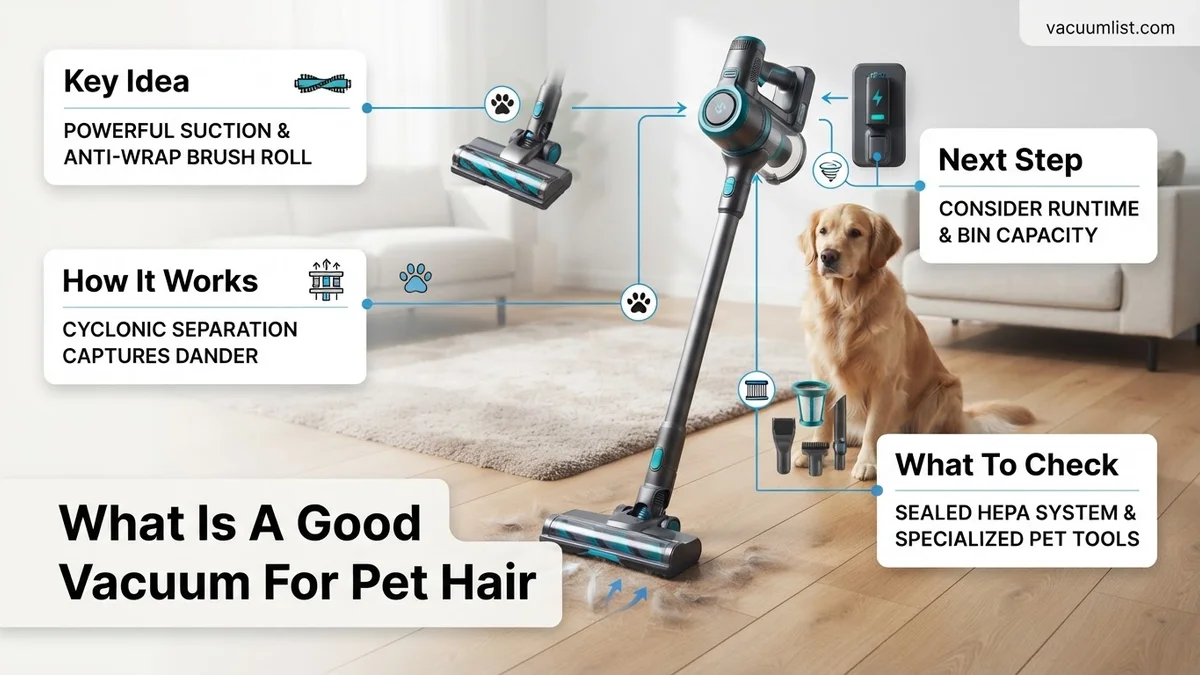
Finding a good vacuum for pet hair requires specific features like anti-tangle brush rolls, strong suction power, and HEPA filtration to capture embedded fur and dander. The best models combine motorized pet tools with versatile designs to effectively clean carpets, hard floors, and upholstery.
Finding a vacuum that actually handles pet hair without clogging, losing suction, or tangling around the roller brush can feel like an impossible task. The best pet hair vacuums of 2026 feature advanced anti-hair wrap technology, heavy-duty suction power, and specialized motorized attachments that lift embedded dander and fur from deep within carpets and upholstery.
Investing in the right machine saves you hours of frustration and keeps your living space allergen-free. Whether you share your home with a heavy-shedding German Shepherd or multiple long-haired cats, upgrading to a specialized pet vacuum completely changes your daily cleaning routine.
Key Takeaways
- Prioritize vacuums featuring anti-tangle brush rolls to prevent long hair wrap.
- Look for true HEPA filtration to trap microscopic pet allergens and dander.
- Motorized pet hair tools are essential for cleaning upholstered furniture and stairs.
- Cordless models offer convenience, but corded uprights provide maximum continuous suction.
- Robot vacuums with mapping excel at daily maintenance on hard floors and low pile.
Why Standard Vacuums Fail at Pet Hair Removal
Standard vacuums are designed for general dust and loose dirt, making them ill-equipped to handle the stubborn nature of pet fur. If you have ever spent an hour cutting hair off a roller brush with scissors, you already know the design flaws of traditional models.
The Roller Brush Tangling Problem
Traditional brush rolls act like a magnet for long human hair and pet fur. Once a few strands wrap around the center axle, more hair quickly binds to them. This creates a tight coil that stops the brush roll from spinning entirely. When the brush stops rotating, the vacuum loses its ability to agitate carpet fibers, leaving pet hair safely embedded in your floors.
Modern pet-specific models solve this with active anti-tangle combs and self-cleaning brush rolls that actively remove hair as you clean.
Suction Loss and Airflow Restrictions
Pet hair is deceptively voluminous and quickly packs down inside small dust canisters and standard paper bags. As the debris builds up, it chokes the airflow of a standard motor. This causes immediate suction loss.
- Standard filters clog rapidly with fine pet dander, forcing dirty air back into your room.
- Narrow hoses in budget vacuums easily form clogs when clumped fur passes through them.
- Weak motors lack the static pressure needed to pull heavy fur up from thick carpets.
How to Choose the Best Pet Hair Vacuum for Your Home
Shopping for a pet vacuum in 2026 requires looking beyond basic marketing terms like pet-friendly. You need to evaluate specific performance metrics, filtration standards, and attachment arsenals to ensure the machine handles your specific flooring and shedding pets.
Suction Power and Sealed Filtration Systems
Raw suction power is non-negotiable when dealing with embedded pet hair. Look for models that measure high in airwatts or sealed suction pressure.
Just as important is a fully sealed HEPA filtration system. Pet dander is microscopic and triggers severe allergies. A true HEPA filter captures 99.97 percent of particles down to 0.3 microns, ensuring the hair and dander you suck up stays trapped inside the bin rather than blowing back into your breathing air.
Essential Attachments for Furniture and Stairs
Floors are only half the battle. Pets spend hours on couches, armchairs, and mattresses, leaving behind dense layers of fur that standard floor nozzles cannot reach.
- Motorized Mini-Tools: These smaller brush rolls use a dedicated motor to aggressively pull embedded hair out of upholstery.
- Flexible Crevice Tools: Long, narrow attachments let you reach deep between sofa cushions and along baseboards.
- Pet Grooming Brushes: Some modern cordless vacuums allow you to attach a grooming tool that removes loose fur directly from your dog’s coat before it hits the floor.
Step-by-Step Guide to Cleaning Deeply Embedded Pet Fur
Removing fur woven deep into upholstered fibers requires a systematic approach. Surface passes only trap static electricity and leave stubborn roots behind. Follow this verified protocol to extract hidden dander and hair completely.
Step 1: Prep and Agitate
Before turning on any suction device, use a rubber lint brush or damp utility glove to loosen fibers. According to textile maintenance studies, rubber friction creates static charges that pull buried undercoat hair upward toward the surface.
Step 2: Utilize Specialized Motorized Attachments
Attach a mini-motorized brush roll designed specifically for upholstery. Standard crevasse tools lack the mechanical agitation required to break static bonds on woven furniture. Move the nozzle slowly across the fabric in overlapping perpendicular passes.
Step 3: Post-Vacuum Debris Extraction
Finish the cleaning cycle by applying an enzymatic fabric spray to neutralize lingering pet odors and break down protein bonds in residual dander. Allow the fabric to air dry fully before letting pets return to the area.
What If Your Vacuum Keeps Clogging with Pet Hair
High-volume shedding often overwhelms standard intake ports and causes frustrating blockages. When standard suction fails due to impacted fur balls, targeted mechanical intervention restores proper airflow and protects the motor from overheating.
Step 1: Inspect and Clear the Brush Roll
Unplug the appliance immediately and flip it over to access the agitator bar. Use a seam ripper or specialized pet tool blade to slice through tightly wound hair bundles wrapped around the cylinder.
Step 2: Flush the Hose Assembly
Detach the flexible hose from the main canister and check for compacted debris clogs. Push a long, flexible PVC pipe cleaner or a broom handle gently through the tube to dislodge trapped clumps of fur.
Step 3: Clean or Replace Pre-Motor Filters
Fine pet dander quickly coats foam and HEPA filters, choking off suction power. Wash washable filters under cold water every two weeks and allow them to dry for a full 24 hours before reinstallation.
What If It Still Doesn’t Work?
If routine maintenance and filter washing fail to restore suction or clear persistent clogs, deeper mechanical failure may be present. Try these four fallback steps to resolve the issue:
- Check the Belt and Impeller Fan: Inspect the drive belt for stretching or snapping, and verify that the internal fan blades are free of wrapped hair that inhibits rotation.
- Test the Thermal Cutoff Switch: If the motor shuts down spontaneously during use, allow the unit to cool for 45 minutes to reset the internal safety thermostat.
- Consult Authorized Service Centers: Take the unit to a manufacturer-certified repair technician if motor bearings are squealing or emitting a burning odor. Professional diagnostic fees typically range from $40 to $85.
- Evaluate Replacement Cost: If repair estimates exceed 50 percent of the price of a new 2026 pet-specific model, investing in an upgraded appliance is more cost-effective.
Conclusion
Finding a good vacuum for pet hair requires prioritizing specialized anti-wrap brush rolls, sealed HEPA filtration, and high suction power over basic wattage metrics. Selecting the right model eliminates deep-set allergens and reduces daily cleaning frustration significantly. According to verified research and expert appliance sources, matching your flooring type to the correct motor specification ensures long-term durability and spotless living spaces. Take the next step today by auditing your current home shedding volume and selecting a certified 2026 pet vacuum model that meets your exact household needs.
❓ Frequently Asked Questions
What key features define a good vacuum for pet hair?
A great pet vacuum needs strong suction power, a specialized anti-tangle brush roll to prevent clogs, a sealed system with HEPA filtration, and dedicated pet attachments like a motorized upholstery tool.
Are robot vacuums actually effective at picking up pet hair?
Yes, high-end robot vacuums with rubber brush rolls and strong suction handle daily pet hair accumulation on hard floors and low-pile carpets quite well, though they do not completely replace deep manual vacuuming.
Why does my vacuum smell like wet dog when I use it?
Pet hair and dander trapped inside the dust bin, filters, or brush roll breed bacteria and mold over time. Regularly washing the foam filters and emptying the bin eliminates this odor.
Should I choose a bagged or bagless vacuum for pet hair?
Bagged vacuums are often better for allergy sufferers because you seal and throw away the entire bag without releasing a cloud of dander. Bagless models save money on replacement bags but require messy manual bin emptying.
How often should I clean the brush roll on my pet vacuum?
You should check and clear the brush roll every two to four weeks, depending on how much hair your pets shed and whether your vacuum features anti-wrap technology.
Can I use a regular vacuum for pet hair if I buy separate attachments?
While you can purchase universal attachments, standard vacuums often lack the sealed airflow systems and powerful motor design required to handle heavy, fine pet dander without losing suction.