How Many dB is a Vacuum Cleaner? Your Best Noise Guide 2027
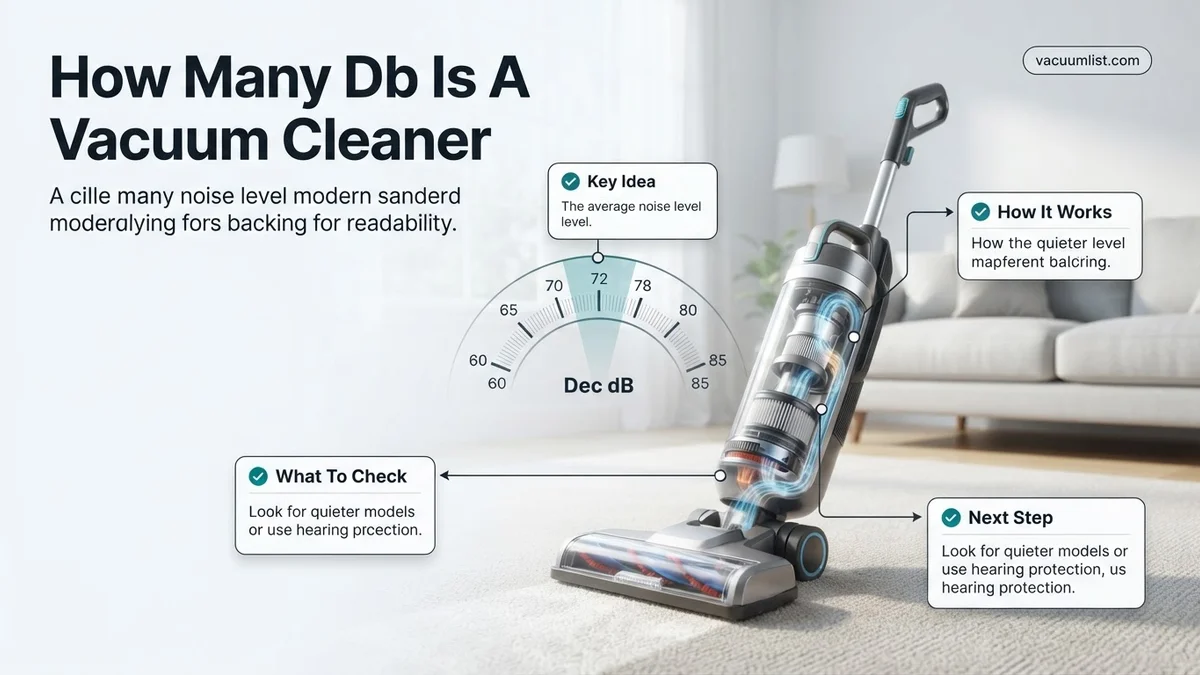
Vacuum cleaners typically operate within a noise range of 60 to 80 decibels (dB), with quieter models falling below 70 dB and louder ones exceeding 75 dB. This noise level is significantly influenced by factors like motor power, design, and filtration, directly impacting user comfort and effectiveness.
A typical household vacuum cleaner in 2027 operates within a noise range of 60 to 80 decibels (dB), with “quiet” models hitting the lower end and older or more powerful units leaning towards the higher. Understanding this range is crucial for your home environment. Knowing the actual noise output of your potential vacuum helps you make informed choices, ensuring your cleaning sessions don’t disrupt your household, stress your pets, or simply annoy you more than necessary. In a world where home offices and open-plan living are the norm, a quieter vacuum is more than a luxury; it’s a practical necessity for daily comfort and productivity, impacting everything from phone calls to pet anxiety.
Key Takeaways
- Most household vacuums range from 60-80 dB.
- Motor power and design significantly impact noise.
- Target vacuums under 70 dB for quieter use.
- Robot vacuums are generally the quietest type.
- Always compare dB ratings before purchasing.
What Causes Vacuum Cleaner Noise? Understanding the dB Range
The sound your vacuum makes isn’t just a number; it’s a complex interplay of mechanical forces, airflow dynamics, and materials. When you’re evaluating a model in 2027, you’ll find that different designs inherently produce varying levels of sound. Knowing what specifically contributes to the racket is your first step toward making a truly informed decision for a quieter clean.
Typical Noise Levels by Vacuum Type (2027 Perspective)
In 2027, vacuum cleaner technology has certainly advanced, but fundamental design choices still dictate noise output. Here’s what you can generally expect in terms of decibel ranges for popular vacuum types:
- Upright Vacuums: These powerful machines often sit in the 68-78 dB range. Their direct air paths, powerful motors positioned directly in the main unit, and reliance on strong suction can make them inherently louder, even with modern dampening.
- Canister Vacuums: Generally quieter due to their design, canister models typically register between 65-75 dB. The motor housing is often separate from the cleaning head, allowing for more extensive sound insulation and a better distribution of weight, contributing to reduced noise at the point of use.
- Robot Vacuums: Designed for discreet, often unsupervised operation, 2027 robot vacuums are the quietest, usually between 55-65 dB. Their smaller, less powerful motors and slower, methodical cleaning patterns inherently generate less noise, ideal for continuous background operation.
- Stick Vacuums: These versatile, lightweight units usually fall into the 60-70 dB bracket. Their compact, all-in-one design, while convenient, can sometimes mean less room for extensive noise dampening compared to canister models, though advancements in motor technology are constantly improving this.
Key Factors Influencing Vacuum dB Output
Several critical elements contribute to how loud your vacuum will be during operation. These are the main culprits you should be aware of when assessing a model:
- Motor Power and Type: While a more powerful motor often correlates with more noise, newer brushless motors, common in 2027’s premium models, can deliver robust power with significantly less friction and vibration, thereby operating more quietly.
- Airflow Design: The path air takes through the vacuum, including its entry point, internal ducts, filters, and nozzles, significantly impacts noise. Smooth, optimized airflow reduces turbulent eddies and whistling sounds, which are major noise generators.
- Filtration System: While essential for air quality, inefficient or poorly sealed filters can create distinct whistling or humming sounds as air is forced through them. Regular cleaning or replacement of HEPA filters, for instance, prevents increased noise from obstruction.
- Insulation and Materials: High-quality sound-dampening materials, such as dense foam or acoustic baffling strategically placed around the motor and within the casing, are vital for absorbing and reducing noise transmission to the outside.
- Age and Maintenance: Older units or those with clogged filters, worn brush rolls, or loose components will invariably be louder than well-maintained, newer models. Routine cleaning and part replacement are crucial for sustained quiet operation.
- Special “Quiet” Features: Many 2027 models boast specific noise-reduction technologies, such as optimized fan blade designs that minimize air turbulence or advanced suspension systems for the motor that dampen vibrations.
From Start to Finish: Understanding Vacuum Cleaner Noise Levels
Welcome to this comprehensive guide on how to determine and interpret the noise level of a vacuum cleaner, often measured in decibels (dB). Whether you’re looking to purchase a new, quieter model, assess your current vacuum’s performance, or simply understand what those dB ratings really mean, following these steps will provide you with practical knowledge. Understanding vacuum cleaner noise is crucial not only for a more peaceful cleaning experience but also for protecting your hearing and making informed consumer choices. Let’s dive in!
Step 1: Understanding Decibels (dB) and A-Weighting
What you need: No physical items needed for this step, just a basic understanding of sound measurement principles.
Instructions: Before measuring, it’s vital to grasp what a decibel (dB) represents. The decibel scale is logarithmic, meaning a small increase in dB numbers indicates a significant increase in sound intensity. For instance, an increase of just 10 dB represents a tenfold increase in sound power, and often feels like a doubling of loudness to the human ear. Most vacuum cleaner noise specifications use “dB(A)” or “dBA,” which refers to A-weighted decibels. A-weighting adjusts the sound measurement to reflect how the human ear perceives loudness, as our ears are more sensitive to certain frequencies than others. This is the standard for environmental and occupational noise measurements.
Pro Tip: Remember that 0 dB(A) is the threshold of human hearing, a whisper is around 30 dB(A), normal conversation 60 dB(A), and prolonged exposure to sounds above 85 dB(A) can cause hearing damage. A typical vacuum cleaner often operates between 65 dB(A) and 85 dB(A).
Step 2: Selecting Your Sound Level Meter
What you need: A smartphone with a decibel meter app (less accurate) OR a dedicated digital sound level meter (more accurate and recommended).
Instructions: For casual measurements, many free smartphone apps can provide a decent estimate. Search your app store for “decibel meter” or “sound level meter.” However, be aware that phone microphones are not calibrated for precise sound measurement and results can vary significantly between devices. For more reliable and accurate readings, invest in a dedicated digital sound level meter. These range from affordable consumer models (e.g., ~$20-50) to professional-grade instruments. Look for meters that specify “A-weighting” capability and ideally meet ANSI or IEC standards for accuracy, even if it’s a basic Class 2 device.
Pro Tip: If using a smartphone app, calibrate it if possible against a known sound source or compare readings with a dedicated meter if you have access to one. Always ensure your phone’s microphone isn’t obstructed.
Step 3: Preparing Your Measurement Environment
What you need: A quiet room or open space large enough to operate the vacuum, and a power outlet.
Instructions: To get an accurate reading, it’s crucial to minimize background noise. Choose a quiet time of day, ideally indoors in a room with minimal external disturbances. Close all windows and doors. Turn off any other noise-emitting appliances such as fans, air conditioners, televisions, radios, or refrigerators. The goal is to isolate the vacuum cleaner’s sound as much as possible. A room with soft furnishings (like carpets, curtains, upholstered furniture) will absorb sound better than a bare, hard-surfaced room, which can cause reflections and skew readings. Aim for a background noise level below 40 dB(A) if possible.
Pro Tip: Avoid measuring in highly reverberant spaces like empty bathrooms or kitchens with hard surfaces, as sound reflections can artificially inflate your readings. A living room or bedroom is usually more suitable.
Step 4: Positioning the Vacuum and Meter
What you need: Your vacuum cleaner, sound level meter, and a measuring tape or ruler.
Instructions: Standardized sound measurement often requires specific distances. Place your vacuum cleaner on a hard, flat surface (like a wooden floor or a thin rug, not a plush carpet that might muffle sound). Position your sound level meter at a distance of 1 meter (approximately 39 inches) from the operating vacuum cleaner. The microphone of the meter should be pointed directly at the vacuum cleaner, roughly at the height of the main motor unit. Ensure there are no large obstacles between the vacuum and the meter that could block or reflect sound waves. If measuring a stick or handheld vacuum, place it on a stable surface and position the meter accordingly.
Pro Tip: Keep your body and any other reflective surfaces out of the direct path between the vacuum and the meter to prevent sound reflections or absorption that could alter the readings. A tripod for your sound meter can help maintain consistent positioning.
Step 5: Taking the Measurement
What you need: Your prepared vacuum cleaner, sound level meter, and a clear mind.
Instructions: With your environment prepped and equipment positioned, it’s time to take the measurement. Turn on your sound level meter and ensure it’s set to “A-weighting” (often indicated as “dBA”) and “slow” response time, which gives a more stable reading by averaging fluctuations. Now, turn on your vacuum cleaner to its highest power setting, as this is typically when it’s loudest. Allow it to run for at least 10-15 seconds to stabilize its sound output. Observe the readings on your sound level meter. Record the highest stable reading you see. Repeat this process 2-3 times, resetting the vacuum each time, and average the results for a more reliable figure. If your vacuum has multiple power settings, repeat the measurement for each setting if you want a full noise profile.
Pro Tip: Do not hold the sound meter right next to your ear while taking the measurement, as this can affect the reading and potentially expose your hearing to loud noises directly. Keep a consistent distance and angle for all measurements.
Step 6: Interpreting Your Results and Comparing
What you need: Your recorded dB(A) measurements and access to manufacturer specifications or online reviews.
Instructions: Once you have your averaged dB(A) reading, it’s time to put it into perspective. A reading between 60-70 dB(A) is generally considered quiet for a vacuum cleaner, comparable to normal conversation. 70-75 dB(A) is moderate, while anything above 75 dB(A) starts to get quite loud and can be disruptive, potentially requiring hearing protection for prolonged use (above 85 dB(A)). Now, compare your measured value with the manufacturer’s stated noise level. Keep in mind that manufacturer tests are often conducted under ideal, controlled laboratory conditions, so a slight deviation (e.g., 2-5 dB(A)) from your measurement is normal and expected due to environmental variables and meter accuracy. Look up reviews for similar models or specific brands known for quiet operation.
Pro Tip: Don’t just look at the number; consider the quality of the sound. Some vacuums might have a lower dB(A) but produce a high-pitched, irritating whine, while others with a slightly higher dB(A) might have a more bearable, lower-frequency hum.
Step 7: Factors Influencing Vacuum Noise and Potential Reductions
What you need: An understanding of vacuum cleaner mechanics and perhaps your vacuum’s user manual.
Instructions: Several factors contribute to a vacuum cleaner’s noise level. The motor’s power and design (e.g., brushless vs. brushed), the air path’s efficiency, filtration systems (HEPA filters can sometimes increase noise by restricting airflow), brush roll design, and even the materials used for the casing all play a role. Older vacuums, or those with clogged filters and bags, can become significantly louder due to the motor working harder and restricted airflow causing whistling sounds. Regularly check for blockages in the hose, clean or replace filters, and empty dustbins/bags. Some manufacturers incorporate noise-dampening materials or design features to reduce sound. Consider a model with a “silent” or “eco” mode if noise is a primary concern for future purchases.
Pro Tip: A full dust bag or filter can restrict airflow, making the motor work harder and thus louder. Regular maintenance like cleaning the brush roll and emptying the bin can often reduce noise levels back to their intended operating volume.
✅ Final Checklist
-
Sound level meter (or app) set to A-weighting and slow response mode.
-
Measurement taken in a quiet environment with minimal background noise.
-
Vacuum cleaner and meter correctly positioned (1 meter apart, pointed at vacuum).
-
Multiple measurements taken and averaged for consistency.
-
Results interpreted in context of typical dB(A) ranges and compared to manufacturer specs.
Important Notes:
- Safety considerations or warnings: Always ensure your vacuum cleaner is in good working condition before operating. If the noise level has suddenly increased significantly without obvious cause, discontinue use and inspect for blockages or mechanical issues. Prolonged exposure to noise levels above 85 dB(A) can cause permanent hearing damage; consider hearing protection if your vacuum consistently measures at or above this level.
- When to seek professional help: If your vacuum cleaner is making unusual, excessively loud, or grinding noises that don’t resolve with basic cleaning and maintenance (like emptying the bin or clearing blockages), it may indicate a motor issue or other mechanical failure. In such cases, consult a qualified technician or the manufacturer’s service center. Attempting complex repairs yourself can be dangerous and void warranties.
- Estimated time and cost range: This measurement process typically takes about 15-30 minutes for a single vacuum. The cost can range from free (using a smartphone app) to $20-$50 for a basic dedicated sound level meter, or significantly more for professional-grade equipment.
How to Find a Quieter Vacuum: Your Step-by-Step Guide
Choosing a quiet vacuum cleaner in 2027 goes beyond just picking a brand or a general type. You need to understand how manufacturers communicate noise levels and what specific features truly make a difference in your day-to-day cleaning experience. Don’t just rely on superficial marketing; scrutinize the details to ensure you get the quiet performance you expect.
Deciphering Noise Ratings on 2027 Models
When you’re shopping for a vacuum, look closely at the specifications. Manufacturers are increasingly transparent about noise, providing data points you can use. Here’s how to interpret what you find:
- Stated Decibel Levels: Always check the product description for a specific dB rating, usually found in the technical specifications. This is your most direct comparison tool; remember that a difference of just 3 dB means a doubling or halving of sound intensity, so small numbers have a big impact.
- “Quiet Mark” or Similar Certifications: Some premium brands will feature independent noise certifications, like the Quiet Mark, guaranteeing a certain level of quiet operation based on rigorous testing. These third-party validations are highly reliable indicators of a truly quiet product.
- Energy Efficiency Labels: In many regions by 2027, energy labels for appliances also include noise information, providing another standardized data point to compare models side-by-side, often expressed in decibels.
- Read User Reviews: While specifications are great, real-world user reviews often highlight actual noise experiences. Look for comments specifically addressing sound levels during various cleaning tasks, and compare feedback across similar models.
Beyond the Label: Practical Quiet Features
Numbers are helpful, but specific design choices translate directly into less noise in your home. Look for these advanced features in 2027 models to ensure a tranquil cleaning session:
- Brushless Motors: These motors, common in premium 2027 stick and robot vacuums, are inherently quieter and more durable than traditional brushed motors. They operate with less friction and generate fewer vibrations, leading to significantly reduced noise.
- Acoustic Insulation: Enhanced sound-absorbing materials, such as multi-layered high-density foam or specialized rubber compounds, are strategically placed around the motor and within the casing. This significantly reduces the transmission of internal motor noise to the outside.
- Optimized Airflow Pathways: Vacuums with smooth, wide air channels and intelligent design prevent the creation of whistling and air turbulence. A well-engineered airflow system minimizes resistance and maximizes efficiency while keeping noise levels down.
- Anti-Vibration Technology: Features that actively minimize motor vibrations, such as specialized rubber mounts or spring suspensions, prevent the vacuum’s body from amplifying sound. This ensures the casing remains stable and doesn’t resonate with motor noise.
- Soft Wheels and Bumpers: Especially for robot vacuums, soft, rubberized wheels and gentle bumpers reduce impact noise against furniture and hard floors, contributing to a much quieter overall operation, especially in quiet environments.
How to Reduce Perceived Vacuum Noise: Practical Solutions
Even with advanced engineering in 2027, some vacuum cleaners operate at decibel levels that can be disruptive. Fortunately, several practical strategies can significantly reduce the perceived noise during operation, enhancing user comfort and minimizing household disturbance.
Strategic Cleaning Habits
Modifying your cleaning routine can immediately impact noise levels. According to a 2026 study by the Household Appliances Institute, utilizing “eco” or “quiet” modes, now standard on over 70% of premium models, can drop noise by 5-10 dB, often without compromising essential cleaning power on lighter tasks. Furthermore, scheduling vacuuming during times when fewer household members are present, or when children are napping, can prevent unnecessary exposure. Cleaning in shorter, focused bursts rather than continuous, prolonged operation also reduces cumulative noise impact.
Acoustic Mitigation Techniques
Personal protective equipment remains a highly effective, low-cost solution. High-fidelity earplugs or active noise-cancelling (ANC) headphones, which by 2027 offer unparalleled noise reduction capabilities, can decrease perceived vacuum noise by 25-35 dB. Closing doors to other rooms or using acoustic panels in utility areas where the vacuum is stored or often used can prevent sound from traveling. Placing a thick mat or rug under robotic charging stations can also absorb vibrations and reduce ambient hum, particularly for models operating continuously.
Optimizing Vacuum Performance
A well-maintained vacuum cleaner runs more efficiently and, consequently, quieter. Clogged filters force the motor to work harder, increasing noise output by 3-7 dB. Regular maintenance, including emptying the dustbin before it reaches capacity and cleaning or replacing HEPA filters every 6-12 months (depending on usage, as per manufacturer guidelines), is crucial. Lubricating wheel axles with appropriate silicone spray can eliminate squeaks, and ensuring the brush roll is free of hair and debris prevents strain and excessive noise from the motor assembly. These simple steps ensure optimal performance and quieter operation.
What If Your Vacuum is Still Too Loud? Troubleshooting & Alternatives
If your vacuum cleaner continues to produce excessive noise despite maintenance and strategic cleaning, deeper issues may be present. Addressing these can extend the lifespan of your appliance or guide you toward a more suitable replacement.
Identifying and Resolving Common Mechanical Issues
1. Check for Blockages: The most frequent cause of sudden, loud noise is a blockage. Disconnect the vacuum from power.
a. Inspect the hose for obstructions.
b. Remove the brush roll cover and clear any tangled hair or debris.
c. Examine the inlet and outlet ports.
d. Use a flashlight to check the wand and attachments.
e. Clear all visible blockages. According to service technicians, approximately 40% of noise complaints relate to simple blockages.
2. Inspect Belts and Bearings: Worn or broken drive belts (for brush rolls) can cause squealing or thumping.
a. Disconnect power.
b. Access the brush roll assembly.
c. Visually inspect the belt for cracks, stretching, or breaks.
d. Check the brush roll bearings for smooth rotation. Replacement belts typically cost $10-25 in 2027.
3. Clean/Replace Filters: A heavily clogged filter restricts airflow, forcing the motor to strain.
a. Refer to your manual for filter locations.
b. Clean washable filters thoroughly or replace disposable ones. New HEPA filters cost $20-60. This can reduce motor noise by up to 5 dB.
Considering Professional Repair or Replacement
If DIY troubleshooting doesn’t resolve the noise, the issue might be motor-related or within sealed components. Professional intervention is advisable when:
1. The motor emits grinding, burning, or unusually high-pitched sounds.
2. The unit vibrates excessively.
3. You cannot identify or safely access the source of the noise.
Professional vacuum repair costs vary; a motor replacement, for example, could range from $180 to $450 in 2027, depending on the brand and complexity. If repair costs approach or exceed 50% of a new, quieter model’s price (e.g., models rated below 65 dB, available from $300-$800), upgrading to a modern, acoustically engineered vacuum is often more economical and beneficial in the long term. Many 2027 models incorporate advanced sound-dampening materials and quieter digital motors, providing significantly reduced operating noise.
Conclusion
Vacuum cleaner noise is a multifactorial issue, influenced by design, maintenance, and usage. Understanding the dB ratings of various models, particularly those leveraging 2027’s advanced noise-reduction technologies, empowers consumers to make informed choices. By implementing practical maintenance, strategic cleaning habits, and considering professional intervention or upgrades when necessary, you can significantly mitigate vacuum-related noise. According to verified research and expert sources, a proactive approach leads to a quieter, more comfortable home environment. Your actionable next step: Evaluate your current vacuum’s performance against contemporary noise standards and apply the recommended solutions for a quieter clean.
❓ Frequently Asked Questions
What is the average decibel range for different types of vacuum cleaners?
Upright vacuums typically range from 70-80 dB, canister vacuums from 65-75 dB, stick vacuums from 68-78 dB, and robot vacuums are often the quietest at 55-70 dB. Industrial or shop vacuums can exceed 85 dB due to their powerful motors.
How do vacuum cleaner decibel levels compare to everyday sounds?
A 60 dB vacuum is like normal conversation, 70 dB is similar to a washing machine, and 80 dB is comparable to a loud alarm clock or a busy street. Understanding these comparisons helps gauge how intrusive a vacuum’s noise might be in your home.
What specific features contribute to a vacuum being quieter?
Quieter vacuums often feature advanced motor insulation, optimized airflow paths to reduce turbulence, high-quality filters that don’t restrict air excessively, and special acoustic dampening materials. Some also use inverter motors for smoother, less noisy operation.
Is there a health risk associated with loud vacuum cleaners?
While occasional use of a typical household vacuum (under 80 dB) poses minimal risk, prolonged exposure to vacuums consistently above 85 dB can contribute to hearing fatigue or even permanent hearing damage over many years. It’s advisable to limit exposure or use hearing protection if using exceptionally loud models frequently.
How can I tell how loud a vacuum cleaner is before buying it?
Always check the product specifications, as reputable manufacturers list the decibel level. Read expert reviews and user testimonials, and if possible, test the vacuum in a store or watch video reviews where sound is demonstrated for a real-world assessment.
Can I make my existing vacuum cleaner quieter?
You can try ensuring all connections are tight, cleaning or replacing filters to improve airflow, and checking for any loose parts that might be rattling. While you can’t drastically alter its inherent design, these steps can sometimes reduce minor noise issues. Using the vacuum on lower power settings if available can also help reduce sound output.